Answer: If you need the longest reach and crisp image quality, these five cameras offer standout optical zooms and practical features for different buyers. This guide helps shoppers pick the right zoom-capable camera, whether for wildlife, sports, travel, or streaming.
The following table summarizes the chosen products to compare at a glance:
| Product | Best For | Optical Zoom | |
|---|---|---|---|
| Canon EOS Rebel T7 DSLR Camera Double Zoom Lens Kit | Beginner photographers who want versatile zoom outdoors | 18-55mm and 75-300mm (kit lenses) | APS-C sensor, Wi-Fi, Full HD |
| KODAK PIXPRO AZ528 | Travelers needing extreme reach without swapping lenses | 52x optical zoom | Wide to telephoto, strong stabilization |
| Nikon COOLPIX P950 | Wildlife and sports shooters requiring long reach | 83x optical zoom | 4K video, RAW option |
| KODAK PIXPRO AZ405 | Budget-conscious zoom lovers | 40x optical zoom | High megapixel sensor, OIS |
| EMEET C60E Dual-Camera 4K Webcam | Streamers and presenters needing flexible framing | Up to 11x hybrid zoom | Dual-camera for wide and tele views |
Canon EOS Rebel T7 DSLR Camera Kit With Lenses

The Canon EOS Rebel T7 is best for beginner photographers who want reliable zoom flexibility with two included lenses (18-55mm and 75-300mm). It features a 24.1 MP APS-C sensor, Dual Pixel CMOS AF, and built-in Wi-Fi for easy sharing. The 75-300mm range supports distant subjects, making it suitable for travel, family events outdoors, and casual wildlife shooting. Caution: As an entry DSLR, the kit may lack advanced autofocus features found in higher-end models, and battery life may require extra packs for long sessions.
KODAK PIXPRO AZ528 16MP Digital Camera

The AZ528 stands out for extreme reach with a 52x optical zoom, ideal for travelers and wildlife enthusiasts who want to frame distant subjects without swapping lenses. It includes a 16 MP sensor and built-in image stabilization for sharper results at telephoto lengths. Best for: budget-conscious shooters who need broad zoom range in a single compact unit. Caution: Optical performance at full zoom can be sensitive to camera shake in handheld shooting; use stabilization features or a tripod when possible.
Nikon COOLPIX P950 Superzoom

The Nikon P950 offers a long-reaching 83x optical zoom, making it a strong choice for wildlife and sports shooters who need to stay distant while capturing detail. It supports 4K Ultra HD video and RAW formats, expanding post-processing options. Best for: users prioritizing ultra-telephoto reach without changing lenses. Limitation: Large zoom range can complicate handheld stability; consider using a lightweight tripod or monopod for sharp results at max zoom.
KODAK PIXPRO AZ405 20MP

The AZ405 combines a 40x optical zoom with a 20 MP sensor, delivering solid image detail across zoom levels. Its Optical Image Stabilization keeps frames steadier at longer reaches, which is beneficial for outdoor portraits and events. Best for: hobbyists seeking a balance of image quality and zoom without high cost. Caution: Sensor performance may be more modest in low light compared to pricier models; plan lighting accordingly.
EMEET C60E Dual-Camera 4K Webcam
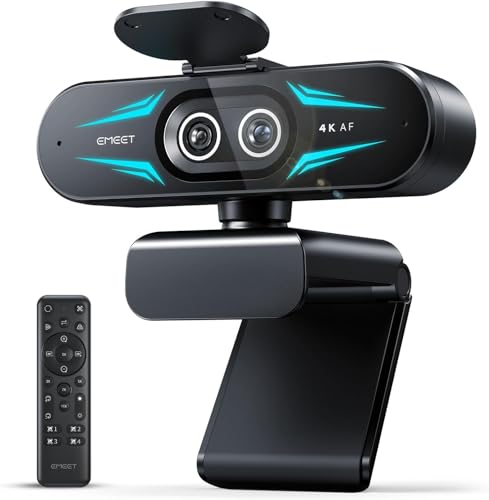
The EMEET C60E uses a dual-camera system to switch between wide-angle and telephoto views, offering up to an 11x hybrid zoom for streaming and online presentations. This makes it highly suitable for educators, remote workers, and content creators who need flexible framing. Caution: Zoom capabilities are not uniform across all 4K modes; check when selecting recording settings to ensure compatibility with your workflow.
Buying Guide
What type of buyer should choose optical zoom cameras?
- Travel and wildlife: Look for high optical zoom values and stable handling. Prefer models with built-in stabilization and long zoom ranges.
- People and events: A mid-to-high zoom range with good autofocus and quick startup helps capture candid moments.
- Streaming and online meetings: A webcam with good low-light performance, reliable autofocus, and optional dual-camera framing is ideal.
Key considerations to compare:
- Optical Zoom vs. Digital Zoom: Optical zoom preserves image quality; digital zoom degrades detail.
- Sensor size and megapixels: Larger sensors generally handle low light better; more MP helps large prints but isn’t the only quality factor.
- Image stabilization: Optical or sensor-based stabilization reduces blur at long zooms.
- Weight and handling: Heavier lenses require steadier hands or tripods; consider your carry load.
- Connectivity: Wi-Fi, NFC, and mobile apps help quick sharing and remote control.
Practical buying questions
- Is the zoom range the main priority or do I also want video features like 4K?
- Will I primarily shoot handheld or with a tripod at long distances?
- Do I prefer a single compact camera or a DSLR with interchangeable lenses?
- How important is built-in image stabilization for the desired zoom level?
- Do I need webcam capabilities for streaming, videoconferencing, or both?
FAQ
- What does optical zoom buy me? Optical zoom preserves image quality by adjusting the lens optics, unlike digital zoom which crops the image.
- Can a compact camera replace a DSLR for zoom shots? It depends on sensor size, lens quality, and autofocus. DSLRs with telephoto lenses often offer stronger image quality at long distances.
- Which is better for wildlife: a high-zoom camera or interchangeable lenses? A high-zoom fixed lens can be convenient; interchangeable lenses allow more versatility but require additional gear.
- Are webcams with zoom good enough for professional streaming? Yes, especially models with 4K options and reliable autofocus, though dedicated cameras may yield better image quality in varied lighting.
- What should I check about stabilization? Look for Optical Image Stabilization or Dual Detect Optical VR and ensure stabilization remains effective at maximum zoom.
- Do I need RAW support for post-processing? RAW formats provide more latitude in editing; check if the model supports RAW capture if you plan extensive editing.