Answering the call for reliable, low-latency audio, these wireless gaming headsets cover multiple platforms and play styles. This guide highlights five models suited for different buyers: competitive FPS players, console-first gamers, multi-system users, and budget-conscious shoppers seeking solid all-around performance.
| Product | Platform Focus | Best For |
|---|---|---|
| AOC Wireless Gaming Headset for PS5, PS4, Nintendo Switch, PC – Black | 2.4 GHz + Bluetooth 5.4 | Cross-platform wireless gamers needing ultra-low latency |
| Ozeino Wireless Gaming Headset for PS5, PC, Switch | 2.4 GHz with Type-C | Lag-free, lossless audio with quick game access |
| Razer BlackShark V3 X HyperSpeed Wireless PC Gaming Headset | 2.4 GHz HyperSpeed | Competitors seeking precise positional audio |
| SteelSeries Arctis Nova 5 Wireless | 2.4 GHz or Bluetooth | gamers needing long battery life and presets |
| Turtle Beach Stealth 600 Wireless Multiplatform | 2.4 GHz + Bluetooth | Multiplatform users prioritizing comfort and battery life |
Note: Each product section provides platform suitability, what makes it stand out, and any potential limitation based on the listed features.
AOC Wireless Headset: Cross-Platform Comfort

Best for players who want a single wireless headset that covers major consoles and PCs. It supports 2.4 GHz ultra-low latency for rapid action and Bluetooth 5.4 for mobile use. The 4-in-1 connectivity helps reduce accessories and adapters. The 7.1 virtual surround and 50 mm graphene drivers aid precise footsteps and effects.
Best for: Multi-platform gamers who value tight latency and flexible connectivity.
Caution: Bluetooth mode may not be compatible with PS5/PS4 for audio; use the 2.4 GHz dongle for those consoles.
Ozeino Wireless Headset: Lag-Free Play
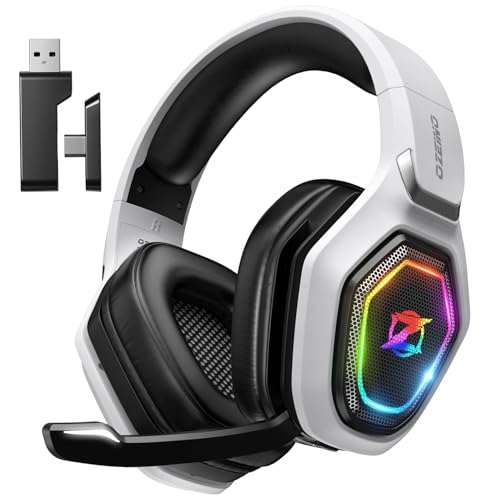
Best for players who want a reliable, low-latency wireless connection with easy in-game controls. It advertises less than 30 ms delay and a 50 mm driver for clear localization of steps, reloads, and voice cues. The design prioritizes comfort during long sessions with convenient, responsive controls.
Best for: FPS and battle royale gamers who need consistent audio timing and responsive mic controls.
Caution: As with many multi-mode headsets, some devices may require mode-specific setup to enable the lowest latency.
Razer BlackShark V3 X HyperSpeed Wireless

Best for competitive PC players seeking precise audio cues. The Gen-2 TriForce 50 mm drivers deliver strong positional audio, while the detachable HyperClear cardioid mic improves voice pickup. The Hyperspeed 2.4 GHz wireless connection aims for low latency, keeping audio in sync with actions.
Best for: Esports-style play where audio cues influence decision making.
Caution: Microphone is detachable, so remember to reattach if you rely on voice chat throughout your session.
SteelSeries Arctis Nova 5 Wireless

Best for gamers who want long battery life and a wide range of sound presets. It offers 100+ audio presets via the companion app, 60-hour battery life, and the option to switch between 2.4 GHz and Bluetooth with quick-switch. The ClearCast Gen2.X mic provides clear voice pickup.
Best for: Streamers or players who value customization and extended play sessions without frequent recharges.
Caution: Bluetooth mode may introduce slightly higher latency than dedicated 2.4 GHz gaming mode on some setups.
Turtle Beach Stealth 600 Wireless Multiplatform

Best for players seeking a budget-friendly, comfortable, all-around wireless headset. It combines low-latency 2.4 GHz wireless with Bluetooth options and emphasizes long-wear comfort with memory foam cushions and glasses-friendly design. The 50 mm Nanoclear drivers provide lively spatial audio for positional cues.
Best for: Casual to mid-core gamers who play across PS5, PC, and mobile devices and value comfort.
Caution: Some users may prefer higher-end audio fidelity for competitive play; latency may vary by device.
Buying Guide: Key Considerations When Choosing a Wireless Gaming Headset
- Platform compatibility: If you use multiple devices, look for headsets with 2.4 GHz dongle support, Bluetooth, and wired options. Note PS5/PS4 Bluetooth audio limitations on some models.
- Latency and connectivity: For fast-paced games, prioritize ultra-low latency (≤20 ms) and a reliable 2.4 GHz connection; Bluetooth is convenient but can add latency.
- Sound profile and drivers: Look for 50 mm or larger drivers and features like virtual surround sound to improve cue localization and immersion.
- Microphone quality and mic type: Detachable vs. fixed mics, noise cancellation, and mic positioning impact team communication. Detachable mics can be a drawback if you often use voice chat.
- Comfort and build: Consider ear cushion material, clamping force, headband padding, and overall weight for long sessions.
- Battery life and charging: Long battery life supports extended play; fast charging can be helpful during short breaks.
- Sound customization: Apps with EQ presets or game-specific profiles can optimize for different genres and titles.
- Price-to-performance balance: Compare feature sets against price to identify the best value without sacrificing essential needs.
Frequently Asked Questions
- What is latency in wireless gaming headsets, and why does it matter?
– Latency is the delay between action and audio. Lower latency reduces audio-visual mismatch and improves reaction time in competitive games. - Can I use a wireless headset with multiple consoles at once?
– Some models support multi-platform use via 2.4 GHz dongle, Bluetooth, and wired modes. Check each headset’s connectivity options to ensure cross-platform compatibility. - Is Bluetooth audio acceptable for gaming?
– Bluetooth generally adds more latency than a dedicated 2.4 GHz connection, making it less ideal for competitive play but convenient for casual listening or chat. - Do detachable microphones affect voice quality?
– Detachable mics can be convenient, but ensure the mic remains securely connected when in use, as poor contact can degrade voice pickup. - How important are presets and software apps?
– Presets and companion apps help tailor sound for different games and communication needs, improving clarity and immersion across titles. - Are these headsets comfortable for long gaming sessions?
– Comfort depends on cushion material, weight, and clamp force. Models with memory foam cushions and adjustable headbands typically perform well for long sessions.