Answer: For condensation-prone spaces, a cordless window vacuum with strong suction, a sizable water tank, and a long-lasting battery is ideal. The top picks below are best for different buyers—homeowners seeking quick daily cleanups, renters needing lightweight options, and those who clean larger panes or showers. Each choice targets a specific use case, from tall windows to tiled surfaces, while minimizing streaks and rework.
| Product | Best For | Key Benefit |
|---|---|---|
| Window Vacuum Squeegee Cordless Electric S2000Pa (BZVV) | General home use; quick upkeep | 2000Pa suction with detachable 150mL tank |
| Kiato WC09 Window Vacuum Squeegee | Tall windows; longer run time | 1.1KPa suction; 40 minutes on full charge |
| Ankuwa 2000Pa Window Vacuum Kit | Spray-and-vacuum bundles | Includes spray bottle and microfiber pad |
| Kiato WC04 Window Vac with Spray | Small to medium panes; quick touch-ups | 1.2KPa suction; 200ml detachable tank |
| Kiato WC03 Window Vacuum Kit | All-purpose cleaning; mirrors and showers | 1.2KPa suction; 200ml tank; spray bottle |
Window Vacuum Squeegee Cordless Electric S2000Pa (BZVV)

The BZVV model provides a strong 2000Pa suction to lift dirty water and cleaning solution in one pass. It is best for users who want a straightforward cordless experience for windows, shower doors, and mirrors, with less dripping and fewer touch-ups after cleaning.
Best for: daily window cleaning where speed matters and where a compact tank simplifies emptying. It suits small to medium panes and bathrooms efficiently.
Caution: The 150mL detachable tank means frequent emptying in larger cleaning sessions. Keep the tank nearby for smoother operation.
Kiato WC09 Window Vacuum Squeegee

This Kiato model emphasizes longer operation between charges, offering about 40 minutes of continuous use with a built-in 2200 mAh battery. It combines strong suction (1.1KPa) with a soft rubber scraper to prevent streaks and scratches on glass.
Best for: cleaning larger or multiple windows in a single session without frequent recharging, ideal for apartment balconies, skylights, or tall panes.
Caution: The vacuum’s lower suction compared to some rivals means slightly more effort on heavily soiled glass; pre-wet concentrated dirt helps.
Ankuwa Window Vacuum Squeegee Cordless Kit
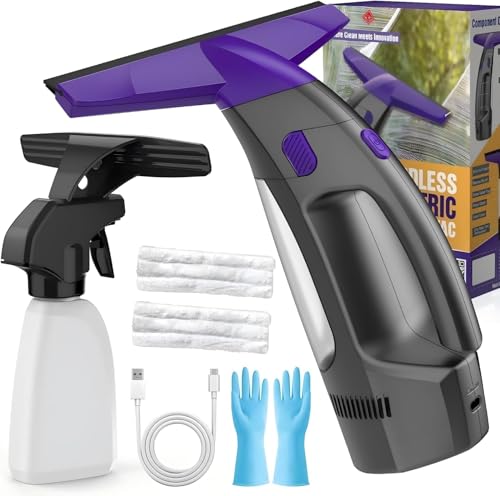
The Ankuwa kit provides a 2000Pa suction, a cordless design, and a microfiber pad with a spray bottle. It’s marketed as a complete cleaning solution for glass surfaces, showers, mirrors, tiles, and even car windows.
Best for: buyers who want a spray-and-vacuum workflow in one package, especially useful for rapid glass touch-ups and smaller bathroom windows.
Caution: The included 360ml spray bottle is adequate for quick cleans but may require refills during larger jobs.
Kiato WC04 Window Vac with Spray

The WC04 offers 1.2KPa suction and a 200ml detachable tank, pairing a spray bottle with the vacuum for a hands-free cleaning experience. It’s designed for quick touch-ups on windows, tiles, and mirrors while keeping the surface streak-free.
Best for: users who prefer a spray-assisted workflow on smaller panes where quick re-wetting helps loosen dirt before suction.
Caution: The smaller tank may require more frequent emptying on larger panes or busy bathrooms.
Kiato WC03 Window Vacuum Kit

The WC03 kit features 1.2KPa suction and a 200ml detachable tank, with a spray bottle included. It is designed for glass, mirrors, showers, and other smooth surfaces, providing a reliable streak-free finish.
Best for: versatile use around the home, especially where mirrors and shower doors are frequent cleaning targets. It’s a balanced option for many households.
Caution: For very large windows, the water tank size may necessitate more frequent stops to empty.
Buying Guide
What to consider when choosing a window vacuum for condensation
Power and suction: Look for at least 1.1KPa to 1.2KPa suction for efficient moisture removal. Higher suction helps with heavier condensation and soapy residues.
Battery life: Battery capacity around 2200 mAh typically yields 40–45 minutes of use. Longer run times are helpful for larger panes or tiled surfaces.
Tank capacity: A detachable water tank around 200–200mL reduces interruptions during cleaning, but consider whether you frequently clean large windows or just touch-ups.
Weight and ergonomics: Lightweight, one-handed operation reduces fatigue during extended cleaning sessions, especially on tall windows or shower enclosures.
Spray bottle and microfiber pads: Some bundles include spray bottles and cleaning pads, which can speed up the prep work and help achieve streak-free results on glass and tiles.
Versatility: If you clean mirrors, tiles, and car windows, choose models marketed as multi-surface cleaners with compatible pads or brushes.
Tank drain design: Some models offer side drain or easy-empty tanks, which helps minimize spills and simplifies disposal of dirty water.
Practical questions buyers often ask
Q: Is a corded option better than cordless for condensation control?
A: Cordless models provide mobility and ease of use, reducing cord dragging, which is advantageous for large windows and bathroom areas. Corded designs can offer continuous power but reduce maneuverability.
Q: How important is the included spray bottle?
A: A spray bottle supports a spray-clean-wipe-vacuum workflow, which can help loosen dirt and speed up drying, especially on tile and glass surfaces.
Q: Should I prioritize higher suction or longer battery life?
A: It depends on your typical tasks. If you clean many windows in one session, battery life matters more. For heavy condensation on difficult glass, higher suction can save time.
Q: Are detachable tanks worth it?
A: Yes, detachable tanks simplify emptying and reduce mess, which is helpful for longer cleaning sessions or large homes.
Quick reference buying tips
- Best for frequent touch-ups: models with strong suction and a compact form factor.
- Best for larger homes: models with longer run times and bigger water tanks.
- Best value package: bundles including spray bottle and microfiber pads.
FAQ
- What is condensation cleaning with a window vacuum like?
- Can these vacuums be used on car windows?
- Do they leave streaks?
- How often should I empty the tank?
- Are spray bottles essential?
- Do these devices require frequent maintenance?
It involves spraying a cleaning solution, wiping with a microfiber pad, and suctioning away moisture to prevent streaks.
Yes, most models work on glass surfaces including car windows, though performance can vary with vehicle textures.
Streaks can occur if the surface isn’t pre-moistened, the tank is full, or the pad is dirty. Follow product guidance for best results.
Empty when the tank reaches the maximum level or between large cleaning sessions to avoid drips.
A spray bottle helps loosen dirt and can improve efficiency during cleaning; it’s beneficial for larger areas.
Minimal maintenance includes emptying the tank, cleaning the pad, and charging the battery as directed by the manufacturer.