Answering the question, these wildlife trail cameras deliver reliable night vision, long battery life, and flexible mounting for animals, property, or farmland monitoring. Ideal buyers include wildlife enthusiasts, hunters, homeowners seeking property surveillance, and professionals needing discreet, durable field devices. The following picks emphasize solar power, high resolution images, and robust durability to suit various terrains and weather conditions. Below is a quick comparison table to help you decide at a glance.
| Product | Best For | Main Advantage |
|---|---|---|
| MAXDONE Solar Trail Camera | Long-term outdoor surveillance | Non-Cellular, solar-powered with adjustable solar panel |
| GardePro E5S Trail Camera | Rugged, low-maintenance use | IP66 rating and high 64MP/1296P imagery |
| WOSPORTS Mini Trail Camera | Compact, budget-conscious scouting | Small size with fast trigger and 850nm night vision |
| Moultrie Edge 3 Cellular Trail Camera | Real-time deer activity and alerts | AI buck detection and multi-network auto-connect |
| KJK Trail Camera 36MP 2.7K | Budget-friendly high-detail capture | 0.1s trigger, large 130° view, 2.7K video |
MAXDONE Solar Trail Camera, 4K 64MP WiFi Bluetooth Night Vision Game Camera
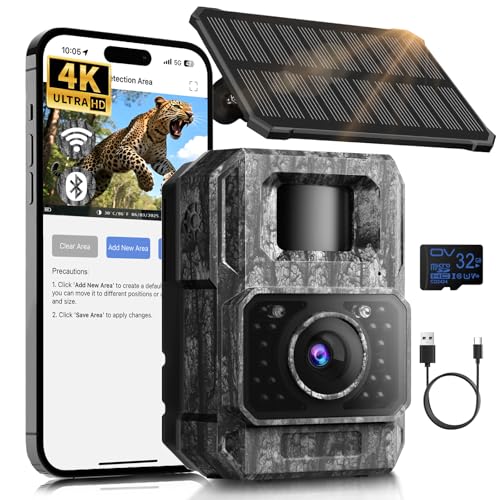
Best for long-term off-grid surveillance, this MAXDONE model emphasizes solar charging and a high-resolution sensor. It operates without requiring cellular service or real-time app alerts, making it ideal for remote properties or farms where constant connectivity is unavailable. The camera supports solar power and Type-C charging with an included 32GB SD card, enabling continuous operation in sunny and shaded environments. Its dual charging modes help reduce maintenance and battery swaps.
Who it’s best for: property owners, wildlife researchers, and rural surveillance needing energy efficiency and dependable performance. Why selected: the non-cellular but solar-powered design offers ongoing operation with minimal upkeep. Caution: Wi-Fi range is limited to 33–50 ft in open areas, and no real-time notifications are supported.
GardePro E5S Trail Camera, 64MP Photo & 1296P HD Video
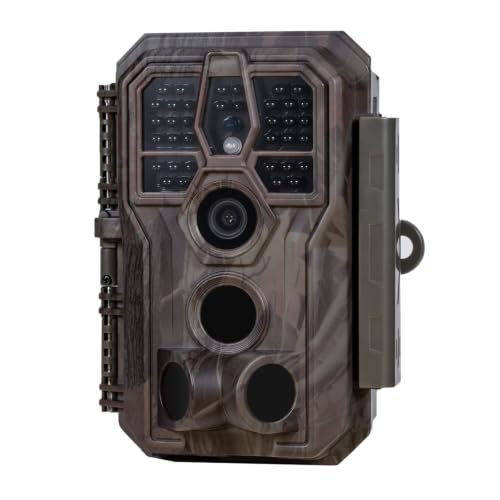
Best for rugged environments, the GardePro E5S emphasizes durability and high-detail imagery. With 64MP photos and 1296P video, it captures sharp daytime scenes and reliable nighttime footage. Non-cellular operation preserves power, reducing maintenance in remote locations. The IP66 rating and standard mounting provide dependable outdoor use with minimal interference.
Who it’s best for: outdoor enthusiasts and property managers needing a tough, low-maintenance camera. Why selected: excellent image quality paired with weather resistance. Caution: no cellular connectivity means you’ll need SD card access to review footage on-site or later.
WOSPORTS Mini Trail Camera, 30MP 1080P HD

Best for portable use and quick setup, this compact mini camera delivers 30MP photos and 1080P HD videos with reliable PIR motion sensing. Its 850nm infrared LEDs provide clear night vision while staying unobtrusive to wildlife. The device is lightweight and camouflaged, suitable for scouting or perimeter monitoring on smaller properties.
Who it’s best for: hikers, budget-conscious buyers, and temporary deployments. Why selected: small size and strong night-vision performance at a low price point. Caution: uses AA batteries (not included), so battery life depends on usage patterns and trigger frequency.
Moultrie Edge 3 Cellular Trail Camera – 2-Pack
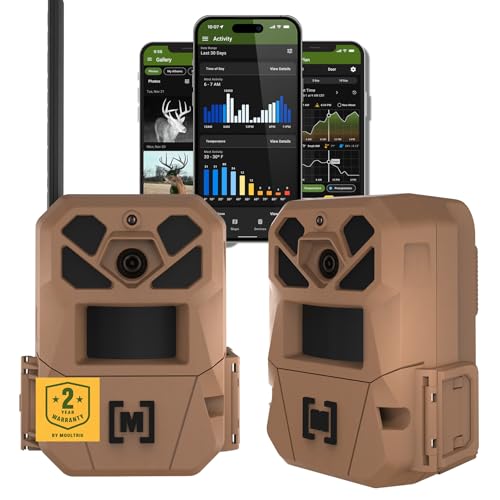
Best for real-time wildlife alerts and scouting across larger properties, the Moultrie Edge 3 Cellular Trail Camera includes AI buck detection and automatic network connection. It can deliver photos and videos to your device without manual checks, avoiding guesswork about animal activity. The three-network auto-connect feature supports reliable coverage in many zones.
Who it’s best for: deer-focused hunters and landowners who want timely insights. Why selected: built-in AI detection reduces false alerts. Caution: cellular plans and SIM management policies can affect connectivity and data usage, so verify network compatibility before deployment.
KJK Trail Camera 36MP 2.7K

Best for budget-friendly high-detail captures, the KJK Trail Camera offers 36MP photos and 2.7K videos with a wide 130° field of view. The 0.1s trigger and 850nm LEDs support clear daytime and nighttime footage with minimal disturbance to wildlife. It also features a compact display for quick field checks.
Who it’s best for: entry-level buyers and hobbyists seeking solid performance at a lower cost. Why selected: strong image resolution and fast trigger time for the price. Caution: SD card not included, so plan for compatible storage separately.
Buying Guide
What should I consider before buying a wildlife trail camera?
Purpose matters: choose a camera based on whether you need cellular connectivity, solar power, or purely non-cellular operation for remote sites. Consider field of view, trigger speed, and image resolution to balance clarity with storage needs.
Power and versatility: solar, battery, or cellular?
Solar options reduce maintenance but depend on sun exposure. Non-cellular models save on connectivity requirements, while cellular cameras provide timely alerts but may incur data costs and network considerations. If you have a shaded or forested area, a solar panel with a robust battery is beneficial.
Durability and weather resistance
IP ratings (e.g., IP66) indicate weather resistance. A rugged housing with reliable mounting threads ensures the camera stays secure in wind, rain, or snow. Consider a unit designed for your climate and installation height.
Image quality, night vision, and trigger speed
Resolution (MP) and video (HD or 4K) influence detail. A fast trigger (sub-0.2 seconds) captures more wildlife, especially fast-moving species. Night vision quality depends on infrared LEDs and noise handling; look for low-glow or infrared options for less wildlife disturbance.
Field setup and accessibility
Some cameras feature built-in screens for quick previews, others rely on SD cards for memory. Consider how you will access footage: on-site, via app, or through cellular transmission. Simpler setups help beginners avoid misconfigurations.
Storage and data management
SD card capacity and video length affect how often you must retrieve footage. If you use cellular models, confirm data limits and plan for remote data use to avoid high costs.
Budget and value
Higher-resolution models and solar-assisted designs cost more but can save time and effort over time. For seasonal monitoring or occasional scouting, compact or entry-level cameras often provide the best value.
FAQ
- Do I need cellular service for these cameras? Not always. Many models operate non-cellularly, storing footage on an SD card. Cellular models provide real-time alerts but require a data plan.
- What is trigger speed and why does it matter? Trigger speed is the time between motion detection and photo capture. Faster speeds reduce missed wildlife, especially for quick animals.
- How long can a camera run on solar power? Solar-powered cameras extend operation by recharging batteries, but performance depends on sun exposure and battery capacity. Some units also offer Type-C charging for supplementary power.
- Is IP66 enough for harsh weather? IP66 offers strong protection against dust and heavy rain, suitable for most outdoor environments. For extreme sub-freezing conditions, verify additional temperature specs.
- Do these cameras require an external power source? Many operate on AA batteries or built-in rechargeable packs. Solar options can reduce the need for frequent replacements, but backups may be needed in low-sun areas.
- What is best for deer monitoring? Cameras with AI buck detection and high trigger accuracy help identify deer activity quickly and reduce false alerts.