When shopping for a water reverse osmosis system, aim for models that remove common contaminants while providing convenient setup and ongoing maintenance. This guide highlights five top options that balance filtration power, ease of use, and value for households, offices, or small apartments. They’re suitable for buyers seeking portable countertop units or durable under-sink solutions, plus convenience features like auto-fill, remineralization, or real-time TDS monitoring.
| Product | Best For | Notes |
|---|---|---|
| DREO 7-in-1 Countertop RO | Frugal remodelers, countertop space savers | Self-cleaning, auto-fill pitcher; 3:1 drain ratio |
| iSpring RCC7AK-BN | Semi-permanent under-sink upgrade | Alkaline remineralization, top-mounted faucet |
| Bluevua RO100ROPOT Countertop | Glass carafe, portable setups | 5-stage, 2:1 pure-to-drain, glass carafe |
| Waterdrop G3P600 | Tankless, high flow | 600 GPD, smart display faucet, multiple certifications |
| Aigerri Countertop RO | Compact, budget-friendly RO with tank | 5-stage with UV option, 5:1 ratio |
DREO 7-in-1 Countertop RO Water Filter
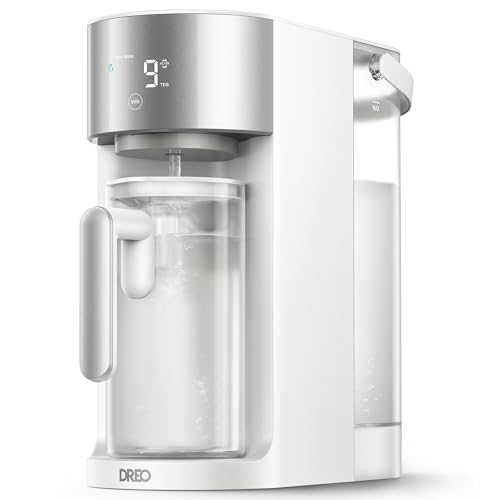
The DREO 7-in-1 countertop system provides robust filtration to reduce common contaminants, including PFOA, PFOS, chlorine, and fluoride. It supports real-time TDS monitoring and filter-life reminders, helping users maintain water purity with minimal effort. Best for budget-conscious buyers who want installation-free operation and a compact countertop footprint. A caution: real-time TDS readings depend on the sensor’s accuracy and may require periodic calibration.
iSpring RCC7AK-BN NSF Certified 6-Stage RO

This under-sink model adds a mineral boost stage, delivering balanced pH and essential minerals, while the top-mounted faucet design enables easy, above-the-sink installation. It’s ideal for buyers seeking enhanced taste and a straightforward installation process. Limitation: under-sink installation may require space under the cabinet and basic plumbing access.
DREO Countertop RO With Dual Autofill Pitches

This DREO model emphasizes a 7-in-1 filtration approach with a dual autofill pitcher option. It maintains a 3:1 drain ratio and real-time monitoring similar to the single-pitch version. Best for households wanting extra pitcher capacity and automated refills. Caution: dual pitchers add to the countertop footprint and may require more space.
Bluevua RO100ROPOT Countertop RO System

This 5-stage countertop RO with remineralization provides solid filtration with a 2:1 pure-to-drain ratio and a glass carafe option. It’s best for users who want a compact, portable unit with a focus on minimizing plastic contact and improving taste with minerals. Limitation: countertop units may require frequent cartridge changes depending on your water quality.
Waterdrop G3P600 Tankless RO System

The Waterdrop G3P600 is a high-capacity, tankless RO system with a smart faucet that displays TDS levels and filter life. It’s suited for households seeking continuous, space-efficient filtration with real-time monitoring. A potential drawback is the more complex installation and the need to manage a higher flow rate with a tankless design.
Aigerri Countertop RO with UV

Includes a 5-stage filtration with optional UV, offering a robust countertop purification solution with a favorable 5:1 pure-to-drain ratio. Best for users prioritizing UV disinfection and portability. Caution: UV adds to maintenance considerations and bulb replacement intervals.
Buying Guide: Key Considerations
- Filtration stages: Most RO systems use 5–7 stages. More stages typically improve contaminant removal and mineral balancing, but may require more maintenance.
- Portability vs. under-sink: Countertop models are installation-free and ideal for renters. Under-sink systems often provide higher capacity and a cleaner look but require plumbing.
- Drain ratio and water waste: Look for higher pure-to-drain ratios (e.g., 2:1 or better). Some models advertise SEO-friendly ratios such as 3:1 or 5:1, which can save water.
- Remineralization and pH: If you prefer balanced minerals, choose systems with AK or remineralization stages to improve taste and health benefits.
- Real-time monitoring: Real-time TDS sensors and filter-life indicators help you replace cartridges promptly but verify sensor accuracy and maintenance needs.
- Ease of installation: Top-mounted faucets, quick-connect fittings, and removable housings simplify setup and serviceability.
- Cartridges and replacements: Check availability and cost of replacement filters and whether a model uses widely available cartridges.
FAQ
- What is reverse osmosis water used for?
RO water is purified to reduce contaminants like chlorine, fluoride, heavy metals, and various dissolved solids, improving taste and potential health benefits.
- Do countertop RO systems require plumbing?
No. Countertop RO units are installation-free and plug into a standard outlet or are self-contained, making them convenient for renters or small spaces.
- Are remineralization filters necessary?
Remineralization helps restore minerals lost during RO filtration. It improves taste and can balance pH, but is optional depending on your water preferences.
- What should I consider when choosing a RO system?
Consider installation type, water waste ratio, capacity, filtration stages, and maintenance costs. Also assess space, water pressure, and desired mineral balance.
- How often should filters be replaced?
Replacement frequency depends on usage and water quality. Real-time readings help, but typical RO systems require filter changes every 6–12 months, with occasional membrane replacement per model.
- Is RO water completely contaminant-free?
RO systems remove a wide range of contaminants, but some dissolved substances or specific minerals may remain in small amounts. Mineral balance through remineralization can improve taste.