Answer: For sim racing, high-resolution, wide-field-of-view VR headsets paired with reliable tracking deliver the most immersive experience. The top picks below include high-endPC VR options for precise cockpit visuals and a standalone headset for untethered play. Best for: serious sim racers seeking PC VR fidelity; others may prefer wireless convenience or rig-friendly accessories.
| Product | Key Benefit | Best For |
|---|---|---|
| Pimax Crystal Super VR Headset | Edge-to-edge sharpness with 50 PPD and 140° FOV | PC-based sim racing with maximum immersion |
| Pimax Crystal Light VR Headset | High-detail 2880×2880 per eye with QLED HDR | PC-based sims with strong visual clarity |
| Meta Quest 3 512GB | Untethered play with broad game library | Casual to mid-core sim play without cables |
| Headphone/VR Original ProSimRacing Mount | Secure, adjustable mounting for headsets and headphones | Rig setups needing organized, stable mounts |
| Vornetil Universal VR Headset | Myopia-friendly design with wide field of view | Budget-friendly, versatile VR for movies and games |
Pimax Crystal Super VR Headset

Brand: Pimax
Features: 50 PPD edge-to-edge clarity from aspherical lenses eliminates screen-door effects. 3840×3840 per eye with local dimming using QLED and Mini-LED technology. Expansive 140° FOV for heightened peripheral awareness in racing simulators.
Best for: PC-based sim racers who demand maximum image fidelity and a wide viewing angle for realistic cockpit perspective. This model targets users who want ultra-sharp visuals and a broad field of view to improve situational awareness during high-speed laps.
Caution: Requires a capable PC and DisplayPort connection; setup can be more intricate than standalone headsets.
Pimax Crystal Light VR Headset for PC
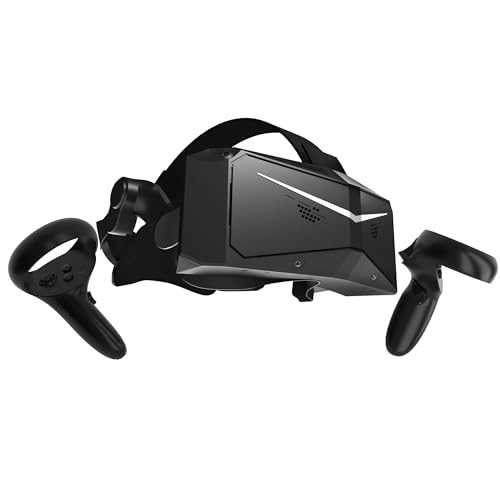
Brand: Pimax
Features: 2880×2880 per eye resolution with 16.6 million pixels; QLED display with local dimming for strong contrast; glass aspheric lenses for edge-to-edge clarity and reduced distortion.
Best for: Racers who want solid PC-based performance with high pixel density but a lighter headset profile than the top-tier Crystal Super variant.
Limitation: While highly capable, it may not reach the screen-door-free sharpness of the Ultra variant in all scenes.
Meta Quest 3 512GB

Brand: Meta
Features: Untethered VR with a vast library and 4K+-like clarity; no wires for a freer racing setup. Includes access to 100+ games and a 3-month Horizon+ trial in some bundles.
Best for: Casual to mid-core sim racers who value portability, ease of use, and a growing software library. Choose this if you want quick setup and wireless freedom during practice sessions.
Caution: Battery life affects long sessions; performance is strong but may not match the absolute pixel density of top PC VR systems.
ProSimRacing Headset Mount

Brand: Generic
Features: Horizontal mounting compatible with aluminum profiles; includes M6 hardware for secure attachment; designed to organize and stabilize headsets and VR gear on sim rigs.
Best for: Sim racers who want a clean, stable mount to reduce clutter and improve headset positioning during races. Use in a 40mm hole spacing environment for compatibility.
Limitation: Compatibility depends on your rig’s profile system; verify dimensions before purchase.
Vornetil Universal VR Headset

Brand: Vornetil
Features: Designed for myopia users with adjustable interpupillary distance; wide field of view; anti-blue light coating to reduce eye strain during long sessions.
Best for: Budget-conscious racers who want a versatile, comfortable headset that supports longer practice sessions and can accommodate various eye needs.
Limitation: General consumer-grade optics may not deliver the same level of cockpit immersion as premium PC VR headsets.
TECKNET VR Headset for Phone

Brand: TECKNET
Features: 90°-110° FOV, anti-blue light lenses, adjustable gears, compatible with a wide range of smartphones for 3D VR experiences.
Best for: Entry-level or travel setups where a quick, affordable option is needed to test VR concepts or casual sim play on a phone. Choose this if you want portable testing before committing to PC VR or standalone headsets.
Caution: Smartphone-based VR typically lacks the fidelity required for serious racing sims compared with PC VR or standalone headsets.
3D VR Headset For Mobile (Mryzzsf)

Brand: Mryzzsf
Features: Immersive 3D movie viewing with adjustable focus and wide field of vision; compatible with most 5.0-7.0 inch smartphones; basic gaming and movie playback.
Best for: Quick, low-cost VR experiences that pair with the phone you already own. This is a supplementary option rather than a primary sim racing setup.
Caution: Not designed for high-end sim racing fidelity or precise motion control.
Xiaokeis VR Headset

Brand: Xiaokeis
Features: Myopia-friendly with wide field of view; adjustable interpupillary distance; anti-blue light coating to reduce dizziness during long sessions.
Best for: Budget-conscious users who need eye-friendly optics and a broad viewing experience for casual VR gaming or videos.
Caution: Build quality and optics may vary by unit; verify fit for your face and IPD range.
Buying Guide
What to consider when choosing a VR headset for sim racing:
- Platform compatibility: PC-tethered headsets like Pimax models excel in raw fidelity; standalone headsets such as Quest 3 offer freedom from cables but may deliver lower pixel density.
- Resolution and clarity: Higher per-eye resolution reduces the cockpit-fog effect and improves instrument readability in racing games.
- Field of view: A wider FOV enhances peripheral awareness, microphone overlays, and the sense of speed in sim environments.
- Tracking and comfort: Inside-out tracking limits external sensors; weight and balance influence long practice sessions.
- Rig compatibility: Some mounts and rigs require compatible profile rails or mounting holes; verify spacing and hardware before purchase.
- Blue light and eye fatigue: Lenses with blue-light reduction and comfortable padding help during extended sessions.
- Software ecosystem: Access to a broad library of sim titles and mods can affect long-term value.
FAQ
- What is the best VR headset for professional sim racing?
- Can I use a standalone headset for sim racing?
- Is a wider field of view always better for racing?
- Do I need a VR mount for my sim rig?
- Should I choose IPD-adjustable lenses?
- Are there risks with VR in racing sims?
The Pimax Crystal options deliver the highest pixel density and a very wide field of view, which can enhance cockpit immersion for serious sim racers with a capable PC.
Yes, devices like the Meta Quest 3 provide wireless convenience and a growing library, but expect less peak pixel density compared to high-end PC VR headsets.
Generally yes, as it improves peripheral awareness and cockpit context, but it can come with more weight and potential distortion if not properly calibrated.
Mounts help with organization and stability, especially in motion-heavy racing setups, reducing the risk of accidental headset contact.
IPD-adjustable lenses improve image clarity for a wider range of eye distances, reducing blur and eye strain during long sessions.
Prolonged use can cause eye strain or motion discomfort for some users. Start with shorter sessions and adjust comfort settings as needed.