Answering the common lecture recording needs: these voice recorders are selected for students, journalists, teachers, and professionals who need clear, reliable capture with playback. Each option suits long sessions, easy transfer to a computer, and simple one‑button recording. The top picks emphasize noise reduction, large memory, and useful playback features to help you review lectures, meetings, or interviews accurately.
Summary table of selected products:
| Product | Memory | Key Benefit | Best For |
|---|---|---|---|
| Tonfarb 136GB Digital Voice Recorder | 136GB (8GB built‑in + 128GB microSD) | Long recording hours with PCM 1536 kbps | Extended lectures, back‑to‑back sessions |
| Tonfarb 64GB Digital Voice Recorder | 64GB (TF card included) | Compact, long battery life | Students on the go, field interviews |
| EVISTR 64GB Digital Voice Recorder | 64GB | 360° pickup and high gain | Classrooms and meetings |
| Sony ICD-PX370 Mono Digital Voice Recorder | Internal USB for transfers | Great battery life, quick file transfer | Reliable everyday recording |
| HoTiyan 8GB Digital Voice Recorder | 8GB | Voice activated, playback ready | Shorter lectures, quick notes |
Tonfarb 136GB Digital Voice Recorder with Playback

This Tonfarb model offers PCM recording at up to 1536 kbps with automatic noise reduction and voice activation. It includes 8GB built‑in storage plus a 128GB TF card, enabling up to 9000 hours of recordings in MP3 or WAV formats. A built‑in 1100mAh battery supports up to 68 hours of continuous use. One‑click recording makes capturing lectures simple, and USB‑C transfer speeds file management. Best for: students or journalists who need long sessions without frequent recharging.
Limitation: Large capacity means more settings to manage; beginners may start with default configurations first.
128GB Digital Voice Recorder for Lectures – EVIDA 9296 Hours

The EVIDA model provides up to 9296 hours of recording with a 128GB memory option and playback function. It supports a range of formats up to WAV 1536 kbps and a six‑level voice decibel setting to tailor recording sensitivity. Its professional chip aims to deliver clear PCM audio and consistent performance for lectures and meetings. Best for: users who want precise playback control and robust memory for long courses.
Limitation: Customer service includes phone support, which can be helpful but may vary by region.
Tonfarb 64GB Digital Voice Recorder with Playback

This compact Tonfarb device includes 64GB of memory and a 600mAh battery delivering up to 48 hours of continuous use at MP3 32kbps. It features one‑click recording, ease of transfer via USB, and PCM recording at up to 1536 kbps with automatic noise reduction. Best for: students or professionals needing a portable option with strong playback features. Choose this if you value ergonomic controls and longer on‑the‑go sessions.
Limitation: Battery life is solid but shorter than larger models when recording at highest quality.
Digital Voice Recorder 16GB – Sunlan
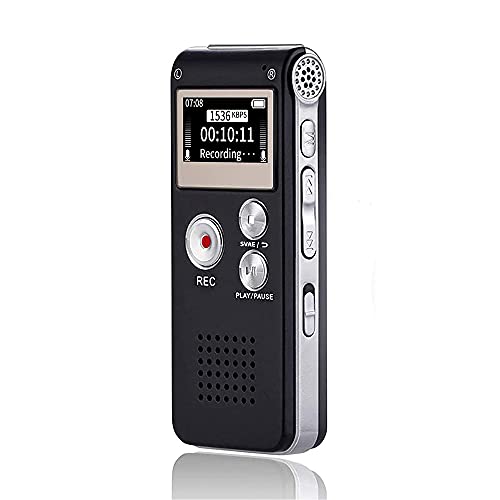
The Sunlan model offers simple one‑button recording with playback and A‑B repeat. It uses noise reduction for clearer captures in lectures, interviews, and meetings. Its 16GB capacity is suitable for shorter courses or daily note sessions. Best for: students who want an easy, straightforward device with quick playback and simple operation. Caution: Smaller storage means you may need to manage files more frequently during long classes.
64GB EVISTR Digital Voice Recorder with Playback

The EVISTR L357 recorder provides 1536 kbps PCM quality, 360° pickup, and seven gain settings. It stores up to 4660 hours or more depending on the bitrate and format, with a Type‑C USB for fast transfers. Best for: students, teachers, and professionals who need flexible gain control and long playback. Limitations: metal build is durable but slightly bulkier than ultra‑compact models.
Sony ICD-PX370 Mono Digital Voice Recorder

The Sony ICD-PX370 offers up to 57 hours of battery life at 128 kbps MP3 and a built‑in USB for quick file transfers. It’s a reliable choice for everyday lecture capture with straightforward operation and strong battery performance. Best for: users who want a simple, dependable device for frequent use. Caution: Mono recording may be less ideal for multi‑speaker lectures unless stereo capture is not required.
HoTiyan 8GB Digital Voice Recorder with Playback

This compact option offers 8GB storage with voice activation and clear playback. It supports up to 20 hours of continuous recording and 8 hours of playback with earphones. Best for: students needing a lightweight, budget‑friendly device for single courses or note‑taking sessions. Limitation: Limited memory may require frequent file management after long lectures.
Buying Guide: How To Choose The Right Voice Recorder For Lectures
- Memory Capacity: For long courses or conferences, prioritize 64GB or more, or devices with microSD expansion.
- Recording Quality: Look for PCM or WAV options (1536 kbps or higher) and effective noise reduction for clear playback.
- Battery Life: Choose devices with 20+ hours of continuous recording if you anticipate back‑to‑back sessions.
- Playback Features: A‑B repeat, variable playback speed, and easy transfer to PC help in review and note‑taking.
- Ease Of Use: One‑button recording and clearly labeled controls reduce missed moments during fast lectures.
- Portability: Lighter, compact models are ideal for students moving between classrooms or field work.
- Compatibility: Check file formats (MP3, WAV) and USB type (USB‑C preferred for modern devices).
- Security: Password protection and built‑in encryption can be useful for sensitive interviews or notes.
FAQ
- What memory size is best for lectures?
64GB is a solid balance for many courses, offering ample room for hours of recordings and notes.
- Is PCM or MP3 better for lectures?
PCM/WAV provides higher fidelity; MP3 saves space and is widely compatible. Choose based on storage and playback needs.
- Do I need noise reduction?
Yes, especially in noisy classrooms or crowded halls. Noise reduction improves intelligibility in playback.
- Can I transfer files easily to a computer?
Most models use USB (often USB‑C) for quick transfers; ensure your computer supports the port.
- What about voice activation?
Voice activation helps conserve memory and battery by recording only when sound is detected, useful for lectures with quiet passages.
- Are these devices suitable for interviews?
Yes, many models advertise playback, password protection, and high sensitivity for interview settings.