Find the right tree identification book for your climate and experience level. This guide highlights five reliable field references, each best suited for beginners, intermediate naturalists, or serious nature study. Use this comparison to choose the best fit for your walks, yard work, or education projects. The top picks cover broad North American trees, leaf-based keys, and quick-reference pockets for field use. The brief table below previews key strengths to help you decide quickly.
| Book | Best For | Format |
|---|---|---|
| The Sibley Guide to Trees | Comprehensive, detailed field reference for serious learners | In-depth, full-size guide |
| Peterson First Guide To Trees | Beginner-friendly, visual identification | Compact, color illustrations |
| National Geographic Pocket Guide to Trees and Shrubs of North America | Portable quick-reference | Pocket-sized, map-backed |
| Tree Finder: A Manual for Identification of Trees by their Leaves | Leaf-based keys for the Eastern U.S. | Leaf-focused, easy to carry |
The Sibley Guide to Trees

The Sibley Guide to Trees is a comprehensive reference featuring detailed illustrations and information for a wide range of North American trees. Best for serious naturalists, students, and professionals who want in-depth species data and visual accuracy. The book supports careful comparison of leaf shape, bark texture, and growth habit. A potential limitation is its larger format, which may be less convenient for field pockets or casual strolls.
Peterson First Guide To Trees
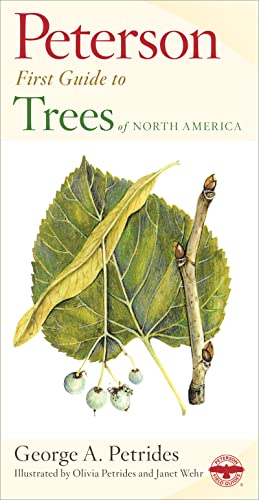
Peterson First Guide To Trees is an accessible, beginner-friendly field guide with 243 trees across six leaf-type categories and 200 vivid color illustrations. It’s ideal for new hikers, students, or homeowners who want quick visual cues. Best for quick recognition during walks; not as exhaustive as deeper guides, so it may miss rarer species.
National Geographic Pocket Guide to Trees and Shrubs of North America

This National Geographic pocket guide is tailored for portable field use, focusing on both trees and shrubs with companion maps. It’s best for travelers, beginner naturalists, and people who need a compact reference during outdoor activities. Its concise entries and map features support quick location identification, though it offers less depth than full-sized guides.
Tree Finder: A Manual for Identification of Trees by their Leaves

Tree Finder emphasizes leaf-based identification for the Eastern United States, making it ideal for students, amateur naturalists, and backyard naturalists who often rely on leaf characteristics. It’s a compact, classic choice that supports quick field identifications. A limitation is that knowledge of leaf variation and regional differences improves results, so beginners may benefit from pairing it with a broader guide.
Buying Guide
- Purpose: Choose based on whether you want comprehensive coverage, quick field reference, or leaf-focused keys. The Sibley Guide is best for depth; Peterson and National Geographic focus on portability and quick looks; Tree Finder specializes in leaves for the Eastern U.S.
- Audience: Beginners benefit from Peterson or National Geographic pocket guides. Intermediate to advanced readers may prefer Sibley or Tree Finder for deeper understanding of leaves and regional variation.
- Format and durability: Field-friendly formats favor pocket guides; sturdy hardcover editions suit desk study and classroom use.
- Geography: If you spend time primarily in the Eastern U.S., Tree Finder and Peterson provide strong Eastern leaf and bark cues; for a broad North American scope, Sibley and National Geographic are more comprehensive.
- Illustrations and keys: If you rely on visual cues, prioritize guides with high-quality illustrations. If you prefer a logical, stepwise key, Tree Finder offers a classic leaf-based approach.
Frequently Asked Questions
- Which tree identification book is best for beginners? The Peterson First Guide To Trees is highly suitable for beginners due to its visual emphasis and approachable layout.
- What is the advantage of a pocket guide? Pocket guides are portable and quick to reference in the field, ideal for on-the-go identification during walks.
- Are leaf-based keys effective for all regions? Leaf-based keys work well in regions with distinct leaf shapes, but many trees require considering bark, fruit, and habitat as well.
- Should I use more than one guide? Yes. Using two guides—one comprehensive and one quick-reference—improves accuracy and covers regional variations.
- Do these books include maps? Some pocket guides include maps; check the product details to confirm.
- Are these books suitable for children or classrooms? Beginner-friendly guides like Peterson and National Geographic work well in classrooms and for young naturalists when paired with guided activities.