Answering buyers seeking immersive home cinema audio, this guide compares five top surround sound speaker systems. Each option is suited for a distinct setup: compact TV-only rooms, ambitious home theaters, or flexible living spaces. Use the quick table below to compare core strengths before diving into detailed sections.
| Product | System Type | Best For |
|---|---|---|
| ULTIMEA 7.1ch Sound Bar w/Subwoofer | 7.1-channel virtual surround | Large living rooms seeking cinema-like immersion |
| ULTIMEA 5.1CH Surround Sound Bar System with Dolby Atmos, Poseidon M60 | 5.1-channel with Atmos | Smart TVs wanting Dolby Atmos without rear speakers |
| Saiyin 5.0 Home Theater System | 5.0 channel bookshelf satellites + center | Flexible placement and strong dialogue clarity |
| Saiyin Sound Bar with Subwoofer | Bar with wired subwoofer | Compact setups needing deeper bass and simple install |
| Bose TV Speaker | All-in-one compact soundbar | Small rooms seeking clearer dialogue with minimal setup |
ULTIMEA 7.1ch Sound Bar w/Subwoofer

The 7.1-channel virtual surround setup is designed for rooms that can accommodate multiple speakers. It uses dedicated front channels for dialogue and four surround drivers to create a wide soundstage. SurroundX technology plus AI tuning aims to position sounds with realism. Best for: larger living spaces where a true multi-speaker layout is feasible and viewers want cinematic impact. Limitation: setup and cable management can be more involved due to multiple components.
ULTIMEA 5.1CH Surround Sound Bar System with Dolby Atmos

This 5.1-channel system includes built-in speakers plus a wired subwoofer to deliver immersive Dolby Atmos-like effects with minimal rear wiring. Best for: smart TVs that want dynamic surround and low-latency audio for movies and gaming. Caution: some users may miss rear speaker separation in very large rooms unless the space is optimally arranged.
Saiyin 5.0 Home Theater System

This 5.0 setup includes four full-range speakers plus a central channel, emphasizing enhanced dialogue clarity. Best for: rooms where flexible placement is needed and users want strong center-channel performance for movies and TV dialogue. Limitation: lacks rear surround speakers, which can reduce true surround realism in larger spaces.
Saiyin Sound Bar with Subwoofer
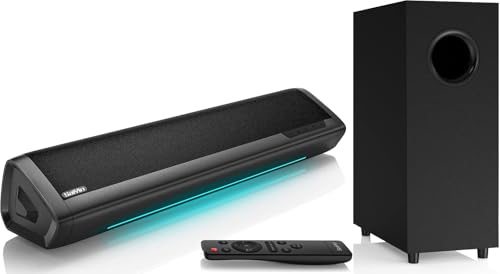
Two-piece system with a dedicated subwoofer delivers deep bass and immersive sound balance. Best for: users who want a simple, compact setup with strong bass response for movies and gaming. Caution: some listeners may prefer additional rear channels for a more enveloping experience in large rooms.
Bose TV Speaker

Designed for clarity, the Bose TV Speaker focuses on speech intelligibility in a compact form. Best for: small rooms or apartments where a quick fix to improve dialogue is prioritized. Limitation: not a true multi-speaker surround system; vertical expansion is limited by the single-bar form factor.
Buying Guide
Key considerations when choosing surround sound speakers:
- Room size and layout: Large rooms benefit from multi-speaker setups (7.1 or 5.1 with rear channels), while small rooms may do well with a single-bar plus subwoofer.
- Source compatibility: Look for Dolby Atmos or SurroundX support if you want cinema-like effects, and ensure your TV or receiver can handle the format.
- Dialogue clarity vs. immersive effects: If dialogue is a priority, prioritize systems with dedicated center channels or speech enhancement features.
- Wiring and placement: Systems with rear speakers require more cabling and planning. Wireless options can reduce clutter but may rely on stable connections.
- Bass and subwoofer: A subwoofer enhances explosions and music; consider room size and whether the sub’s depth fits your listening preferences.
- Setup time and complexity: All-in-one soundbars are quicker to set up, whereas modular systems offer more customization but take longer to install.
Frequently Asked Questions
- What is the difference between 5.1 and 7.1 surround sound?
– 5.1 uses five full-range drivers plus one subwoofer for surround effects; 7.1 adds two additional surround channels for more precise placement and wider soundstage. - Do I need rear speakers for good surround sound?
– Rear speakers improve immersion in large rooms, but some systems with rear-only or virtual surround can still deliver a strong sense of space in smaller rooms. - Can I use a sound bar with my TV without a receiver?
– Yes. Many sound bars connect directly to TVs via HDMI-ARC or optical inputs and provide easy setup. - Is Atmos necessary for cinematic sound?
– Atmos adds height cues for more depth, but many 5.1 systems still deliver compelling surround without Atmos support. - How important is room treatment for sound quality?
– Room acoustics affect clarity and bass; soft furnishings and rug placement can reduce reflections and improve imaging.