Answering the question “which sunscreen best protects against UVA rays?” this guide highlights five reliable options that emphasize UVA/UVB protection, skin-friendly formulas, and suitability for different skin types. Best for daily wear, active days, or sensitive skin, these picks balance high UVA protection with comfortable wear. The following summary table helps compare core details at a glance.
| Product | SPF / Type | Best For | Notes |
|---|---|---|---|
| Neutrogena Ultra Sheer Dry Touch SPF 70 Lotion | SPF 70, Lotion | All-day wearers who want a matte finish | Oil-free, non-greasy |
| Neutrogena Ultra Sheer Dry Touch SPF 100+ Lotion | SPF 100+, Lotion | High UVA/UVB protection on sunny days | Antioxidants, lightweight feel |
| Blue Lizard Sensitive Mineral SPF 50 | SPF 50, Mineral | Sensitive or reactive skin | Fragrance-free, paraben-free |
| Banana Boat Sport SPF 50 Spray | SPF 50, Spray | Active outdoor use | Water-resistant; non-greasy |
| La Roche-Posay Anthelios Melt-In Milk SPF 100 | SPF 100, Lotion | Very high protection for sun-prone skin | Highest SPF in line; non-greasy |
Note: The selections emphasize UVA protection, broad spectrum coverage, and skin compatibility. Each entry lists who it’s best for and a practical caveat to consider.
Neutrogena Ultra Sheer Dry Touch SPF 70 Lotion

This lightweight, fast-absorbing sunscreen lotion provides broad spectrum SPF 70. It’s non-comedogenic and oil-free, leaving a matte finish suitable for makeup priming and radiance enhancement. Helioplex technology offers stable UVA/UVB protection with antioxidant vitamin E to nourish skin. Best for: daily wearers who want a non-greasy feel and a reliable UVA/UVB balance. Caution: may feel less moisturizing for very dry skin without a moisturizer underneath.
Neutrogena Ultra Sheer Dry Touch SPF 100+ Lotion
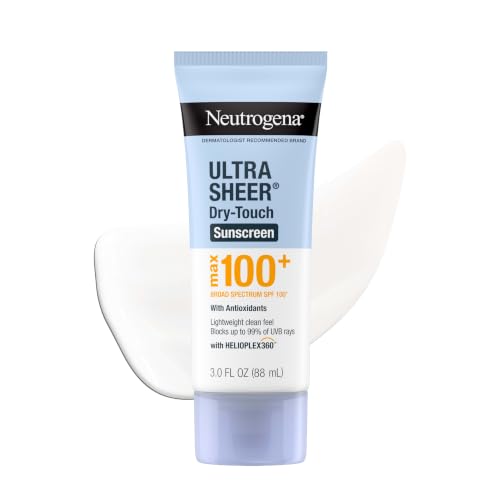
This Max SPF 100+ option emphasizes strong UVA/UVB defense with a lightweight, non-greasy formula. It includes antioxidants to defend against free radicals and blue light exposure. Best for: those seeking the highest UVA/UVB protection in a single product for sunny, prolonged outdoor activities. Caution: higher SPF may require reapplication with time and water exposure as directed.
Blue Lizard Sensitive Mineral SPF 50

This mineral sunscreen uses zinc oxide to deliver broad spectrum protection, with a focus on sensitive skin. It’s fragrance-free and paraben-free, designed to minimize irritation. Best for: users with sensitive or reactive skin seeking a mineral-based option. Caution: mineral formulas can leave a faint white cast on some skin tones, though this product is formulated to be discrete.
Banana Boat Sport SPF 50 Spray

This spray sunscreen offers broad spectrum SPF 50+ with a light, breathable feel that resists heaviness on the skin. It’s suitable for outdoor activities and keeps protection on during sweat and water exposure. Best for: athletes and families who want quick, even coverage. Caution: may require careful application to avoid missed spots on hard-to-reach areas.
La Roche-Posay Anthelios Melt-In Milk SPF 100

This melt-in milk delivers a high SPF 100 with a lightweight, non-greasy feel. It’s designed for face and body and aims to be invisible on many skin tones. Best for: users who want very high protection without a heavy residue. Caution: very high SPF can feel rich if you apply too much; a light, even layer is recommended to avoid residue.
Buying Guide: Key Considerations For UVA Protection
What SPF level is best for UVA protection?
SPF primarily reflects UVB protection. For UVA protection, look for broad spectrum protection and ingredients known to block UVA, such as avobenzone, zinc oxide, or other mineral filters. High SPF with broad spectrum coverage generally offers strong UVA protection as well.
Mineral vs. chemical filters: which is better?
Mineral sunscreens (zinc oxide or titanium dioxide) are often best for sensitive skin and provide immediate UVA/UVB protection. Chemical filters can offer a lighter feel but may require patch testing for sensitivities. Your skin type and tolerance should guide the choice.
Texture and finish matters
For daily wear, a non-greasy, matte finish works well under makeup. If you need strong protection for outdoor activities, a water-resistant formula helps maintain coverage during sweating or swimming.
How often should you reapply?
Reapply at least every two hours when outdoors, and after sweating, swimming, or towel drying. The exact guidance can vary by product, so follow the label instructions for best results.
Skin type considerations
Fiber sensitive or reactive skin benefits from fragrance-free formulas. Acne-prone skin often prefers noncomedogenic products that won’t clog pores. Consider a product that also contains soothing or antioxidant ingredients if you have concerns about irritation or signs of aging.
Application tips
Apply generously to all exposed areas 15 to 30 minutes before sun exposure. Reapply evenly and don’t miss areas like ears, the back of the neck, and hands. Under makeup, a light layer that dries quickly helps maintain a natural look.
Frequently Asked Questions
- What UVA protection does broad spectrum sunscreen provide?
- Is mineral sunscreen better for sensitive skin?
- Can I use facial sunscreen on the body?
- How do I choose the right SPF for daily wear?
- What about reapplication after swimming?
- Are fragrance-free options always best for sensitive skin?
Broad spectrum shields against both UVA (aging) and UVB (burning) rays, helping reduce photoaging and sunburn risk.
Mineral sunscreens with zinc oxide are often gentler on sensitive skin and less likely to cause irritation, though formulations vary.
Many facial sunscreens are designed for the face; for large areas of the body, choose a product formulated for body use or one with a spray or lotion that covers efficiently.
For daily use in moderate sun, SPF 30–50 provides solid protection. Higher SPF is beneficial for prolonged sun exposure or outdoor activities with intense sun.
Reapply after swimming or sweating as directed, even if the product claims water resistance. Towel drying can also remove sunscreen, necessitating reapplication.
Fragrance-free formulas reduce the risk of irritation for sensitive or reactive skin; however, individual sensitivities vary. Patch testing is advised.