Finding sunscreen that helps pigmentation concerns without leaving a white cast or sticky residue can be tricky. This guide highlights five clear choices that target pigment concerns while offering reliable UVA/UVB protection, hydrating formulas, and skin-friendly ingredients. Ideal for adults with uneven skin tone, post-inflammatory hyperpigmentation, or sun-sensitive skin seeking a balanced, makeup-friendly finish.
Summary table of selected products:
- CeraVe Invisible Mineral Sunscreen SPF 50 Face Sunscreen, 1.7oz — Best for a truly invisible mineral formula on all skin tones.
- mixsoon Bean Sunscreen SPF 50 — Best for a lightweight, no-white-cast daily wear with hydrating finish.
- FoxTale Vitamin C & Niacinamide Glow Sunscreen SPF 50 — Best for brightening and pigmentation reduction.
- Anua Zero-Cast Moisturizing Sunscreen SPF 50 — Best for low white cast and long-lasting hydration.
- Dr. Sheth’s Ceramide & Vitamin C Sunscreen SPF 50+ PA++++ — Best for evidence-backed protection and brightening.
CeraVe Invisible Mineral Sunscreen SPF 50
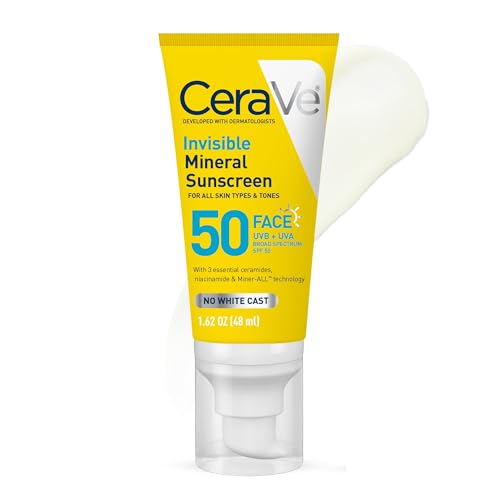
Best for: All skin tones seeking a genuinely invisible mineral option. This sunscreen uses mineral filters with a no-white-cast finish and doubles as a hydrating makeup primer. It’s suitable for sensitive and acne-prone skin while delivering broad-spectrum UVA/UVB protection.
Why selected: The product emphasizes an invisible finish, making it easy to wear under makeup without altering skin tone. Its fragrance-free formula reduces irritation risk, and the 24-hour hydration claim supports skin that tends to dry out during sun exposure. Shake well and apply 30 minutes before sun exposure for best results.
Limitations: While invisible for most, very deep skin tones may still notice a faint tint in certain lighting. May require reapplication every two hours if outdoors for extended periods.
mixsoon Bean Sunscreen SPF 50

Best for: Daily wear with a lightweight, breathable finish and no white cast. This Korean sunscreen uses a feather-light texture suitable for layering under makeup or for bare skin, with a focus on skin-friendly hydration.
Why selected: It delivers SPF 50 protection with a hydrating base and no chalky residue. Fermented care (pear and barley) contributes to a refreshing moisture feel, making it attractive for those who want a comfortable, skin-care-like sunscreen that won’t disrupt pigmentation concerns.
Limitations: Some users may notice a very subtle sunscreen scent or a slightly dewier finish that may remix with certain makeup products.
Aveeno Protect + Hydrate SPF 60

Best for: Travelers and daily users who want a larger spray-friendly bottle with reliable hydration and fragrance-free formula. This product supports sensitive skin and offers extra protection with SPF 60.
Why selected: It provides a balance of broad-spectrum protection and moisture, with a non-greasy feel that suits oily or combination skin. The fragrance-free formula reduces irritation risk for pigmentation-prone skin, and the 80-minute water resistance helps maintain protection during outdoor activities.
Limitations: Some users with very dry skin may still need an additional moisturizer on drier days, as not all hydration needs are covered by the sunscreen alone.
FoxTale Vitamin C & Niacinamide Glow Sunscreen SPF 50

Best for: Those looking to address pigmentation with a glow-boosting formula. The combination of vitamin C and niacinamide targets skin brightness and texture while delivering reliable SPF 50.
Why selected: The product emphasizes a no white cast, non-greasy finish, and a glow-enhancing effect. It’s designed to brighten and even skin tone, which can support pigmentation-focused goals when used as part of a broad sun protection routine.
Limitations: The brightening effect is gradual; consistent daily use is key. Users with very sensitive skin should test for irritation due to active ingredients.
CeraVe Tinted Sunscreen for Face SPF 30

Best for: Those who want light coverage to help even pigmentation while providing sun protection. The sheer mineral tint helps offset white cast with iron oxides and can function as a tinted primer.
Why selected: This product blends skincare with suncare, offering hyaluronic acid for moisture and niacinamide for calming skin. Its tinted finish provides a natural glow that can help visually even skin tone after sun exposure.
Limitations: It comes in a light shade range; deeper skin tones may seek a darker tint or pure physical sunscreen to avoid mismatches.
Buying Guide: Key Considerations For Pigmentation-Friendly Sunscreens
- Skin tone and finish: Look for no-white-cast formulas and finishes that match your skin tone. Mineral sunscreens can leave a cast on darker skin if not properly formulated, so opt for products explicitly noting an invisible or universal finish.
- Active ingredients: For pigmentation concerns, vitamin C, niacinamide, and ceramides can support brightness and barrier function. Consider tinted options to offset visible casting.
- SPF level and protection: Daily use benefits from SPF 30–50+ with broad-spectrum UVA/UVB coverage. For outdoor activities, SPF 60+ or water resistance adds extra protection.
- Texture and absorption: Lightweight, non-greasy formulas work better under makeup and reduce the chance of clogging pores. Hydrating bases (hyaluronic acid, glycerin) help skin comfort during sun exposure.
- Skin type fit: Sensitive and acne-prone skin benefit from fragrance-free, noncomedogenic options. For dry skin, formulas with added moisturizers perform better.
- Application guidance: Mineral sunscreens require adequate blending and full-face coverage. Reapplication every two hours when outdoors is recommended, especially after sweating or swimming.
- Makeup compatibility: If you wear makeup, choose sunscreens marketed as primer-friendly or that leave a smooth base for foundation or powder.
Frequently Asked Questions
- Q: Do tinted sunscreens help with pigmentation more than clear ones? A: Tinted sunscreens can visually even skin tone by offsetting pigments with iron oxides, acting as a light primer while providing protection.
- Q: How often should I reapply sunscreen for pigmentation concerns? A: Reapply every two hours when outdoors, or after swimming or sweating, to continuously protect against photo-induced pigmentation.
- Q: Can SPF alone reduce pigmentation spots? A: SPF prevents further darkening from sun exposure but typically does not fade existing pigmentation without additional active brightening ingredients over time.
- Q: Is mineral sunscreen better for sensitive skin? A: Many mineral formulas are fragrance-free and noncomedogenic, which can be gentler on sensitive or acne-prone skin, though individual tolerance varies.
- Q: Should I use a separate moisturizer with sunscreen? A: If a sunscreen lacks sufficient hydration, apply a lightweight moisturizer underneath or choose a hydrating sunscreen to avoid dryness or flaking with makeup.
- Q: Are there any risks using sunscreen with vitamin C or niacinamide? A: Generally safe, but some individuals may experience mild irritation when combining actives. Patch testing is advised if you have sensitive skin.