Whether you’re tracking, mixing, or mastering, these studio monitor headphones are designed to deliver flat, detailed sound with minimal coloration. This guide focuses on models that are widely used by professionals and enthusiasts for critical listening. The top picks below are best for home studios, project studios, podcasting, and mobile editing setups. Each entry notes who it’s best for and why it fits that use case.
Summary table of chosen products (key features at a glance):
- Audio-Technica ATH-M50X — Critical listening with deep bass; best for professionals and serious enthusiasts.
- Audio-Technica ATH-M30x — Budget-friendly with solid midrange clarity; good for beginners and portable setups.
- Audio-Technica ATH-M40x — Balanced sound with robust build; ideal for mid-level studios and mixing engineers.
- Sony MDR7506 — Classic reference sound; excellent detail and portability; favored by field engineers.
- OneOdio Wired DJ Hi-Res Over-Ear — Wide compatibility and comfort; best for budget multi-use monitoring and DJing.
Audio-Technica ATH-M50X Professional Studio Headphones

These flagship headphones offer proprietary 45 mm drivers with rare earth magnets and copper clad aluminum wire voice coils. They provide exceptional clarity across a wide frequency range and deep, accurate bass. They’re best for professional-grade mixing and mastering in moderately treated rooms. The detachable cable adds flexibility for studio and field work. A potential limitation is that their closed-back design can feel slightly less airy in long sessions for some users.
Who it’s best for: Professional engineers, serious home studios, and mastering-focused listeners who need precise low-end accuracy and wide, balanced response.
Why chosen: They are a widely respected reference monitoring pair with robust construction and consistent performance across sessions.
Caution: Heavier clamping force can feel tight for some users; ensure proper fit to avoid ear fatigue during long sessions.
Audio-Technica ATH-M30x Professional Studio Monitor Headphones
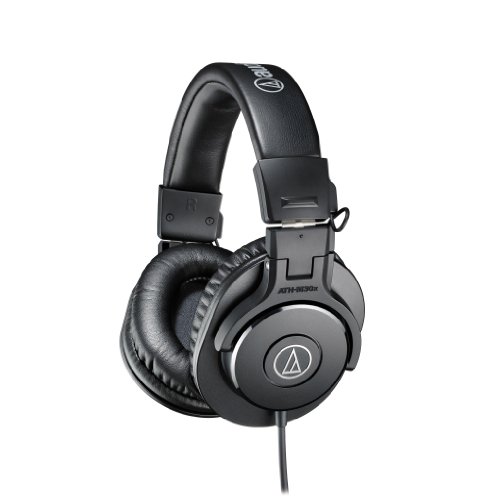
The ATH-M30x delivers solid build quality and clear mid-range detail with 40 mm drivers and copper clad aluminum wire. It’s tuned for accurate mid-range presence with a focus on portability and comfort, making it a solid entry point for beginners and portable studios. It may lack the extended bass extension some users want for detailed bass-heavy genres.
Who it’s best for: Entry-level professionals, students, and remote editors who need a dependable reference with a reasonable price point.
Why chosen: A reliable starter for critical listening without the premium price of flagship models.
Caution: Bass depth may be lean for listeners who prefer a lush low-end; consider alternative with stronger bass emphasis if that’s critical.
Audio-Technica ATH-M40x Professional Studio Monitor Headphones

The ATH-M40x combines robust construction with a balanced, expansive soundstage. It features 40 mm drivers, rare earth magnets, and copper clad aluminum wire voice coils, delivering clear detail across the frequency spectrum and strong midrange clarity. This model is well-suited for engineers who need accuracy in busy mixes. A potential drawback is that, like most closed-back headphones, long sessions may cause ear fatigue for some users.
Who it’s best for: Mid-tier studios, mixing engineers, and professionals who want precise monitoring without stepping up to the M50x level.
Why chosen: It provides a near-reference experience for a broader set of studio tasks, with a sturdy build for daily use.
Caution: Closer, more intimate stage feel can reduce perceived airiness compared to high-end open-back designs.
Sony MDR-7506 Professional Headphones

The MDR7506 uses 40 mm drivers with neodymium magnets for detailed highs and controlled bass. It’s a classic choice for field engineers and studio use due to its portability and transparency. The closed-ear design reduces external noise, and the 9.8-foot cord ends in a gold-plated plug with a 1/4 inch adapter included. The longer cord can be cumbersome in smaller setups, and the non-detachable cable may reduce travel convenience.
Who it’s best for: On-the-go engineers, editors, and anyone needing a lightweight, reference-grade headphone for critical listening away from the desk.
Why chosen: A time-tested option that remains relevant for accurate reference monitoring in varied environments.
Caution: The cable is not detachable; plan for wear or replacement accordingly if used heavily on the go.
OneOdio Wired DJ Hi-Res Over-Ear Headphones

These headphones combine large 50 mm drivers and neodymium magnets to deliver powerful bass, clear vocals, and crisp highs. The circumaural design and padded cushions provide comfort for long mixing sessions, and swiveling ear cups support single-ear monitoring—handy for DJs and producers who need to cue tracks. They’re budget-friendly and versatile, but their bass emphasis may be more pronounced than a flat reference monitor would provide, depending on your source material.
Who it’s best for: Budget-conscious users, DJs, podcasters, and hobbyists who need flexible monitoring for multiple tasks.
Why chosen: A solid all-around performer at a lower price point with useful features for monitoring and cueing.
Caution: The sound profile may skew bass-heavy for those seeking a perfectly flat reference for critical mixing.
Buying Guide: Key Considerations When Choosing Studio Monitor Headphones
- Purpose and environment: Home studios, mobile editing, or field work require different builds (detachable cables, weight, and portability).
- Sound signature: Do you need a flat, reference response for mixing, or a slightly emphasized bass for music production?
- Comfort and fit: Look for memory foam cushions, clamp force, and headband design for long sessions.
- Build quality: Durable housings and robust cables reduce downtime in busy studios or on location.
- Impedance and sensitivity: Higher impedance models may require more powerful equipment but can yield better accuracy with proper gear.
- Isolation and leak: Closed-back designs minimize noise bleed and external disturbances in shared spaces.
- Detachable cables and accessories: A detachable cable can extend lifespan and simplify replacement.
How to choose by use case
- Starting a home studio: Consider ATH-M30x or OneOdio for cost-effective versatility with solid sound.
- Professional mixing: ATH-M50x or ATH-M40x offer more precise midrange detail and robust build.
- On-the-road monitoring: MDR7506’s portability and reliable performance make it a strong field option.
Maintenance tips
- Store in a protective case to prevent driver damage.
- Keep cables untangled; avoid yanking connectors.
- Periodically inspect ear cushions and replace if worn for comfort and hygiene.
FAQ
- What is a “studio monitor headphone”?
They are designed to reveal accurate, uncolored sound for critical listening, mixing, and mastering. - Should I buy closed-back or open-back for monitoring?
Closed-back isolates sound better and reduces bleed; open-back offers a more natural soundstage but leaks sound. - Are detachable cables important?
Yes, they can extend headphone life and simplify replacement after wear or damage. - Do I need a high-end model for home use?
Not necessarily; entry-to-mid range models provide reliable accuracy for most home studios. - Which brand is most reliable for monitors?
Audio-Technica models are widely trusted for consistent reference performance across multiple price points. - Can these headphones replace studio monitors?
Headphones can complement monitors but are not a full substitute for loudspeaker monitoring in a treated room.