Answering the question “what’s the best steam cleaner for stone floors?” this guide highlights models that are effective on marble, granite, limestone, and ceramic stone surfaces while keeping sealants intact. These picks are ideal for homeowners who want chemical-free sanitization, easy refills, and lightweight handling. The top contenders vary from compact handheld units to full-size canister steamers, each chosen for stone-floor suitability and practical use in American homes. Below is a quick comparison to help you choose the right tool for your space and cleaning style.
Summary table of chosen products:
| Product | Best For | Key Benefit | Limitations |
|---|---|---|---|
| Shark Steam Mop S1000 | Lightweight cleaning across sealed hard floors | Removable water tank; under 5 lbs | Basic scrub capability |
| Bissell 1940A PowerFresh | Versatile everyday cleaning | Built-in scrubber; adjustable steam | May require more refills on large areas |
| Shark S8001 Sazer | Stubborn messes with lights | 3 steam modes; LED headlights | May be bulkier than ultra-light options |
| Shark S3501 Steam Pocket | Budget-friendly, double-sided pads | Two-sided pads; chemical-free sanitization | Smaller cleaning area per pass |
| Shark S2001 SteamSpot | Targeted stain removal | Steam blaster technology; chemical-free | Specialized use; not ideal for large areas alone |
Shark Steam Mop S1000: Lightweight, Chemical-Free

The Shark S1000 offers a chemical-free sanitization approach suitable for sealed stone floors. The removable water tank speeds up refills, keeping cleaning uninterrupted. Weighing under 5 pounds, it is an excellent choice for smaller spaces or stairs where maneuverability matters. Best for: quick, frequent cleans on stone surfaces without heavy lifting. Caution: limited deep-cleaning power compared to models with more robust scrubbing features.
Bissell 1940A PowerFresh: Built-In Scrubber and Varied Steam

The Bissell PowerFresh provides steam sanitization (chemicals-free) and a built-in scrubber to tackle dried grime and grout buildup. With three steam settings, you can adjust for quick touch-ups or deeper cleaning on stone floors. Best for: homes with varied daily dirt and occasional tough spots on stone floors. Caution: larger rooms may require more frequent refills due to 12″ cleaning path.
Shark S8001 Steam & Scrub: Deep Clean With LED Lights

This all-in-one model blends scrubbing power with a high-visibility LED headlight to reveal hidden debris. It offers three steam modes for different mess levels on stone floors. Best for: households with uneven lighting situations and frequent tough stains. Limitation: heavier than ultra-light options, which may affect ease of use on stairs or tight corners.
Shark S3501 Steam Pocket Mop: Double-Sided Efficiency
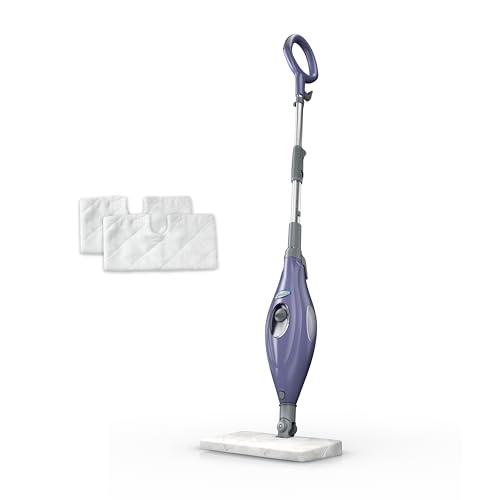
The Steam Pocket Mop uses dual-sided pads, effectively doubling the cleaning surface per pass. It delivers steam sanitization and is notably lightweight, making it ideal for smaller stone-floor areas or apartments. Best for: cost-conscious buyers wanting chemical-free cleaning on sealed stone floors. Caution: smaller pad surface means more frequent pad changes in larger spaces.
Shark S2001 SteamSpot: Targeted Stain Power

SteamSpot combines targeted steam blasts with a safe, chemical-free approach to remove stubborn marks on stone floors. Best for: problem areas like grout lines or embedded stains that require a focused boost. Caution: not the best option for large-area cleaning due to its focused cleaning design.
Buying Guide: How To Choose The Right Stone Floor Steam Cleaner
What stone floor type do you have? Sealed stone floors like marble, granite, and some ceramic tiles respond well to steam cleaners with adjustable or multiple steam settings. For unsealed or textured stone, avoid excessive moisture and prefer models with precise control and quick-dry features.
What cleaning tasks do you expect? If your routine is quick daily refreshes, a lightweight model with good maneuverability and removable tanks can be ideal. For tougher grout and dried-on grime, a unit with built-in scrubbers or a steam blast option is advantageous.
How important is chemical-free sanitization? All products listed rely on heat and water for sanitization. If you require stronger sanitation or allergy-conscious cleaning, choose models explicitly advertising 99.9% bacteria reduction when used as directed.
Do you need a large cleaning path or portability? Large rooms may benefit from a wider cleaning path and longer water tanks, while apartments or stairs demand lighter, more compact designs.
Safety and maintenance tips: always follow manufacturer directions for sealed stone floors, test a small inconspicuous area first, and empty the water tank after use to prevent mineral buildup. Regularly inspect pads for wear to avoid residue transfer on stone surfaces.
FAQ
- Q: Can steam cleaners damage stone floors? A: When used as directed on sealed stone floors, steam cleaners are typically safe. Avoid prolonged exposure to any single spot and use appropriate settings for stone.
- Q: Do steam mops sanitize without chemicals? A: Yes. Most models sanitize using high-temperature steam to reduce bacteria and germs without chemical cleaners.
- Q: Which model is best for grout on stone tiles? A: Models with built-in scrubbers or steam blasts perform better on grout and stuck-on grime.
- Q: Is a larger water tank better for big areas? A: Generally, yes. A bigger tank reduces refills, but it may add weight; balance with your cleaning space needs.
- Q: Are steam mops suitable for hardwoods and stone? A: Some models handle both, but check manufacturer guidance for your specific surface mix to avoid moisture-related damage.
- Q: Do any of these models require chemicals for effective cleaning? A: All listed options rely on steam and water for sanitization; none require added chemicals for standard use.