Looking for a standalone DJ controller that can run without a laptop? This guide highlights five top options that are built for laptop-free performances, ideal for mobile DJs, club setups, or home studios. Each entry explains who it’s best for, why it was chosen, and practical limitations to consider. Use these picks to compare features like onboard stems, Wi‑Fi streaming, and multi‑deck control.
| Product | Best For | Why It Stands Out | Limitations |
|---|---|---|---|
| Denon DJ SC LIVE 4 | Pro performers needing Serato compatibility | 7″ touchscreen, onboard Engine OS, broad streaming, Serato Pro integration | Requires SD/USB for offline tracks; standalone feature set tied to Engine OS |
| Denon DJ PRIME 4 G2 | Four-deck, studio-to-club versatility | Onboard stems, four channels, embedded Wi‑Fi for direct streaming | High-end unit with sizable footprint and cost |
| Denon DJ PRIME GO+ | Mobile DJs needing battery power | Ultra-portable, battery-powered, onboard streaming via Wi‑Fi | Requires charging and battery management for long sessions |
| Pioneer DJ XDJ-RX3 | Club-ready, USB-only sets | Standalone 2-channel system, 10.1″ touchscreen, familiar Pioneer layout | Limited to USB playback for standalone use; laptop control still possible |
| AlphaTheta XDJ-AN | Compact, cloud-enabled standalone | Two-channel, USB-C drives, built-in Wi‑Fi with cloud streaming | Cloud-first workflow may depend on service availability |
Denon DJ SC LIVE 4 Standalone DJ Controller Black
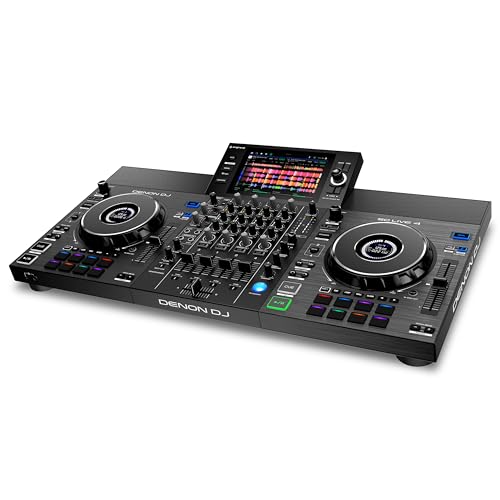
The SC LIVE 4 is designed for professional, laptop-free performances with Engine DJ OS. It supports SD and USB inputs for tracks and offers access to streaming services that cover a wide musical spectrum. The 7″ touchscreen helps library management and track browsing, while Serato Pro 1:1 hardware integration adds advanced FX and mixing capabilities. This model is best for mobile or club DJs who want a robust, self-contained setup with strong software compatibility. A limitation to note is that offline performance relies on compatible media and local storage; streaming requires a reliable network.
- Best for: Pro DJs who want Serato integration and a built‑in touchscreen
- Key benefit: Laptop-free performance with broad streaming support
- Potential drawback: Requires SD/USB media for local playback in some scenarios
Denon DJ PRIME 4 G2 Standalone Controller

The PRIME 4 G2 brings four decks into a single, self-contained unit with onboard stems rendering, which lets you isolate vocals, drums, and instruments during live performance. It supports direct streaming from Beatport, Amazon Music Unlimited, TIDAL, and more, and includes dedicated Stem FX and pads for expressive control. This is a strong choice for DJs who perform multi-genre sets and want a stable, all-in-one system without a laptop. A caveat is its size and cost, which may be overkill for hobbyists or tight travel gigs.
- Best for: Four-deck performances with on-device stems rendering
- Key benefit: Direct streaming and advanced Stem FX
- Potential drawback: Larger footprint and higher price point
Denon DJ PRIME GO+ Standalone Portable Controller
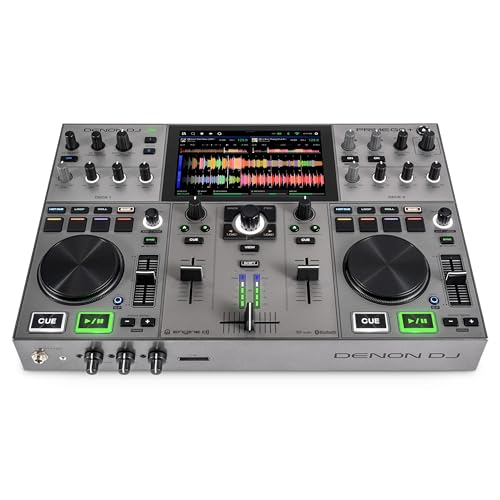
The PRIME GO+ blends high-end performance with portability and an embedded battery. It’s designed for DJs who perform on the move, offering robust Wi‑Fi streaming and Engine DJ OS for battery-powered, laptop-free performances. This unit is best for traveling DJs or small venue operators who need long battery life and reliable wireless access to streaming services. A limitation to consider is battery maintenance during extended events and potential streaming interruptions in low-signal areas.
- Best for: Pro DJs who travel and perform battery-powered
- Key benefit: Ultra-portable with onboard streaming
- Potential drawback: Battery management during long gigs
Pioneer DJ XDJ-RX3 All-In-One System

The XDJ-RX3 is a flagship all-in-one unit that supports standalone operation with USB playback. Its 10.1-inch touchscreen and club-standard layout provide a familiar workflow for DJs transitioning from pro booth gear. It offers two platforms: hardware unlock for rekordbox in Performance mode and control for Serato DJ Pro when connected to a computer. This is a solid choice for venues requiring a self-contained system with a dependable, booth-ready interface. A limitation is reliance on USB playback for pure standalone use; features expand when connected to a computer.
- Best for: Club-ready, USB-driven standalone sets
- Key benefit: Pro-like control in a compact all-in-one
- Potential drawback: Standalone use depends on USB media availability
AlphaTheta XDJ-AN 2-Channel All-in-One System
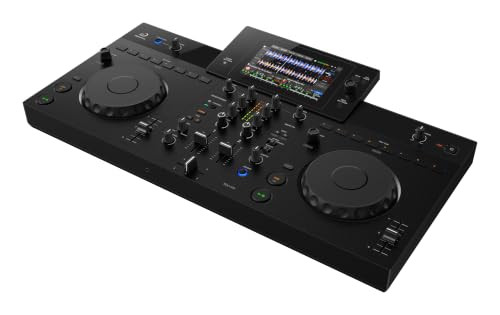
The AlphaTheta XDJ-AN is a compact, standalone system designed to bridge home setups and club booths. It streams via built-in Wi‑Fi and supports rekordbox CloudDirectPlay as well as streaming from Spotify, Apple Music, Beatport, and TIDAL. It’s best for DJs who want a compact, cloud-enabled workflow without a laptop. A potential limitation is that cloud streaming quality depends on service availability and network reliability during performances.
- Best for: Compact, cloud-enabled standalone performance
- Key benefit: Seamless integration with rekordbox CloudDirectPlay
- Potential drawback: Cloud dependency can affect reliability in poor networks
Buying Guide: Key Considerations For Standalone DJ Controllers
- Storage and offline playback: Check how each unit handles local media (SD, USB, HDD) for offline sets. If you travel often, a model with robust onboard storage is advantageous.
- Streaming options: Consider which services are supported (Amazon Music Unlimited, Tidal, Beatport, SoundCloud Go+). Wireless streaming expands your library, but network stability matters.
- Deck count and stems: Look at how many decks you need and whether onboard stems rendering suits your style. Four-deck systems offer more live remix potential, while two-deck models are more compact.
- Software compatibility: Some units lock to specific platforms (rekordbox, Serato, Engine OS). Verify which ecosystems you prefer for future-proofing.
- Portability and power: Battery-powered options matter for mobile gigs. Consider weight, handle design, and power requirements for travel.
- Expansion and control: If you anticipate needing booth integration, ensure the unit provides pro FX, hot cues, and compatibility with external mixers or club gear.
- Reliability and serviceability: For frequent performers, evaluate fan noise, build quality, and availability of spare parts or accessories.
Frequently Asked Questions
What is a standalone DJ controller?
A standalone DJ controller operates without a laptop, running its own OS, processing, and often streaming, while controlling decks, effects, and libraries directly from the hardware.
Do standalone controllers support popular streaming services?
Many do, via built-in Wi‑Fi or Ethernet. Supported services vary by model; check the product’s service list before buying.
Is four-deck standalone better than two-deck?
Four-deck units offer more live remixing options and stems control, but they also cost more and may be larger. Two-deck units are more compact and simpler for beginners.
Can I use these with a laptop later?
Most support optional computer control via Rekordbox, Serato, or Engine OS. Verify compatibility if you plan to switch workflows.
Which is best for touring?
Portable, battery-powered models with solid streaming capabilities are ideal for touring. Weight, battery life, and quick setup are key factors.
Do these require an internet connection?
Streaming features require internet access. Standalone operation is possible with offline media on SD/USB, but streaming expands your library.