Answering the question “which sous vide cooker should I buy?” with clear recommendations for American cooks. This guide highlights top devices for home use, from compact Nano models to high-capacity Pro circulators. It helps different buyers decide who benefits most: beginners, busy families, or serious home chefs seeking precise control. Each section notes strengths, who it’s best for, and practical trade-offs, so you can pick the right tool without guesswork. A quick product summary table is included for side-by-side comparisons.
Product Summary
| Product | Best For | Key Benefit | Limitations |
|---|---|---|---|
| Anova Culinary Sous Vide Precision Cooker Nano 2.0 | Beginners and small containers | Compact, precise temperature control | Limited wattage for large volumes |
| Anova Culinary Sous Vide Precision Cooker 3.0 (WiFi) | Tech-savvy home cooks | Dual-band WiFi and easy viewing display | Higher price than basic models |
| Sous Vide, Wancle Sous Vide Cooker 1100W | Value-conscious cooks needing speed | Fast heating, compact design | Removable skirt not universal for all pots |
| Anova Pro 1200W | Serious home chefs and pro-like setups | Highest power, rugged stainless build | Bulkier and premium-priced |
| InkBird NKBIRD ISV-100W (InkBird) | WiFi-enabled multitaskers | App control and precise 0.1°C accuracy | App dependency for full experience |
Anova Nano 2.0: Tiny Size, Big Precision

The Anova Nano 2.0 circulator delivers precise temperature control in a compact package. Best for cooks who want a space-saving device that still maintains tight accuracy (0.1°C). It handles a range from 0°C to 92°C (32°F to 197°F), suitable for chicken, fish, vegetables, eggs, beef, and pork. Ideal for small pots or stock pots with a fixed clamp. Best for beginners or those with limited counter space. Caution: its smaller size means it may be slower with very large volumes of water.
Anova 3.0 (WiFi): Smart Control for Busy Cooks

This third-generation Anova model adds dual-band WiFi and a two-line touchscreen, improving connectivity and quick visibility of time and temperature. It fits most pots with an adjustable clamp and includes a detachable stainless steel skirt for easy cleaning. Best for cooks who want app-assisted control and reliable performance without a premium price tag. Caution: some users may prefer a larger screen or more robust app features for frequent, long cooks.
Wancle 1100W: Fast, Quiet, and Portable

Wancle emphasizes speed and portability with 1100W power and 3D water circulation for even heating. It operates quietly and maintains stability within a broad range (25–90°C) with precise timing (1 minute to 99 hours 59 minutes). Best for those who want a powerful all-purpose unit that still stores easily. Limitation: some users may prefer a stainless steel exterior for durability over time.
Anova Pro 1200W: Rugged, High-Performance
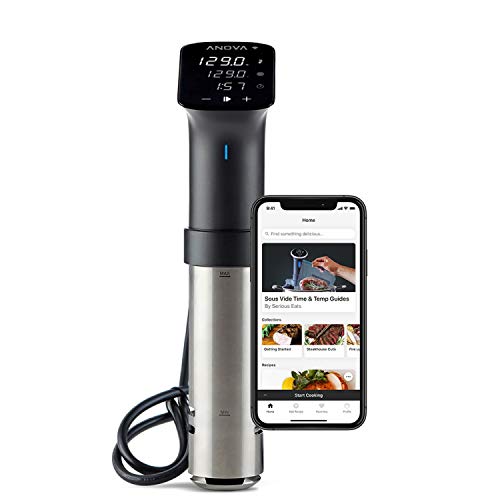
The Pro model is designed for demanding kitchens. It circulates water at precise temperatures with up to 1200 watts of power and a stainless steel build for durability and IP-rated protection. Best for advanced home cooks who regularly prepare large or multiple items in a single bath. Caution: larger footprint and higher price may be unnecessary for casual cooks.
InkBird NKBIRD ISV-100W: App-Enabled Versatility

The InkBird model emphasizes WiFi app control with a 1000W heater for quick heat-up and stable temperatures. It highlights a wide range (25–99°C) with 0.1°C precision and an intuitive LCD/touch experience. Best for multitaskers who value remote monitoring and preset menus. Caution: dependence on the app for full feature access may affect users who prefer manual controls.
Buying Guide: How To Choose Your Sous Vide Cooker
What should you look for when buying a sous vide cooker? Consider these practical aspects:
- Power and speed: Higher wattage heats water faster, useful for large baths or dense bags. Choose 1000–1200W for best performance with 6–15 liter containers.
- Temperature range and accuracy: A precise range (0°C to 90°C+) with ±0.1°C accuracy yields consistent results for most proteins and vegetables.
- Connectivity: WiFi or Bluetooth can help with remote monitoring and access to recipes. If you prefer plug-and-play, a non-app model may be simpler and cheaper.
- Clamps and compatibility: Ensure the device clamps securely to your pot or container. Removable skirts can ease cleaning in some models.
- Durability and build: Stainless steel builds tend to be sturdier for long-term use. IP ratings add water-resistance confidence for busy kitchens.
- Size and storage: If counter space is limited, a compact unit like the Nano can be a better fit.
- Ease of use: Look for clear displays and straightforward controls if you cook frequently or serve as the primary cook.
What About Features and Presets?
Many models come with preset cuisines or recipes through apps. These can reduce guesswork for common proteins and vegetables. If you value guided cooking, prioritize models with robust app ecosystems and easy recipe access.
How To Use In Practice
For best results, fill a pot with water, attach the device with the clamp, set the target temperature, and seal your food in vacuum bags. Submerge fully and allow the water to circulate. Monitor time and temperature, then finish with a quick sear if desired to develop color and texture.
Common Trade-Offs
Budget models offer basic precision and manual controls, but may lack smart connectivity or premium build. High-end models provide robust construction and advanced features but at a higher price point. Consider how often you cook sous vide and whether you value app control or a simple, reliable unit.
FAQ
- Q: Do I need WiFi for sous vide cooking? A: Not strictly. WiFi adds convenience for remote monitoring and recipes, but non-WiFi models work well for most cooks.
- Q: Is 0.1°C accuracy necessary? A: It helps maintain consistent doneness, especially for delicate proteins, but many home cooks do well with ±0.2°C accuracy.
- Q: Can I use any pot? A: Most devices clamp to standard stock pots or containers; check the minimum water depth and clamp compatibility.
- Q: Is stainless steel better than plastic? A: Stainless builds are generally more durable; plastic housings are lighter and cheaper but may wear over time.
- Q: How long can I leave food in sous vide? A: Time depends on the recipe; many proteins tolerate longer times, but always follow safe handling guidelines and tested times.
- Q: Should I buy multiple devices for different meals? A: If you frequently cook large batches or multiple items, a higher-wattage unit with wide capacity can be advantageous.