Answering the need for reliable, precise soldering tools for guitar maintenance, these five soldering irons and stations are well-suited for electronics work on guitars, pickups, wiring, and quick repairs. Ideal buyers include hobbyists doing on-the-spot guitar maintenance, techs performing instrument electronics, and DIY enthusiasts who want adjustable temperature control and stable heat. The following picks balance ease of use, safety features, and temperature control to help you choose the right tool for your guitar projects.
| Product | Best For | Why Selected |
|---|---|---|
| Q-MING 60W Soldering Iron Kit (60W, 10-in-1) | Beginners to intermediate | All-in-one kit with interchangeable tips and handy accessories helps tackle guitar wiring and small electronics. |
| Q-MING 80W LCD Digital Solder Iron (80W) | Intermediate to advanced | Faster heating with a clear temperature display; precise control for sensitive guitar electronics. |
| MEAKEST Soldering Iron Premium Kit (60W, 12-in-1) | General repairs | High-ventilation design and multiple tips suited for varied guitar tasks, from rewiring to shielding.” |
| MEAKEST 60W 9-in-1 Soldering Kit (110V, 60W) | DIY hobbyists | Flexible temperature range and multiple tips designed for delicate components and guitar hardware. |
| YIHUA 926 III 60W Digital Station (with Tips) | Pro or serious hobbyist | Digital display, PID stability, sleep mode, and a compact footprint for precise guitar work. |
Soldering Iron Kit, 60W With Interchangeable Tips by Q-MING

This 60W pencil-type soldering iron includes adjustable temperature control (392 ℉–842 ℉ / 200–450 ℃) and a thermostatic setting. An on/off switch helps save energy and supports safer welding. The ceramic heating core heats quickly (about 15 seconds) with four ventilation holes to reduce tip-to-handle heat transfer. The kit comes with a stand, sponge, five interchangeable tips, solder wire, and flux paste, offering a complete start-to-finish package for guitar wiring and small electronic repairs. Best for hobbyists handling basic guitar electronics, like contact pickups, pot soldering, or replacing small components. Caution: tip temperature can be high; use tip tongs or a stand when not actively in use.
Why chosen for guitar work: The included variety of tips covers common guitar tasks—from fine tip work on potentiometers to broader strokes for shielding and wiring harness work. The kit’s compact setup suits a typical home workshop or a portable repair kit for on-the-road adjustments.
Limitations: The 60W rating is adequate for most guitar electronics, but large solder joints or heavy gauge wire may require higher power tools or longer heating times.
Soldering Iron Kit, 80W LCD Digital Solder Iron by Q-MING

This upgraded 80W iron heats quickly (about 20 seconds) and uses a clear LCD display to indicate temperature. The adjustable range spans 180℃–480℃ (356°F–896°F), enabling precise control during guitar repairs, from shielded wiring to delicate pot soldering. Four ventilation holes support heat dissipation and an insulated handle improves comfort during longer sessions. Best for guitar projects requiring stable temperature and quick heat-up, such as re-soldering pickups or wiring harness work. Choose this if you need accurate temperature readouts and faster performance. Limitation: larger heat emissions may need careful ventilation in small workspaces.
Soldering Iron Premium Kit, 60W 12-in-1 by MEAKEST

This premium MEAKEST kit provides a 60W 110V iron, quick heating, and six air vents to extend tool life. It features an on/off switch for energy savings and a broad temperature range to suit guitar electronics work. The set includes six tips, solder wire, flux, and paste, covering common tasks on guitars—from shielded wires to small components. Best for users who want a robust all-in-one kit for ongoing guitar maintenance. A potential drawback is the number of included tips may be more than needed for very basic repairs, which could overwhelm a novice.
Why it’s suitable for guitars: The 12-in-1 configuration gives versatility for different guitar components, including pot soldering, harness work, and fine wire connections. The kit’s comprehensive accessories reduce the need for separate purchases when starting a guitar repair toolkit.
Soldering Iron Kit, 60W 9-in-1 by MEAKEST
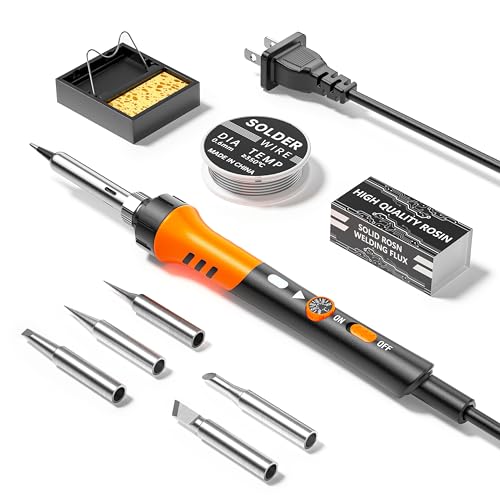
This 60W tool from MEAKEST focuses on essential guitar-related tasks with a 200–450℃ (392–842°F) adjustable temperature range. It includes five tips and a soldering wire set for immediate use. On/off switching improves safety and energy efficiency. Best for hobbyists and learners who want a reliable, compact solution for routine guitar repairs, such as lead-free soldering and wire reattachments. Better for smaller projects than heavy metal work; not ideal for high-temperature heavy-duty tasks.
YIHUA 926 III 60W Digital Display Soldering Station Kit
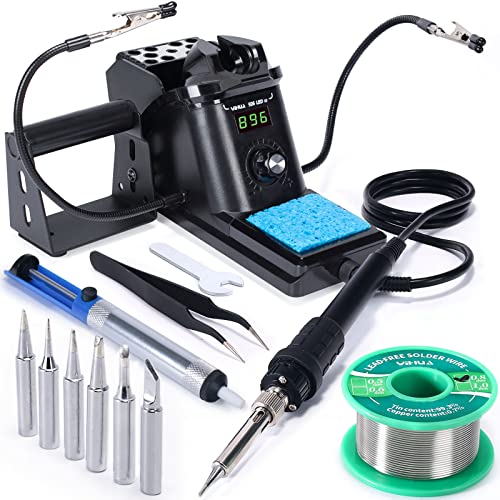
The YIHUA 926 III station uses a 60W iron with a fast heat-up and a broad temperature range (194℉–896℉). The PID stabilization maintains the set temperature, and the space-saving design includes a built-in iron holder. Features include °C/°F conversion, Sleep Mode, and thermal calibration. Best for serious hobbyists or small workshop environments where stable, precise control is crucial for guitar electronics or multiple maintenance tasks. Limitation: station complexity may require a short learning curve for new users.
YIHUA 926 III LED Display Soldering Station Kit
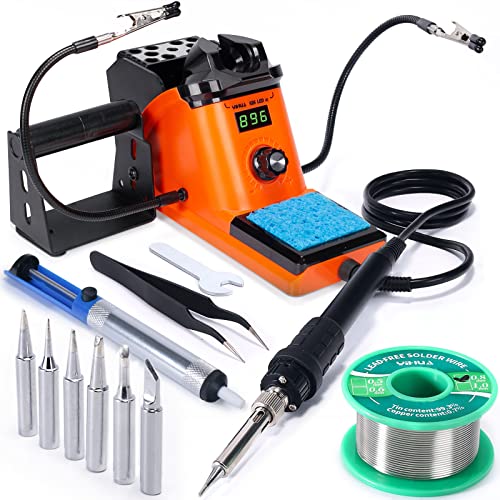
This LED-display variant shares many features with its predecessor: rapid heating, wide temperature range (194℉–896℉/90°C–480°C), and precise digital control. It emphasizes a compact footprint ideal for guitar repair benches where space is at a premium. Best for precise, repeatable work on guitar electronics, including delicate coil wiring and PCB-level tasks. Caution: modern stations can be sensitive to power fluctuations; use a stable power source.
Buying Guide: Key Purchase Considerations
What should you look for when choosing a soldering iron for guitar work?
- Temperature range and stability: For guitar electronics, aim for adjustable ranges that cover up to at least 450℃ (842°F) and features like PID stabilization to maintain a consistent temperature during soldering.
- Tip variety and heat management: A kit with multiple tips supports different tasks—from precise pot work to larger wire rewiring. Adequate ventilation and heat dissipation reduce tip wear and handle heat exposure.
- Safety features: An on/off switch, good insulation, and a stable stand protect against accidental burns and misfires during long sessions.
- Display and control: Digital displays help set exact temperatures, while °C/°F conversion and calibration improve accuracy for sensitive guitar components.
- Footprint and ergonomics: Space-saving designs with built-in stands or holders keep your workspace tidy and safe, especially in small repair setups.
- Included accessories: A complete kit with solder wire, flux, paste, and extra tips reduces the need for additional purchases when starting or expanding a guitar repair kit.
- Ease of use for beginners vs. advanced users: Simpler kits are great for basic soldering; more advanced stations offer precision and long-term reliability for complex guitar electronics tasks.
Frequently Asked Questions
- What wattage is best for guitar repairs?
– A range around 60W–80W is typically sufficient for most guitar electronics, including pickups, pots, and small wiring tasks. Higher power can heat faster for larger joints but may require extra caution to avoid damage. - Is digital display necessary for guitar work?
– Not strictly, but it helps set exact temperatures and track heat over time, which reduces the risk of overheating sensitive components. - Should I buy a station or a simple iron?
– For frequent or detailed guitar work, a station with temperature control, PID stabilization, and multiple tips provides greater accuracy and comfort over a plain iron. - What safety features matter most?
– Look for an on/off switch, a stable stand, good insulation, and sleep or auto-off modes to prevent accidental burns and save energy. - Do I need lead-free solder for guitar repairs?
– Using lead-free solder is common for electronics work, including guitars, to reduce hazardous exposure. Ensure you have appropriate flux and cleanup tools. - Can these tools be used for other small electronics beyond guitars?
– Yes. The listed irons and stations are suitable for small electronics, PCBs, watches, and other DIY electronics projects.