When choosing solder for electronics, look for a consistent 63/37 tin-lead mix with rosin core for reliable, clean joints and easy flow on circuit boards. The top picks below are best for hobbyists and professionals who need steady workability, good wetting, and portable options. Choose by wire diameter, flux content, and package size to fit your project scale.
Buyer personas: beginners benefit from smaller, easy-to-handle spools; intermediate tinkerers want a balance of flux and flow; professionals may prefer larger quantities and consistent performance across small surface-mount and through-hole tasks. The following five products cover common use cases and offer clear advantages based on diameter, weight, and flux content.
| Product | Best For | Key Benefit |
|---|---|---|
| MAIYUM 63-37 Rosin Core Solder Wire 0.8mm 50g | Small projects, pocket-sized kit | Compact and easy to handle with 0.8 mm diameter |
| TOWOT 63-37 1.0mm 50g Rosin Core | Through-hole boards, higher heat flow | 1.0 mm for faster joins on larger joints |
| MAIYUM 63-37 Rosin Core Solder Wire 0.8mm 100g | Moderate to extended sessions | More weight per spool with the same diameter |
| HengTianMei Tin Lead 63/37 Rosin Core 0.8mm 50g | General electronics, DIY repairs | Balanced 63/37 ratio with rosin core for smooth flow |
| HGMZZQ 60/40 Rosin Core Solder Wire 0.8mm 50g | Reliable joints with consistent flow | Classic Sn60 Pb40 with rosin core for steady wetting |
MAIYUM 63-37 Rosin Core Solder Wire 0.8mm 50g
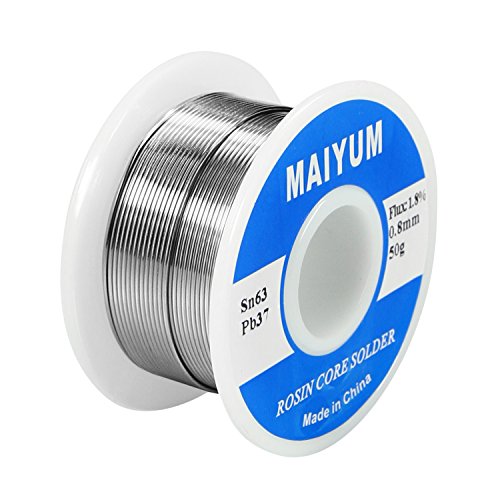
Features: Tin Lead Solder Wire with Rosin Core; 63/37 Sn/Pb, flux content 1.8%; diameter 0.8 mm; gross weight 50 g. Pocket-friendly size for on-the-go work.
Best for: Small plug-in projects and compact kits. This is ideal for precise, delicate joints on small PCBs.
Limitations: Tin-lead formulation is not RoHS-compliant for certain commercial manufacturing; avoid for lead-free requirements. Suitable for legacy boards and repair tasks that tolerate leaded solder.
TOWOT 63-37 High Purity Tin Lead Rosin Core, 1.0mm 50g

Features: Sn63 Pb37 alloy; flux 1.8%; diameter 1.0 mm; weight 50 g. Designed for smoother flow and fast soldering.
Best for: Through-hole components and boards with larger joints where quicker fill is helpful. Better for projects needing straightforward soldering with reliable joints.
Limitations: Slightly larger diameter may be less ideal for tight SMT work; consider 0.8 mm for fine components.
MAIYUM 63-37 Rosin Core Solder Wire 0.8mm 100g

Features: Tin Lead Solder Wire with Rosin Core; 63/37 Sn/Pb; flux content 1.8%; diameter 0.8 mm; net weight 100 g. Slightly heavier spool for longer projects.
Best for: Hobbyists who run longer sessions or need reduced re-spooling time between jobs. Good balance of flux and flow for repeatable results.
Limitations: Similar leaded alloy considerations apply; ensure compliance with applicable standards if used in sensitive environments.
HengTianMei Tin Lead 63/37 Rosin Core 0.8mm 50g

Features: Sn63 Pb37; flux 1.8%; diameter 0.8 mm; 50 g net weight; rosin core for easy wetting and clean joints.
Best for: General electronics repair and small- to mid-size PCBs. The 0.8 mm diameter supports common through-hole and surface-mount tasks with consistent flow.
Limitations: Not the best choice for very fine SMT work where 0.6–0.8 mm might be too large for tiny pads.
HGMZZQ 60/40 Tin Lead Rosin Core 0.8mm 50g

Features: SnPb 60/40; flux content 2.2%; diameter 0.8 mm; weight 50 g; rosin core for reliable wetting.
Best for: General purpose electronics with a need for consistent solder joints and good fluidity. The 60/40 alloy remains a classic standard for many repair tasks.
Limitations: Higher flux content may require careful cleaning for sensitive boards; consider no-clean flux if post-solder cleaning is an issue.
Buying Guide
What alloy should I choose?
The 63/37 Sn/Pb alloy is common for electronics due to its near-eutectic properties, which minimizes reflow issues and provides smooth, reliable joints. If you must use lead-free for compliance, look for Sn99.3 Cu0.7 or similar formulations, but note different melting points and flow characteristics.
Which diameter is right for my project?
0.8 mm is versatile for both through-hole and some larger surface-mount tasks. 1.0 mm flows faster on bigger joints but is less precise on fine pads. For SMT work, 0.6–0.8 mm is often preferred.
Flux content and rosin core
Rosin flux (the 1.8% value in these products) improves solder wetting and joint quality. Higher flux can improve flow but may require cleaning if residues are an issue. No-clean flux simplifies post-solder cleanup.
Weight and packaging considerations
Smaller spools (50 g) are convenient for new projects or beginners, while larger spools (100 g) reduce re-spooling stops during longer sessions. Portability vs. run-time should guide the choice.
Safety and environmental notes
Always work in a ventilated area. Lead-containing solders require careful disposal and handling, especially in environments with children or pets. Consider lead-free options if compliance is needed for your project.
Which product should I pick?
For general repairs and a balanced approach, HengTianMei 0.8 mm 50 g or HGMZZQ 0.8 mm 50 g are solid all-round choices. If you need longer runs between swaps, MAIYUM 0.8 mm 100 g provides more material without changing performance. If you’re working on through-hole boards and prefer slightly quicker fills, TOWOT 1.0 mm 50 g can be advantageous.
Quick reference comparison
- Best for compact kits: MAIYUM 0.8 mm 50 g
- Best for larger joints: TOWOT 1.0 mm 50 g
- Best value per spool: MAIYUM 0.8 mm 100 g
- Best general repair: HengTianMei 0.8 mm 50 g
- Best classic flow: HGMZZQ 0.8 mm 50 g
FAQ
- What does 63/37 mean in solder?
- Is leaded solder safe for electronics projects?
- How do I choose flux content?
- Can I use lead-free solder instead?
- What diameter should I start with for SMT work?
- How should I store solder wire?
It is the ratio of tin to lead in the alloy, providing near-eutectic behavior for consistent melting and good wetting.
Leaded solder is widely used for reliability and performance, but ensure compliance with local regulations and proper disposal.
Flux helps wetting; 1.8% is common in hobby-grade solders. Higher flux can improve flow but may require cleaning if residues matter.
Yes, but melting points and flow differ. Lead-free alloys may require different temperatures and techniques.
Start with 0.6–0.8 mm for a balance of precision and flow on typical SMT pads and through-hole mix.
Keep in a cool, dry place, away from moisture and heat sources. Re-seal or use a spool holder to prevent tangling.