Looking for reliable solar power panels to power RVs, boats, or off‑grid homes? This guide highlights five top options that balance efficiency, durability, and practicality for a variety of buyers. Each entry notes who benefits most and why it was selected, plus a quick caution to help you decide.
| Product | Best For | Why It Stands Out |
|---|---|---|
| Callsun N-Type 16BB 400W 2Pcs | Off‑grid systems, RVs, vans | High efficiency with bifacial design and anti‑shade technology for reliable output |
| SOKIOVOLA N-Type 200W Portable | Portable power stations, camping | Foldable, IP68 waterproof, easy transport, strong efficiency |
| FlexSolar 100W Foldable | Backpacking and short trips | Ultra‑lightweight, versatile outputs, 23%+ efficiency |
| ZeroKor Portable 300W Generator | Emergency prep, off‑grid cabins | Integrated power station with multiple outlets |
| TWELSEAVAN 200W Portable | Camping and outdoor events | ETFE cover, multi‑output, good heat tolerance |
Callsun N-Type 16BB 400W Dual-Module Panel

The Callsun 400W dual‑module panel uses N‑type 16BB cells to achieve up to 25.6% efficiency. The bifacial design collects light from the front and rear, increasing total energy output by up to 30% under the right conditions. The twin‑cell anti‑shade layout helps each half operate independently, boosting shading tolerance and reliability. Best for larger off‑grid setups where space and performance matter, such as rooftop installations on homes or sizable RV parks. Caution: heavier and wider than typical 1‑panel setups, so check mounting space and weight limits.
SOKIOVOLA N-Type 200W Portable Solar Panel
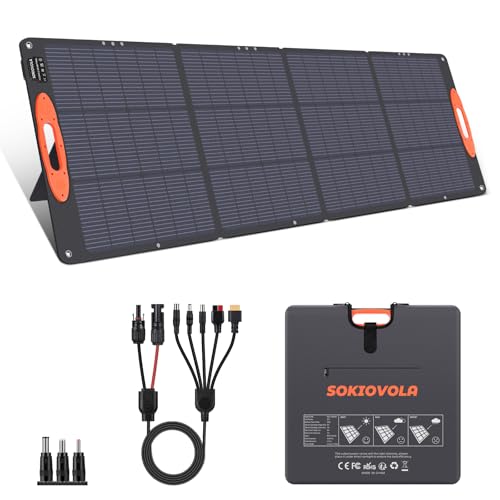
This foldable 200W panel is designed for travelers and outdoor enthusiasts who need a balance of portability and power. It weighs about 16.31 pounds and folds to 21 by 23 inches, with a magnetic handle and four mounting holes for RV applications. It delivers up to 25% efficiency with A+ monocrystalline cells and features IP68 waterproofing and ETFE coating for durability in harsh weather. Best for RVers and campers who want a reliable, packable solar option. Limitation: may be heavy for long backpacking trips.
FlexSolar 100W Foldable Portable Solar Panel Charger

FlexSolar’s 100W panel emphasizes portability without sacrificing output. Weighing under 5 pounds with a slim profile, it unfolds to a generous 45.47 by 26.18 inches for maximum sun capture. It includes PD 3.0 USB‑C, 18W USB‑A, and 100W DC outputs, plus a 4‑in‑1 cable for compatibility with popular power stations. Better for weekend trips and off‑grid use where quick setup and device charging matter. Caution: maximum power is achieved in steady sun; performance drops on cloudy days.
ZeroKor 300W Portable Solar Generator Kit

ZeroKor pairs a 300W solar generator with a 60W panel, delivering a robust all‑in‑one solution for off‑grid living and emergency prep. It offers two 300W AC outlets, a DC port, three USB ports, and a quick‑charge USB option, plus an SOS flashlight. Best for users who want a compact power hub for camping or small cabin setups. Limitation: may not run high‑watt appliances continuously without careful load management.
SOLPERK Solar Panel Kit 20W 12V Charger Maintainer

SOLPERK’s 20W kit is a compact option for maintaining 12V batteries across trailers, boats, or small RV setups. It uses A+ cells with 21–30% efficiency, a low‑iron tempered glass surface, and an IP68 aluminum frame for weather resistance. The included 8A smart charge controller helps protect against overcharging and short circuits. Best for basic maintenance and light charging. Caution: low wattage means slower charging and limited usefulness for larger power needs.
TWELSEAVAN 200W Portable Solar Panel

TWELSEAVAN’s 200W panel emphasizes fast charging and broad compatibility. It delivers up to 24% efficiency with A+ monocrystalline cells and ETFE lamination for durability. A 5‑in‑1 MC4 connector and multiple DC adapters enable easy pairing with many portable power stations, while USB‑C and QC ports provide flexible charging for phones and accessories. Best for campers who want straightforward cross‑device charging. Limitation: heavier than ultra‑compact options, so plan transport accordingly.
Buying Guide: How To Choose The Right Solar Panel Kit
- Power needs: Estimate daily energy consumption. Choose a panel or kit that can meet or exceed that demand with some headroom for typical weather variations.
- Portability vs. size: Portable panels are ideal for RVs and camping, but fixed rooftop panels offer higher sustained output. Match your vehicle or space constraints.
- Cell technology: N‑type cells and 16BB busbars reduce heat and micro‑cracks, improving longevity and performance in challenging conditions.
- Durability: Look for ETFE or tempered glass with IP ratings for water and dust resistance, especially for outdoor use.
- Shade tolerance: Dual‑module or bifacial designs help maintain output under partial shading, an important factor for RV and rooftop setups.
- Outlets and compatibility: Check the available outputs (USB‑C, USB‑A, DC, MC4) and ensure compatibility with your power station or battery system.
- Ease of setup: Foldable panels with integrated handles or kits with simple controllers reduce installation time and risk of miswiring.
Frequently Asked Questions
- What is the most efficient type of solar panel for off‑grid use?
– N‑type panels with 16BB busbars typically offer higher efficiency and better longevity, especially in shaded or high‑heat environments. - Are portable solar panels suitable for RVs?
– Yes, foldable panels are popular for RVs due to their balance of weight, portability, and power output. - Do I need a solar generator or just panels?
– Panels generate electricity; a generator (or power station) stores and converts it for devices. Choose based on your power needs and storage requirements. - How much output do I need for basic camping use?
– For light use, 100–200W with a reliable controller and battery storage is usually sufficient for phones, lights, and small electronics. - Is waterproofing important for solar panels?
– Yes, IP ratings and proper sealing extend lifespan in rain, snow, and humidity, especially for outdoor setups. - Can shaded areas ruin solar performance?
– Partial shading can cause dramatic output drops; models with anti‑shade designs can mitigate this issue.