Answering the question, these top solar panels are best for caravan and RV enthusiasts seeking reliable off-grid power. The selections below prioritize durability, weather resistance, and ease of mounting, with clear guidance on who each product suits. Use this guide to compare capacity, installation ease, and long-term performance for a mobile lifestyle.
| Product | Best For | Key Benefit |
|---|---|---|
| SUNGOLDPOWER 8PCS 450W Panels | Big rigs, full-time nomads | High total wattage for off-grid charging |
| ECO-WORTHY 200W Kit | Balanced power for mid-size caravans | Integrated controller, durable frame |
| HQST-100W 2-Pack | Lightweight setups, modular arrays | Bifacial tech for extra power |
| JJN 200W Panels (2-Pack) | Space-conscious RVs | 10BB cells, high efficiency |
| JJN 100W Panel | Compact off-grid needs | Good efficiency, sturdy build |
SUNGOLDPOWER 450W Panels For Caravan And RV

The SUNGOLDPOWER 8-piece 450W system targets caravans and boats needing high daily energy. Best for full-time campers and larger RVs with space for a multi-panel array. Features Grade A monocrystalline cells and a waterproof IP68 design for all-weather use. The tough twin-wall aluminum frame supports long-term outdoor exposure and high tolerance against harsh conditions. A clear advantage is maximizing daytime charging when campsite power is limited. Consider space and mounting requirements; this kit demands a bigger rooftop area. Caution: ensure compatibility with your existing battery system and controller capacity.
Why chosen: High total wattage makes it ideal for caravans that run appliances simultaneously or rely on solar through long trips. The UL61730 Grade A cells imply consistent output under variable sun.
Best for: Larger caravans and RVs, or yacht/marine setups that can dedicate significant roof space to solar arrays.
ECO-WORTHY 200W Kit With Controller
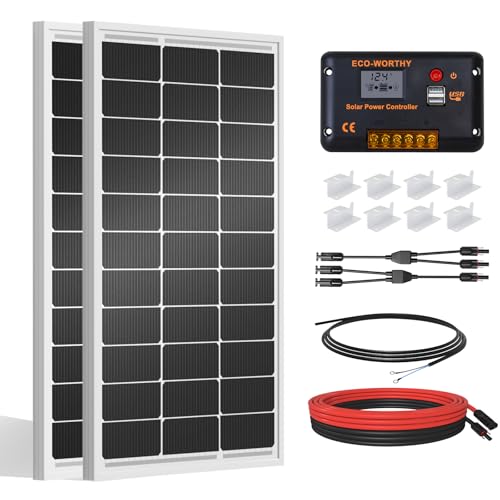
The ECO-WORTHY 200W kit suits mid-size caravans and campers needing dependable daily output. It includes a high-efficiency monocrystalline panel and a 30A PWM charge controller to manage battery charging for RVs, campers, and other off-grid uses. The aluminum frame resists corrosion, and the panel is designed to endure wind and snow loads. IP65-rated junction box adds protection for outdoor mounting. This kit emphasizes balanced power with straightforward installation. Caution: PWM controllers may be less efficient than MPPT in certain conditions, potentially affecting peak performance in very hot climates.
Why chosen: A good all-around option for travelers who want a reliable solar upgrade without complex configurations. The kit’s durability and water protection support long camping seasons.
Best for: RVs and caravans that need a solid daily charge with a simple setup and reliable weather resistance.
HQST-100W 2-Pack Monocrystalline Panels

HQST 100W panels deliver modular flexibility for caravans and small off-grid setups. The bifacial technology can push extra output by harvesting reflected solar energy, boosting overall efficiency in reflective environments. With Grade A+ cells and a high conversion rate, these panels perform well in portable RV installations. They come in a two-pack, making it easy to create an expandable array. Caution: pilot installation should consider rear-side energy capture to maximize bifacial gains; avoid mounting on surfaces with poor reflection or shadowing.
Why chosen: The bifacial feature offers extra energy potential without requiring large additional roof space. They pair well with modest roof layouts and adaptable mounting options.
Best for: Caravans where roof area is limited but an expandable, efficient array is desired.
JJN 200W Solar Panels (2-Pack)
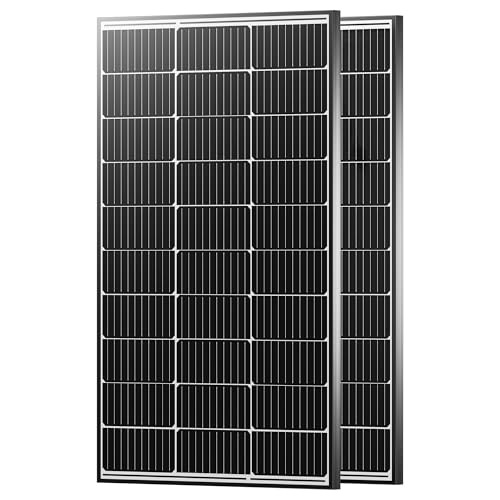
JJN’s 200W solar panels come in a two-pack setup designed for RVs and caravans needing higher power in a compact footprint. The 10BB monocrystalline cells improve efficiency, and the panels are built with a corrosion-resistant aluminum frame. They withstand strong winds and snow loads, making them suitable for varied climates. The IP65/IP67 protective features support outdoor use. Caution: the larger combined array size requires adequate mounting strength and appropriate wiring planning to handle higher current loads.
Why chosen: Space-efficient high-output panels that can be deployed as a compact, scalable array on many caravan roofs. They pair well with modest but expandable setups.
Buying Guide: What To Consider Before Buying Caravan Solar Panels
- Power needs: Calculate daily energy usage and match total wattage to support essential appliances without overloading the system.
- Mounting space: Measure roof area and consider modular panels versus fixed large arrays to fit your caravan’s shape.
- Controller type: MPPT controllers optimize charging in variable sunlight; PWM controllers are simpler and typically cheaper but less efficient in optimal conditions.
- Durability: Look for waterproof ratings, corrosion-resistant frames, and robust mounting hardware for outdoor exposure.
- Weather tolerance: If you travel year-round, prioritize panels with higher wind and snow load ratings and IP ratings for junction boxes.
- Expansion potential: Choose panels that allow adding more modules in the future if power needs grow.
- Wiring and safety: Ensure wiring matches your battery system’s voltage and that connectors are weatherproof and appropriately rated.
Frequently Asked Questions
- Can I install solar panels directly on a caravan roof? Yes, with proper mounting brackets and weatherproof seals. Ensure the roof structure can support the weight.
- Is MPPT better than PWM for caravan solar setups? MPPT typically offers higher efficiency, especially in variable conditions, but costs more.
- How many watts do I need for basic RV living? A typical setup may range from 100W to 400W, depending on appliances and usage; larger rigs may require more.
- Should I buy a two-pack or single panels? Two-packs offer better scalability and easier mounting for expandable systems on caravans.
- What maintenance do caravan solar panels require? Periodic cleaning, inspection of mounting hardware, and wiring checks to prevent corrosion or loose connections.
- Do solar panels work in cloudy weather? They produce less output but can still generate energy; the system relies on battery storage for non-sunny days.