Choosing the right smart heating controller helps you save energy, simplify climate management, and keep sensitive environments steady. This guide highlights five reliable options across budgets and features, with clear notes on who each product is best for. Whether you need precise temp control for a greenhouse, a reptile terrarium, or a whole-home setup, these devices offer WiFi connectivity, scheduling, and voice compatibility to fit American households.
| Product | Best For |
|---|---|
| BN-LINK Temperature Controller Smart WiFi Thermostat | Remote control via app; great for garages, seedlings, and DIY projects |
| TURBRO TC01 Smart Temperature Controller | Flexible schedules and data tracking; ideal for home brewing and greenhouses |
| meross Smart Temperature Controller | Apple HomeKit users; broad heating and cooling compatibility |
| Bromic Affinity Smart-Heat Dimmer Controller | High-power outdoor heating; integration with Bromic heaters |
| DEWENWILS Smart Temperature Controller For Fan | Fan and small appliance control with memory and timers |
BN-LINK Smart WiFi Thermostat for Heating and Cooling

The BN-LINK Temperature Controller offers APP remote control and voice commands via Alexa or Google Home. It supports 2.4GHz WiFi and pairs with iOS and Android devices, making it suitable for buyers who want convenient, wireless management of heating or cooling devices in small to medium setups. Best for tech-savvy users who want quick remote access and simple voice control in environments like greenhouses, seedling rooms, or fermentation spaces.
Key points: 2-stage thermostat helps manage two devices or zones; compatible with BN-LINK Smart app for remote operation; voice control provided. Limitation: relies on 2.4GHz WiFi only, which may require network adjustments in some homes.
TURBRO TC01 Smart Temperature Controller

The TURBRO TC01 provides automatic on/off control based on a target temperature (14–212°F) with a programmable timer and a 2.4GHz WiFi connection. It supports APP-exclusive schedules and data tracking, making it well-suited for home brewers, seedling environments, greenhouses, and reptile enclosures. Best for users who value flexible timing and historical data to optimize energy usage.
Caution: Works only on 2.4GHz WiFi, so ensure your network fits this requirement. The device is best used where stable wireless coverage exists throughout the monitored space.
meross Smart Temperature Controller for HomeKit

The meross controller pairs with Apple HomeKit and supports a broad range of heating and cooling equipment. It includes an LCD display with backlight and offers scheduling, timer modes, and a 15A, 1800W maximum load. It is a solid choice for homes already using Apple ecosystems or those seeking easy voice-enabled control. Best for HomeKit households needing reliable, simple integration with existing devices.
Limitation: The screen may flash after long inactivity; this behavior is noted but not uncommon in some models. Temperature range capabilities and app features can vary by region and install.
Bromic Affinity Smart-Heat Dimmer Controller

The Bromic Affinity Smart-Heat Dimmer Controller handles up to 6,000 watts (6kW) at 208–277V single-phase, designed for outdoor heating and Bromic Platinum or Tungsten heaters. It supports Wi-Fi and Bluetooth for remote control and local operation, enabling you to turn heaters on, adjust settings, and monitor performance from a mobile app or within Bluetooth range. Best for outdoor spaces or high-power installations where precise dimming and remote access are essential.
Limitation: High power may require professional installation and compatible heater models; verify compatibility with existing outdoor heating setups before purchase.
DEWENWILS Smart Temperature Controller For Fan
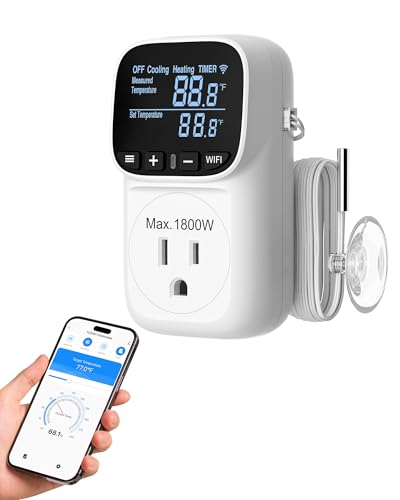
The DEWENWILS model supports six smart control modes, including cooling, heating, timers, and memory for power outages. It enables remote control via the app to manage fans, heaters, and cooling devices based on real-time temperature and schedules. Best for reptile enclosures, incubators, or small greenhouses where dynamic cooling or heating control is needed and outages must be restored automatically.
Tip: Use the memory function to prevent manual resets after outages, but ensure you configure the differential settings to avoid unnecessary cycling in climates with rapid temperature swings.
Buying Guide: Key Considerations For Smart Heating Controllers
- Network compatibility: Most devices require 2.4GHz WiFi. Confirm your home network supports this band and check whether a smart hub or extra setup is needed for your router.
- Power handling and outlets: Evaluate maximum current and wattage for your heaters or fans. High-power units like the Bromic require appropriate electrical work and compatible equipment.
- Control options: Decide between app-based control, voice assistants, and local control. Apple HomeKit, Alexa, and Google Assistant compatibility expands convenience, especially for multi-room setups.
- Scheduling and memory: Look for multiple timers, daily/weekly schedules, and memory features for outages. This helps maintain stability in incubators, labs, or greenhouses.
- Sensor accuracy and placement: Dual probes or multiple sensors improve accuracy in large spaces. Place sensors where the highest impact on environment occurs (near heat sources or plant roots).
- Data and insights: Some models log historical temperature data. If you need trends for compliance or optimization, choose a model with accessible data history.
- Installation considerations: Outdoor or high-temperature environments may require weatherproof enclosures or specific mounting provisions. Ensure the device matches your space and power configuration.
Frequently Asked Questions
- What is a smart temperature controller used for?
- Do these devices require a hub?
- Can I use a smart controller for outdoor heaters?
- What should I consider for dual-probe controllers?
- Is energy saving guaranteed with smart thermostats?
- Can I control these from my phone while away?
A smart temperature controller automates heating and cooling devices based on set temperatures, schedules, and remote access. It is ideal for greenhouses, incubators, terrariums, or rooms needing precise climate control.
Most do not require a dedicated hub; many connect directly to WiFi. Some ecosystems may benefit from a hub for broader smart home integration.
Yes, but ensure the model supports outdoor use and matches the heater’s electrical specifications. Some controllers are designed specifically for outdoor heaters with weather-resistant features.
Dual-probe controllers improve accuracy by monitoring two locations. Place probes in representative spots to prevent overheating or underheating in critical areas like plant roots or reptile enclosures.
Energy savings depend on scheduling, usage patterns, and device efficiency. A well-tuned schedule and remote control can reduce waste without sacrificing comfort.
Most models offer remote control via a companion app, enabling temperature monitoring and adjustments from anywhere with internet access.