Answering the question for artists seeking reliable, quality sketchbooks, this guide highlights five top picks across dry media, mixed media, and travel-friendly designs. Each is best for different needs—beginner practice, left-handed use, portable urban sketching, or heavyweight paper for charcoal and lettering. The table below quickly compares key points to help decide which sketchbook fits your style and projects.
| Product | Size | Pages/Sheets | Best For |
|---|---|---|---|
| Soucolor Sketch Book 9″ x 12″ | 9 x 12 inches | 100 sheets | Great for teens and adults doing dry media and travel sketches |
| Fuxi 9″ x 12″ Sketch Book | 9 x 12 inches | 100 sheets | Left-handed or right-handed users; clean erase shading |
| String & Space Artist’s Sketchbook Hardcover | 8.25 x 11.4 inches | 40 sheets / 80 pages | Heavyweight paper for charcoal and mixed media |
| MOFUNY Mixed Media Sketchbook 9×12 | 9 x 12 inches | 60 sheets | Versatile for pencil, pen, charcoal, and light ink |
| Leda Art Supply Softcover Sketch Book | 8.25 x 11.5 inches | 160 pages (paper-based) | Heavy, durable 90 lb paper for ink, colored pencils, and watercolor use |
Soucolor Sketch Book 9″ x 12″

Best for: Beginners and students who want a reliable, portable dry-media sketchpad. The Soucolor book uses premium drawing paper that minimizes bleeding and feathering, supporting graphite, colored pencils, charcoal, pens, and soft pastels. It weighs well for daily practice and travel. The 100-sheet format provides ample reuse without frequent reloading. Caution: Not ideal for heavy wet media like watercolor or markers; choose dedicated pads for those media.
Fuxi 9″ x 12″ Sketch Book

Best for: Students and artists who value a top-spiral, lay-flat experience with good erasing capability. The paper has a diagonal-tooth texture that grips graphite and charcoal for clean lines and blending, and the spiral binding reduces wrist strain while shading. Caution: Paper is not suitable for watercolor, alcohol markers, or heavy wet media.
KEVIN&SASA CRAFTS Hardbound Sketch Book

Best for: Artists who want a durable, protective cover and a large, high-quality paper surface. The 8.5×11 size with 90gsm paper provides a sturdy drawing experience, suitable for pencil, pastels, and light ink. Detachable pages and a PU-wrapped hardcover offer protection for finished works. Caution: The paper weight is lighter than some heavyweight pads, so very wet media may bleed through.
String & Space Artist’s Sketchbook Hardcover
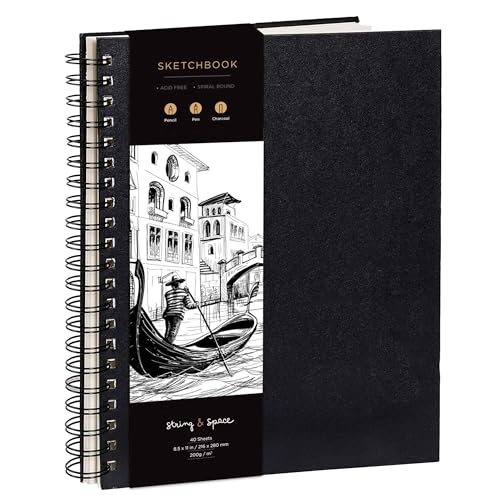
Best for: Artists seeking a heavy, premium feel for charcoal, graphite, and mixed media. The 200GSM, 40-sheet format reduces bleed-through and supports thick applications. The hardcover provides stable drawing space and longevity. Caution: Fewer pages than some competitors, so plan for ongoing projects or larger collections.
MOFUNY Mixed Media Sketchbook 9×12

Best for: Mixed media artists who want a versatile 98 lb/160 gsm paper. The ring binding allows 360-degree rotation for easy access, and the pages resist bleeding with dry media. Caution: Not ideal for heavy watercolor or alcohol-based inks; use dedicated pads for those media.
Leda Art Supply Softcover Sketch Book

Best for: Artists seeking a large, affordable lay-flat sketchbook with lots of pages. The 90-pound paper is versatile for ink, colored pencils, charcoal, watercolor, and mixed media. The cream-colored, acid-free paper helps preserve art over time. Caution: As a softcover book, it may flex with heavy media when carried in a tight bag.
Buying Guide
What paper weight should I choose?
Paper weight affects bleed-through and media compatibility. Heavier paper (90–200 gsm) is better for ink, charcoal, and watercolor with less bleed. Lighter paper (60–90 gsm) works well for pencils and light ink but may feather with heavy media.
What binding matters for my workflow?
Spiral bindings lie flat and are easy to fold back for single-handed use, ideal for right- or left-handed artists. Hardcover books offer durability and a stable drawing surface, while softcover pads are lighter and portable.
Should I pick a dedicated wet-media pad or a dry-media pad?
Dry-media pads excel with pencils and pastels. If you occasionally use watercolors or markers, choose a mixed-media pad or a dedicated watercolor pad to prevent bleed-through and warping.
How many pages do I need?
For casual practice, 40–60 pages is sufficient. For ongoing projects or classes, 80–160 pages reduce the frequency of replacements. Consider whether you prefer perforated pages for easy sharing or display.
Is portability a factor?
If you sketch on the go, look for 8–9 inch sizes with a sturdy cover and lightweight binding. Pocket backpacks and tote bags benefit from compact formats without sacrificing paper quality.
Summary of key considerations
- Media compatibility: dry vs. wet media support
- Paper weight and texture for blending and erasing
- Binding type and page-permission features
- Durability of cover and ease of page removal
FAQ
- What is the best sketchbook for travel?
Look for a compact size (8–9 inches), durable cover, and lay-flat binding. A 40–60 sheet option balances weight and space.
- Can I use watercolors in these sketchbooks?
Only in pads labeled as mixed-media or watercolor. Dry-media pads may bleed or warp with water.
- Which sketchbook is best for beginners?
Beginners benefit from mid-weight, affordable pads with wide pages for practice and erasing—like 60–100 sheet options in 9×12 or 8.5×11 sizes.
- What is the advantage of a top-spiral bound book?
Top-spiral binding reduces wrist contact and allows easy page-turning, especially for left-handed users.
- Should I prioritize number of pages over paper thickness?
Both matter. More pages reduce replacements, but thicker paper better resists bleed-through and feathering.