Finding the right single boiler espresso machine means balancing speed, steam capability, and simplicity. This article helps buyers choose machines that excel in small kitchens or office spaces while delivering solid espresso shots. The highlighted models suit different needs—from compact beginners to those seeking integrated grinders or milk frothers. Each entry notes who it’s best for and why it’s a strong pick for that use case. A quick summary table follows to compare core features at a glance.
| Product | Best For | Key Benefit | Notes |
|---|---|---|---|
| Breville Barista Express Espresso Machine BES870XL | Home enthusiasts who want bean-to-shot control | Integrated grinder and dose control | Single boiler; reliable for daily use |
| Gaggia RI9380/46 E24 Espresso Machine | Espresso purists who prefer commercial-grade portafilter | Solid steel housing and 9 bar extractions | Brushed stainless steel; larger footprint |
| CASABREWS 3700 Essential Espresso Machine | All-in-one value seekers with milk frothing | 20-bar pump and powerful steam wand | Compact and stylish stainless steel |
| atatix Espresso Machine with Milk Frother | Budget-conscious buyers who want quality crema | 20-bar pressure with fast preheat | NTC temp control adds consistency |
| De’Longhi Stilosa Manual Espresso Machine | Basic setup with manual milk frothing | 15-bar pump with included tamper | Compact and beginner-friendly |
Note: All models emphasize ease of use, temperature stability, and steam performance suitable for home or small office environments. Choose based on whether you value integrated grinding, portafilter quality, or milk frothing speed.
Breville Barista Express Espresso Machine BES870XL

The Breville Barista Express combines a built-in grinder with precise dose control. Best for: home users who want bean-to-shot capability without buying separate equipment. Why selected: it streamlines workflow from grinding to extracting in one unit. Caution: the setup may require some acclimation for dialing in grind size and dose. Features include a precision conical burr grinder and low-pressure pre-infusion for balanced extraction.
Gaggia RI9380/46 E24 Espresso Machine
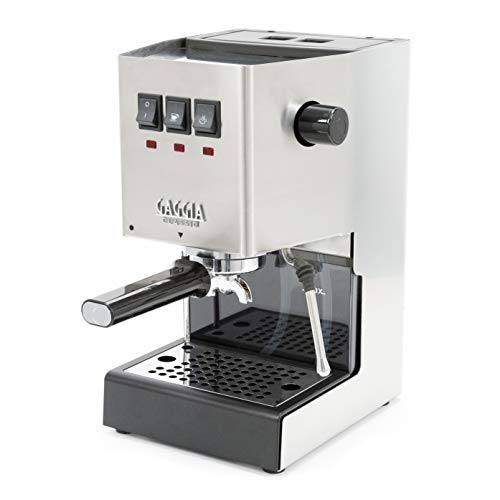
Best for: espresso enthusiasts who want a robust, commercial-style housing. Why selected: solid steel construction and a true 9-bar extraction with a 58mm portafilter. Limitation: it may require more space and a steeper learning curve than compact, integrated machines.
CASABREWS 3700 Essential Espresso Machine

Best for: users seeking an all-purpose machine with a strong steam wand for milk-based drinks. Why selected: 20-bar pressure and a combination milk frother enable café-style drinks. Caution: compact design means a smaller water reservoir and footprint may require more frequent refills.
atatix Espresso Machine with Milk Frother

Best for: buyers seeking a budget-friendly machine with reliable steam and quick heating. Why selected: 20-bar system and fast preheat deliver consistent crema. Limitation: steam wand performance may vary with larger milk volumes; use for smaller batches first.
Chefman Crema Deluxe Espresso Machine
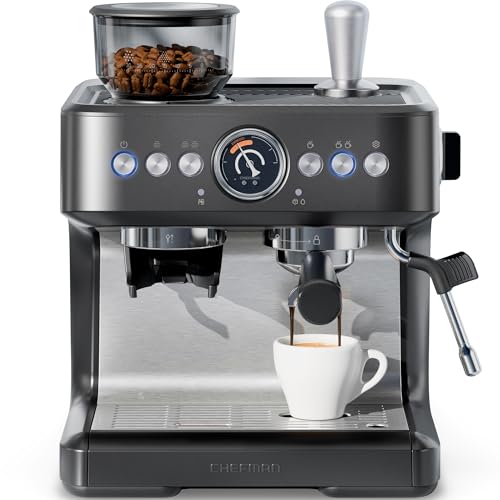
Best for: homes that want both grinding and brewing in one package. Why selected: double boiler design speeds up frothing and brewing, while the 30-setting grinder supports customization. Caution: larger footprint than strictly compact, entry-level models.
KEENSTAR 3.5Bar Espresso Machine

Best for: beginner users who want a simple, fast espresso setup with milk frothing. Why selected: 800W power and 3.5-bar system allow quick heating and straightforward operation. Caution: not ideal for advanced baristas seeking high-pressure leverage for crema stability.
Buying Guide: Key Purchase Considerations
- Single boiler vs dual boiler: Single boilers heat water for extraction and steam sequentially; dual boilers offer simultaneous brewing and milk frothing for faster service.
- Integrated grinder: Machines with built-in grinders save space and ensure fresher grounds, but may complicate maintenance and cleaning.
- Pressure and temperature stability: Look for reliable pump pressure (around 9-15 bars) and stable temperature control to improve crema and flavor consistency.
- Portafilter size: 58mm portafilters are often preferred by enthusiasts for even extraction; smaller sizes are common in compact models.
- Milk frothing capability: If you plan to make lattes or cappuccinos, assess steam wand quality and foam texture potential.
- Maintenance: Consider ease of descaling, grinder cleaning, and access to spare parts.
- Footprint and capacity: Reserve space for the machine and water reservoir; larger machines may not fit in small kitchens.
FAQ
- What is a single boiler espresso machine best used for?
Best for customers who want a compact setup and are okay with brewing and steaming in sequence rather than simultaneously.
- Do I need a built-in grinder?
Not required, but it helps with fresh grounds and a shorter workflow. If you already have a grinder, a models without one can save space and cost.
- Is 9 bar or 15 bar pressure better for espresso?
Most espresso tastes best near 9 bars. Higher pressure can help with extraction but may not improve flavor if not managed well.
- What maintenance is most important for longevity?
Regular descaling, cleaning the portafilter and steam wand, and wiping down surfaces to prevent milk residue buildup.
- Which machine is best for beginners?
Entry-level models with straightforward controls and good steam capability are often the easiest to start with, such as compact, manual-pump options.
- Can I make milk-based drinks with all these machines?
Yes, but performance varies. Machines with strong steam wands or double boilers are generally better for milk drinks and latte art.