Finding a silent PC case means prioritizing quiet operation without sacrificing cooling performance. This article compares five top options designed for low noise, predictable airflow, and practical build features. It’s ideal for quiet workstation setups, home theaters, or gaming PCs where noise is a concern. Each product is evaluated for who it suits best, with clear pros and limitations to help you decide quickly.
Summary table of chosen products:
| Product | Best For | Key Quiet Features | Note |
|---|---|---|---|
| Antec P7 S Mid-Tower | Balanced quiet cooling with strong airflow | 4 PWM fans included, brushed front panel, dual side mesh | Supports up to 360 mm radiator |
| be quiet! Pure Base 501 Black | Minimalist, noise-aware builds | 2 Pure Wings 3 140mm PWM fans, optimized airflow | Front/top radiator options up to 360mm |
| be quiet! Silent Base 802 | High airflow with sound insulation | 3 Pure Wings 2 fans, sound-insulated panels, modular layout | Interchangeable top/front covers for airflow vs. silence |
| Phanteks XT Pro Silent | Quiet chassis with strong cooling headroom | Includes 3x M25-120 fans, supports many 120mm locations | Closed panels for reduced noise |
| be quiet! Silent Base 802 Window | Silent operation with visual appeal | 3 Pure Wings 2 fans, tempered glass window, thick insulation | Premium look with same quiet focus |
Antec P7 S Mid-Tower ATX PC Case
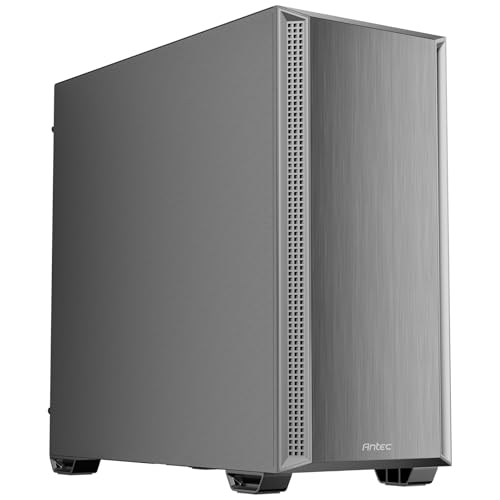
The Antec P7 S combines a sleek brushed front with dual side mesh to enhance intake airflow while keeping noise predictable. It ships with four PWM fans (three 120 mm at the front and one 120 mm at the rear) for balanced cooling out of the box. The top supports a radiator up to 360 mm, allowing flexible liquid cooling options. This case is best for buyers who want a clean, minimal aesthetic with solid cooling readiness.
Who it’s best for: Quiet builders who value an unobtrusive look and ready-to-use cooling performance for mid- to high-end GPUs and CPUs.
Why chosen: The built-in four PWM fans reduce the need for aftermarket noise tuning and help maintain steady temperatures during long sessions. A potential limitation is that the front mesh and fans still allow audible airflow under load if fans are run at high speeds.
be quiet! Pure Base 501 Black ATX Case
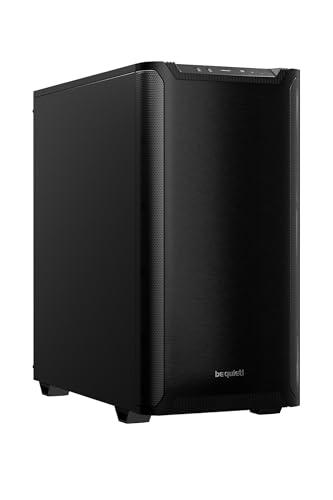
Pure Base 501 is streamlined for quiet operation and absolute focus on airflow efficiency. It ships with two Pure Wings 3 140mm PWM fans and emphasizes optimized air pressure to reduce turbulence. Despite its compact footprint, it accommodates high-end GPUs and large coolers, while front and top areas support versatile radiator placements (up to 360 mm at the front or 240 mm at the top).
Who it’s best for: Quiet enthusiasts who want a compact, clean-looking case that still supports robust cooling configurations.
Why chosen: The design prioritizes low noise with blade optimization and a calm internal layout. Caution: Maximum radiator support is strong, but may require careful component planning to maintain silence with very power-hungry GPUs.
Phanteks XT Pro Silent Mid-Tower

The Phanteks XT Pro Silent Chassis focuses on silent operation with closed panels and bundled cooling. It includes three M25-120 black fans and supports up to seven 120mm fan locations, giving users flexibility to tailor quiet airflow versus aggressive cooling. The closed panels help minimize noise leakage, while still allowing solid cooling performance when configured with the right fans and radiators.
Who it’s best for: Builders who want a dedicated silent path with ample fan expansion, and who don’t mind a slightly more feature-heavy design to maximize quiet operation.
Why chosen: The combination of an enclosed noise profile and strong fan expansion potential makes this a strong pick for quiet, scalable builds. Caution: Closed panels can complicate maintenance compared with open-panel designs.
be quiet! Silent Base 802

The Silent Base 802 emphasizes sound insulation and modularity. It ships with three Pure Wings 2 fans, and it offers interchangeable top covers and front panels to switch between maximum airflow and silent operation. Its decoupled motherboard tray supports flexible layouts, while the IO panel includes a modern fan controller and USB 3.2 Gen 2 Type C. This is a strong pick for those who alternate between quiet work and intense gaming sessions.
Who it’s best for: Quiet-focused users who want adaptable airflow options and a visually clean interior with effective insulation.
Why chosen: The modular design and enhanced insulation help reduce noise across a variety of workloads. Caution: The additional top/front panel options may add some complexity during setup for first-time builders.
be quiet! Silent Base 802 Window

Silent Base 802 Window blends silent operation with a tempered glass side panel for visual appeal. It retains the sound insulation and modular layout of the gem family, plus three Pure Wings 2 140mm fans for a balance of quiet performance and strong airflow. Extra thick insulation mats contribute to noticeable noise reduction, making it suitable for media centers or bedrooms where aesthetics matter as much as acoustics.
Who it’s best for: Users who want a quiet PC case with an attractive windowed exterior to showcase components while maintaining silence.
Why chosen: The glass window adds style without compromising the core silent design. Caution: The tempered glass panel requires careful handling during maintenance to prevent damage.
Buying Guide: Key Considerations for Silent PC Cases
- Noise-reduction features: Look for insulated panels, decoupled motherboard trays, and thick side panels. Cases with sound-dampening materials tend to run quieter under load.
- Fan configuration and cooling headroom: Cases that ship with PWM fans and support multiple radiators offer flexible quiet-to-performance tuning. Consider whether you need up to 360 mm radiators or more limited front/top options.
- Build quality and ease of maintenance: Modular interiors, tool-free drive bays, and accessible cable management improve long-term silence and usability.
- Aesthetic options without sacrificing acoustics: Some models offer tempered glass, interchangeable top covers, or color-matched panels. Choose based on whether silence or appearance is the priority.
- Expansion potential: If you plan to upgrade GPUs or add multiple drives, verify the case supports your motherboard form factor (ATX/mATX) and provides ample clearance for GPUs and coolers.
- Cable routing and airflow: Favor cases with good cable routing space and airflow-friendly layouts to prevent turbulence and heat buildup that can raise noise from fans.
- Maintenance considerations: Closed panels can reduce noise but may complicate cleaning; ensure the design makes dust filtration accessible and easy to remove.
Frequently Asked Questions
- What makes a PC case “silent”?
– It combines noise-dampening materials, optimized airflow, and often quieter fan models to reduce audible noise while maintaining cooling performance. - Do built-in fans significantly affect noise levels?
– Yes. PWM-controlled fans can adjust speed for quiet operation, but high-load tasks may still increase noise if fans run at higher RPMs. - Is windowed tempered glass bad for silence?
– Tempting visuals don’t inherently increase noise; the key is insulation and panel construction. Glass itself is not loud, but its mass can affect resonance if not properly dampened. - Should I prioritize radiator support or fan count for silence?
– For silent builds, prioritize well-insulated panels and a balanced radiator-to-fan ratio. Too many fans can increase audible airflow noise if not controlled. - Are modular cases worth it for silence?
– Yes, modularity helps tailor the interior to your components and noise-control needs, enabling better cable management and airflow paths.