Answering the hunt for reliable self-inflating sleeping pads, this guide compares five popular models to help campers, hikers, and car-tent travelers choose the right pad. Each pick is evaluated for comfort, setup speed, weight, and practicality in different outdoor scenarios. The top choices include pads with built-in pumps, memory foam blends, and reinforced fabrics for durability. This overview helps buyers decide who each pad is best for, whether you prioritize ultralight gear, extra-thick cushioning, or quick inflation after a long day outdoors.
Summary of chosen products:
| Product | Best For | Key Benefit | Approx. Weight |
|---|---|---|---|
| OGERY Self-Inflating with Foot Pump | Car camping, tent campers | 3″ memory foam support with built-in foot pump | Varies by model |
| FUN PAC Camping Sleeping Pad | Backpackers, travelers | Ultralight, compact, built-in pillow | Lightweight |
| Coleman Self-Inflating Sleeping Pad | Casual campers | No external pump needed, included pillow | Lightweight |
| OGERY 6″ Ultralight Inflating Pad | Hikers, long trips | 6″ thick with built-in foot pump | Lightweight |
| MOXILS Memory Foam Camping Pad | Backpacking with comfort | Memory foam blend, ultra-compact pack size | Moderate |
OGERY Self-Inflating Sleeping Pad With Built-in Foot Pump

Best for campers who want stable support without a separate pump. This 3″ thick pad uses high-density foam and a hybrid foam-and-air structure to provide even support across all sleeping positions, reducing shoulder and hip pressure for side sleepers while staying supportive for back and stomach sleepers. A built-in foot pump lets you fine-tune firmness after expansion, avoiding mouth blowing. The fabric is abrasion-resistant with a textured bottom to minimize sliding on tents or car trunks. Caution: the higher thickness adds weight compared to ultra-light designs.
Who it’s for: ideal for car camping or tent setups where a stable, foam-like feel is preferred and you want rapid setup after driving. Why selected: it balances dense foam comfort with self-inflation and a built-in pump, reducing setup time and effort.
FUN PAC Camping Sleeping Pad With Pillow

Best for ultralight travelers and backpackers who want a compact pad with integrated comfort features. It measures up to 78x27x8 inches after inflation and uses egg-shaped air cells plus a built-in pillow to support the back and neck. Inflation takes about 30–60 seconds with the built-in pump, and deflation is quick. The pad is designed to be easy to carry, roughly the size of a water bottle when packed. Caution: the larger footprint may be less suitable for very tight bivy setups.
Who it’s for: ideal for hikers and travelers seeking a balance between portability and cushioned support. Why selected: the combination of ultralight design and a built-in pillow provides streamlined packing without sacrificing comfort.
Coleman Self-Inflating Sleeping Pad With Pillow
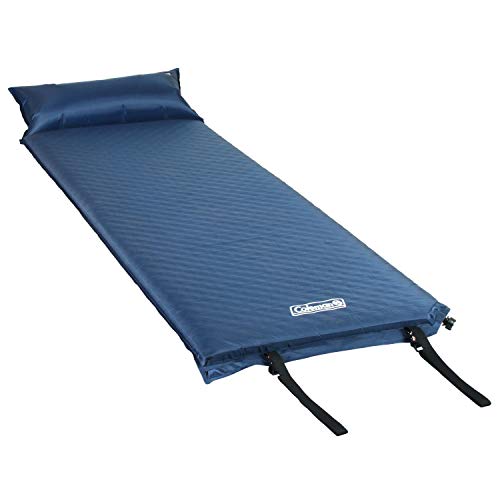
Best for casual campers who want a simple setup without a separate pump. Coleman’s pad includes a built-in pillow and requires no external air pump, making setup straightforward after unrolling. It focuses on ease of use and portability for shorter trips or quick overnight stays. Caution: some users may perceive less dense support compared with higher-end foam-and-air hybrids.
Who it’s for: great for weekend campers, family outings, or first-time hikers who value simplicity. Why selected: a reliable, no-fuss option with built-in pillow and easy inflation that reduces gear fuss.
OGERY Sleeping Pad With Pillow, 6″ Thick

Best for hikers who want maximum comfort on longer trips. This ultralight pad offers 6″ thickness for enhanced back and neck support, along with a built-in foot pump for inflation. It folds down compactly, and the stuffed size is designed for easy backpacking. Caution: thicker padding may reduce packability for ultra-light minimalist packs.
Who it’s for: hikers and campers who prioritizes comfort during longer stays and are okay with a slightly larger packed size. Why selected: high thickness and built-in inflation provide premium comfort while remaining portable for many backcountry scenarios.
QGB Memory Foam Camping Sleeping Pad

Best for those who want a hotel-like feel in the backcountry. This pad blends high-density foam with high-resilience support foam to deliver cloud-like cushioning and even weight distribution, reducing pressure points. It folds down to a compact size and can inflate quickly with the built-in design. Caution: memory-foam blends can be heavier and slightly bulkier to pack compared to pure air pads.
Who it’s for: campers needing premium comfort for longer trips or guests staying in a tent overnight. Why selected: memory-foam technology minimizes bottoming out and delivers consistent support across sleeping positions.
Gear Doctors Oxylus 4.3 R-Value Insulated Foam Pad
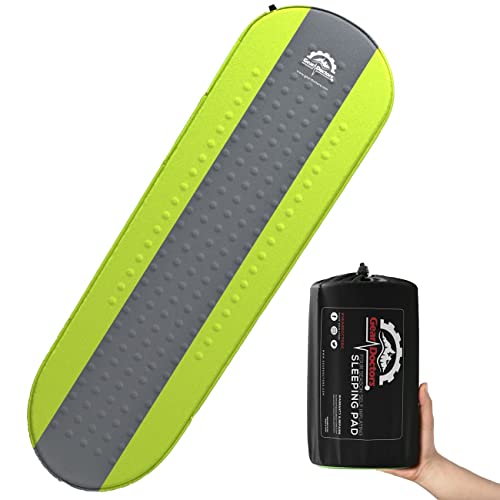
Best for four-season use and durability on rough terrain. The Oxylus pad uses a 4.3 R-value insulated core, combining foam with self-inflating capabilities. It compresses for packing and expands to a broad surface quickly, offering stability on uneven ground. Caution: some may find the setup a bit more involved than basic self-inflating pads due to its insulated layers.
Who it’s for: adventurers who camp in varied conditions and want reliable warmth and stability. Why selected: strong insulation and a balanced, beginner-friendly setup make it adaptable for many outdoor scenarios.
Buying Guide: Key Purchase Considerations
- Insulation and R-value: Higher R-values improve warmth on cold nights; consider your typical camping climate and ground conditions.
- Thickness versus pack size: Thick pads offer more cushion but may weigh more and take space. Balance comfort with transport needs.
- Self-inflation vs. built-in pump: Self-inflating designs are easy but may require some breathing; built-in pumps simplify setup, especially after long days.
- Materials and durability: Look for abrasion-resistant fabrics and non-slip bases for stability on varied surfaces.
- Weight and compressibility: For backpacking, prioritize lightweight, compact packs; for car camping, comfort and durability may take precedence.
- Maintenance and repair: Consider pads with simple repair options or warranties for longer trips.
Frequently Asked Questions
- What is a self-inflating sleeping pad?
It combines foam insulation with an air chamber that expands when opened, providing cushioning with minimal effort. - Which pad is best for car camping?
Pads with higher thickness and foam support (like 3″–6″ pads) typically offer the most comfort for car camping. - Do built-in pumps make a difference?
Built-in pumps speed setup and reduce mouth or external pump use, which is convenient after a long day. - Is memory foam better than foam-and-air?
Memory foam provides contouring comfort; foam-and-air pads balance support and weight, depending on design. - How do I choose the right R-value?
Higher R-values are warmer; pick a value appropriate for nighttime temperatures and ground exposure. - Can these pads be used in tents with ground moisture?
Yes, but ensure a groundsheet or additional barrier to reduce moisture transfer and prolong pad life.