Direct answer: a used mirrorless camera from reputable brands offers solid image quality and compact design at lower prices. This guide highlights five solid picks that balance performance, reliability, and value for different buyers—from beginners to travel shooters. Best for budget-conscious beginners: entry-level Sony and Canon bodies; best for compact travel kits: Canon EOS RP kit; best for retro styling and advanced controls: Fujifilm X-Pro 2; best for feature-rich value: a versatile selection with multiple lenses. Below is a quick comparison to help you choose.
| Product | Brand | Sensor | Megapixels | Ideal For |
|---|---|---|---|---|
| Sony Alpha a6000 (Body Only) | Sony | APS-C | 24.3 MP | Beginner and hobbyists seeking solid AF |
| Canon EOS R100 Kit (18-45) | Canon | APS-C | 24.1 MP | Compact beginner setup with 4K video |
| Canon EOS R100 with 18-45 & 75-300 | Canon | APS-C | 24.2 MP | Beginner to enthusiastic shooters needing versatile lenses |
| Canon EOS RP with 24-105 | Canon | Full-frame | 24 MP | Travel and vlogging with full-frame look |
| Fujifilm X-Pro 2 (Body) | Fujifilm | APS-C | 24.3 MP | Premium control, classic rangefinder styling |
Sony Alpha A6000 Mirrorless Camera (Body Only)

The Sony a6000 targets budget-conscious shooters who want fast autofocus and a compact form. It features a 24 MP APS-C CMOS sensor and a hybrid AF system with 179 phase-detection points and 25 contrast-detect points. Best for learners and hobbyists who value quick focus in everyday shooting and street photography. Caution: body-only kits require a separate lens purchase, which can affect overall cost for a complete setup.
Canon EOS R100 Kit with RF-S 18-45mm

The Canon EOS R100 kit emphasizes user-friendly operation and portability. It uses a 24.1 MP APS-C sensor with the DIGIC 8 processor to deliver crisp images and approachable 4K video. This kit is ideal for beginners who want a small system with reliable autofocus and built-in Wi-Fi/Bluetooth for quick sharing. Limitation: the base kit lens is modest in reach; consider adding a longer lens for versatility.
Canon EOS R100 With Dual Lens Bundle
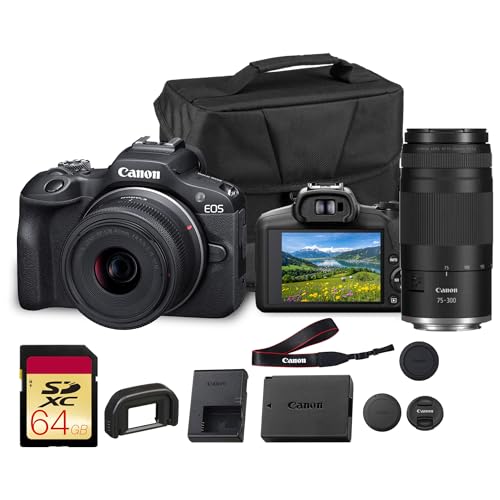
This Canon bundle adds two versatile lenses—the RF-S 18-45mm and the RF 75-300mm—giving beginners broad coverage for landscapes, portraits, and distant subjects. It pairs a 24.2 MP APS-C sensor with DIGIC 8 processing for crisp detail and nice color rendition. Best for buyers who want a ready-to-shoot setup, with more focal flexibility than a single-lens kit. Caution: larger kit size means more weight and cost than a single-lens option.
Canon EOS RP with RF 24-105 Kit

The Canon EOS RP is a full-frame option that remains compact and lightweight, offering a 24 MP sensor and a versatile 24-105 zoom. It’s best for travelers and vlogging where a full-frame aesthetic matters without a heavy, expensive setup. Like most full-frame bodies, it benefits from larger lenses for optimal depth of field. Limitation: being a used full-frame, body wear and lens compatibility should be considered in the purchase process.
Fujifilm X-Pro 2 (Body)

The Fujifilm X-Pro 2 emphasizes classic rangefinder styling with modern imaging. It uses a 24.3 MP X-Trans CMOS III sensor and an advanced hybrid viewfinder for flexible shooting perspectives. Best for photographers who value tactile controls and color science that Fujifilm is known for. Caution: the X-Pro 2 is older; availability of new lenses and service should be checked when buying used.
Canon EOS M200 Compact Vlogging Camera

The Canon EOS M200 focuses on compact design and strong video capabilities. It offers 24.1 MP APS-C imaging and Dual Pixel CMOS AF with eye detection. It’s a good pick for vloggers and casual shooters who prioritize portability and easy sharing through built-in Wi-Fi and Bluetooth. Limitation: newer lenses and accessories are less widely available than newer Canon mirrorless lines; consider this when planning future upgrades.
RASTKY 75MP 5K Mirrorless Camera

The RASTKY 75MP 5K model markets itself as a high-detail option with a 75 MP capture and 5K video. It includes a pop-up flash for low-light shots and an extended battery life claim. Best for content creators who want extra resolution and lighting features in a single, travel-friendly package. Caution: branding and long-term support vary; verify compatibility with preferred lenses before purchase.
Buying Guide
What should you consider when choosing a second-hand mirrorless camera?
- Budget vs. needs: Define your primary use—portraits, travel, video, or sports—and match to sensor size and lens ecosystem.
- Sensor and image quality: APS-C bodies offer strong image quality at a lower cost; full-frame options deliver deeper depth of field and low-light advantage, often at higher used prices.
- Autofocus and speed: Look for reliable AF systems, especially if you shoot moving subjects or street photography.
- Lens ecosystem: A broader lens selection increases long-term versatility; consider future lens purchases when evaluating a body.
- Build and ergonomics: A comfortable grip and intuitive controls matter for extended shoots; test handling if possible.
- Condition and warranty: In used markets, check for signs of wear, battery health, and any remaining manufacturer or third-party warranties.
- Video capabilities: If you create video, confirm 4K availability, frame rates, and stabilization features.
- Storage and accessories: Ensure availability of batteries, chargers, and memory cards; compatibility with your existing gear matters.
- Market availability: Some models are older and harder to find in good condition; balance price against potential maintenance needs.
Quick buyer tips
- Choose “best for beginners” if you want straightforward operation and easy lens upgrades.
- Choose “better for travel” if compact size and weight are priorities.
- Choose “best for portrait work” if you value deeper background blur and color rendition.
FAQ
- What is a second-hand mirrorless camera?
- Is it safe to buy used cameras online?
- Do used cameras hold their value well?
- What should I inspect before buying a used camera?
- Which brand offers the best used mirrorless options?
- Are used full-frame cameras worth buying?
A used mirrorless camera is a previously owned mirrorless system that still offers modern image sensors and interchangeable lenses at a lower price than new gear.
Yes, when buying from reputable sellers, verifying return policies, warranty options, and inspecting photos of the actual unit helps reduce risk.
Used cameras can hold value better if they are from popular models with ongoing lens ecosystems and reliable support.
Check shutter count (if visible), sensor cleanliness, body wear, screw integrity, grip condition, and battery health. Ensure autofocus and exposure work as expected.
Popular options include Sony, Canon, and Fujifilm, each with strong lens ecosystems and robust second-hand markets.
Used full-frame bodies can provide superior image quality and depth of field, but lenses and maintenance costs should be considered.