When choosing sewing scissors, look for ultra-sharp blades, a stable pivot, and an ergonomic grip that reduces fatigue. The right pair makes quick work of fabric, leather, and patterns without fraying. This guide highlights five top options, each suited to different sewers—from hobbyists to professionals. Select a pair that matches your typical projects, from garment construction to quilting and crafts. Below is a quick comparison to help you decide which to buy first.
| Product | Best For | Key Benefit |
|---|---|---|
| Fiskars 8″ RazorEdge Fabric Scissors | All-purpose fabric cutting | Ultra-sharp blades for clean cuts to the tip |
| Snavida Tailor Scissors 9″ | Heavy fabrics and multiple layers | High-carbon steel with titanium coating |
| Asdirne 4-Scissor Bundle | Varied sewing tasks | Versatile set with multiple blade sizes |
| LIVINGO 9.5″ Tailor Scissors | General sewing and crafts | High-density steel; rust-resistant blades |
| Wteehn 8″ Professional Scissors | Thick materials and leather | 45° blade angle for smooth cutting |
Fiskars 8″ RazorEdge Fabric Scissors, Heavy Duty & Sharp Fabric Shears

Fiskars RazorEdge fabric scissors feature ultra-sharp stainless blades with a precisely honed edge, delivering clean cuts all the way to the tip. The advanced pivot design ensures smooth action through a range of fabrics, while the ergonomic handle supports comfortable control. This set is best for sewists who regularly cut woven fabrics, from cotton to denim, and need dependable performance with minimal hand strain.
- Best for: Everyday fabric cutting, including multi-layer projects.
- Why selected: Consistent blade sharpness and a balanced feel for extended use.
- Caution: The long blade can be less nimble for very tight notches on tiny patterns.
Snavida Fabric Scissors Tailor 9 Inch Heavy Duty
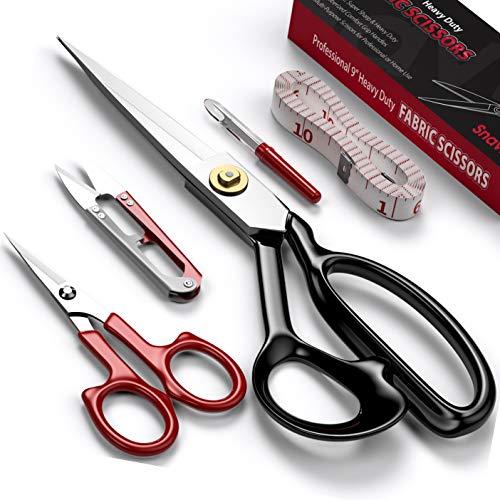
These tailor scissors are built from high-carbon steel with a titanium coating for durability and sharpness. The ergonomic, soft-grip handle supports precision control, making them a solid choice for garment construction, quilting, and alterations. They excel at cutting multiple layers with minimal effort, which helps speed up sewing projects.
- Best for: Cutting heavy fabrics and multiple layers.
- Why selected: Strong blades stay sharp longer and resist rust.
- Caution: Heavier weight may cause fatigue on extended use for very light fabrics.
Asdirne Premium Sewing Scissors Bundle

This 4-pack covers a wide range of needs: 9″ fabric scissors, 5″ detail shear, 3.9″ embroidery scissors, and 4.8″ thread snips. Blades are forged from knife-grade stainless steel, designed to cut cleanly and remain rust-free. The inner semi-soft TPR-wrapped handles provide a comfortable grip for long sewing sessions.
- Best for: Collectors, hobbyists, or gift-giving with varied projects.
- Why selected: Versatility in one budget-friendly bundle.
- Caution: Blade sizes vary; pick the right pair for the specific task to avoid overkill.
LIVINGO 9.5″ Tailor Scissors
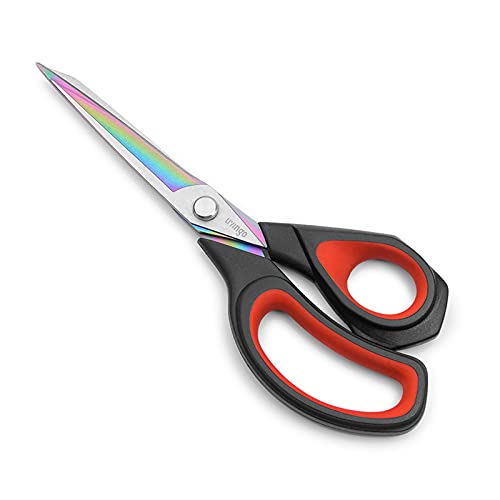
LIVINGO’s professional fabric scissors use high-density steel forged for durability and rust resistance. They’re designed to handle multi-layer cutting with a smooth, even pass. The blades are coated for protection against adhesives and common fabrics, making them a practical option for dressmakers and craft projects alike.
- Best for: Multi-layer fabric cutting and general sewing tasks.
- Why selected: Strong, long-lasting blades with a comfortable grip.
- Caution: May feel heavier than smaller scissors on quick, delicate notching tasks.
Fabric Scissors Professional, 8″ Heavy Duty

The Wteehn 8″ fabric scissors are forged from galvanized manganese for high hardness and rust resistance. They are designed for thick materials, including multiple fabric layers and leather. An adjustable bolt lock helps maintain precise cutting, while the 45° blade angle reduces hand fatigue over long sessions.
- Best for: Thick fabrics and leather cutting in crafting or tailoring.
- Why selected: Precision control with a scientific blade geometry.
- Caution: Heavier construction may be less negotiable for tiny, intricate cuts.
SINGER ProSeries Sewing Scissors Bundle

This 3-count set covers broad sewing tasks with tempered stainless steel blades designed for smooth cuts. The 8.5″ ProSeries heavy-duty bent fabric shears are ideal for cutting through multiple layers of woven fabrics, denim, and leather. The 4.5″ detail scissors are designed for embroidery and precision work.
- Best for: Comprehensive sewing tasks at home or in school.
- Why selected: Includes both fabric shears and precision snips for varied tasks.
- Caution: The set may be more than needed if you only require basic fabric cutting.
LIVINGO 8″ Fabric Scissors Professional Tailor

Another LIIVINGO option focuses on durability and comfort, offering a strong stainless steel blade with rust resistance and a user-friendly, ergonomic handle. The bent and mirror-finish design adds a premium feel while maintaining practical performance for everyday sewing, alterations, and dressmaking.
- Best for: Everyday sewing projects and classroom use.
- Why selected: Consistent performance with a comfortable grip.
- Caution: May be less ideal for extremely delicate fabrics that require ultra-fine tips.
Buying Guide: How To Choose The Right Sewing Scissors
- Blade material and sharpness: Look for high-carbon steel or stainless steel blades that hold a edge and resist rust. For leather or thick fabrics, beveled or heavier blades perform better.
- Blade length and shape: Longer blades cut more fabric per stroke; shorter blades offer precision for detailed work. Bent blades can aid cutting on flat surfaces.
- Handle design: Ergonomic grips reduce fatigue. Semi-soft materials provide comfort for long sessions. Consider left- or right-handed use.
- Durability and maintenance: Forged blades and quality pivots last longer. Keep blades clean and dry to prevent rust and dullness.
- Intended use: Choose sets with variations (fabric, detail, snips) when you frequently switch between tasks like embroidery and garment construction.
FAQ
Are expensive sewing scissors worth it?
High-quality scissors tend to stay sharper longer and offer smoother cutting, especially for frequent use. They reduce fabric fraying and hand fatigue over time.
Can I use fabric scissors for paper or cardboard?
Some fabric scissors are designed to cut paper, but using them on paper can dull blades. It’s best to reserve dedicated paper scissors for cardboard and packaging tasks.
How do I maintain sewing scissors?
Wipe blades after use, dry thoroughly, and store in a dry place. Periodically oil the pivot to maintain smooth operation and tighten the bolt if needed for consistent pressure across the blades.
What’s the difference between regular and heavy-duty scissors?
Heavy-duty scissors have thicker, stronger blades and a more robust pivot to cut dense fabrics like denim or leather. Regular scissors are adequate for typical garments and quilting fabrics.
How should I choose for multi-layer cutting?
Look for high-carbon steel blades with a sturdy, balanced grip and a longer blade length. A comfortable handle helps reduce fatigue when you’re cutting several layers at once.