When choosing dressmaking scissors, prioritize a blade that stays sharp, cuts cleanly through multiple layers, and feels comfortable in your hand. This guide highlights top options suited for serious sewers, quilters, and fashion hobbyists. The picks below are best for fabric-heavy projects, leather trimming, and general tailoring tasks. Whether you’re a student, professional dressmaker, or DIY enthusiast, these scissors help you achieve precise, smooth cuts with less fatigue.
Buyer’s quick-reference table:
| Product | Best For | Why It Stands Out |
|---|---|---|
| Fiskars 8″ RazorEdge | All fabrics, smoothest cuts | Ultra-sharp blades and smooth pivot for precise edge cuts |
| Kai 5210 8″ | Delicate to medium fabrics | Sturdy, sharp, made for consistent cuts |
| LIVINGO 9.5″ | Multiple layers, heavy fabric | High durability, rust-resistant blades, long reach |
| Wteehn 8″ | Thicker materials and leather | Heavy-duty, adjustable bolt, ergonomic |
| Proshear 10″ | Leather and thick fabrics | High carbon steel, professional design |
Fiskars 8″ RazorEdge Fabric Scissors

Best for: general fabric cutting where a clean edge is essential. These scissors feature ultra-sharp stainless blades with a precisely honed edge that reaches the tip, producing consistently straight lines. The pivot design supports exceptionally smooth action, making long sewing sessions less tiring.
Why selected: The RazorEdge line emphasizes edge retention and a comfortable grip, which helps reduce fatigue during detailed cutting work. The ergonomic design aligns with natural hand movement for stable, accurate cuts.
Caution: Avoid forcing the blades through very thick leather or multiple layers without pre-trimming; use clear, straight movements to prevent edge strain.
Kai 5210 8-inch Dressmaking Shears

Best for: precise, reliable cuts across lightweight to mid-weight fabrics. Made with a focus on durability and clean edge retention, these shears are a staple for many dressmakers.
Why selected: The Kai 5210 design emphasizes sharpness and sturdiness, suitable for everyday sewing tasks. The construction supports flat, even cuts with less fabric snagging.
Caution: A bent or dull blade compromises edge quality; regular sharpening maintains performance.
LIVINGO Fabric Scissors 9.5″ Professional Tailor Shears
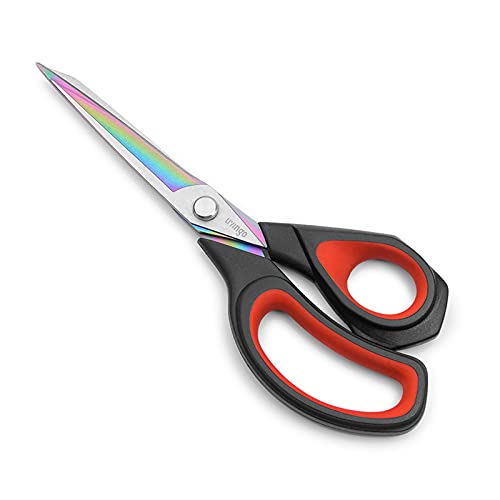
Best for: multi-layer fabric cutting and general tailoring needs. These shears combine a robust blade with an ergonomic grip, making them suitable for longer sessions.
Why selected: The blades are described as rust-resistant with a durable forging process, supporting long-term use. The coating helps resist adhesives and other fabrics’ residues.
Caution: The long blade length requires a balanced hand to maintain straight cuts; avoid twisting on the fabric edge.
Proshear Fabric Scissors 10″ Heavy Duty

Best for: leather trimming and thick fabrics where robust cutting power is needed. The high carbon steel construction provides strong edge retention for heavy-duty use.
Why selected: Professional design and a chamfered blade head help prevent fabric snagging and accidental marks while cutting. The bent handle aids keeping materials flat during table-top cuts.
Caution: Heavy-duty blades are heavier; ensure a comfortable grip and appropriate hand position to minimize fatigue.
LIVINGO 8″ Fabric Scissors Professional Tailor

Best for: general dressmaking across a range of fabric weights. A reliable everyday pair that balances sharpness with comfort.
Why selected: The blades are high-density stainless steel with a durable, rust-resistant finish. The design emphasizes a tight grip and minimal hand fatigue for longer sewing sessions.
Caution: Not ideal for very thick leather cutting; reserve for fabrics and light leather trimming to avoid dulling the edge.
Buying Guide: Key Considerations For Dressmaking Scissors
- Cutting task: Choose lighter blades for delicate fabrics and heavier blades for leather. Consider blade length: 6–8 inches for everyday use, 9–10 inches for larger pattern pieces or thick materials.
- Blade material: High-carbon steel offers edge retention but can require more maintenance. Stainless steel resists rust but may dull faster with heavy leather work.
- Handle design: Ergonomic grips reduce fatigue. Look for contoured finger rings and non-slip materials, especially for long projects.
- Locking mechanism: Some models include an adjustable bolt or lock to secure blade alignment; this helps maintain precise cuts over time.
- Shaping and edge: A sharp, finely honed edge with a precise point improves accuracy on small pattern pieces.
- Maintenance: Clean blades after use, keep them dry, and sharpen or have them professionally serviced as needed to preserve performance.
- Use-case compatibility: If you routinely cut thick layers or leather, opt for heavier, more robust shears; for delicate fabrics, a lighter, finer blade may be preferable.
FAQ
- What are the best scissors for multi-layer fabric cutting?
Look for 9–10 inch blades with high-carbon steel and a comfortable grip designed for heavy use, such as the Proshear or LIVINGO 9.5″ options.
- Should I get stainless or carbon steel for dressmaking scissors?
Carbon steel blades hold an edge longer but require maintenance to prevent rust; stainless steel resists corrosion but may dull faster with tough materials. Choose based on your material mix and care routine.
- Are bent handles important for dressmaking?
Yes, bent handles help hold materials flat during tabletop cutting, improving accuracy on long cuts.
- How do I know if scissors are sharp enough?
Sharp scissors should cut cleanly without dragging or snagging. If you must force the cut or hear fraying, it’s time to sharpen or replace the blades.
- Can I use fabric scissors for leather?
Thin leather can be cut with fabric scissors, but thick leather benefits from heavier, leather-specific shears to avoid dulling the edge.
- How should I maintain fabric scissors?
Wipe blades after use, keep them dry, store in a dry place, and have them professionally sharpened when cuts become uneven.