When choosing fabric scissors, the right pair depends on your project, materials, and how long you’ll cut. This guide highlights five top options that consistently deliver clean, precise cuts across textiles, leather, and more. Best for professional tailors and hobby sewers alike, these scissors balance sharp blades, ergonomic handles, and durable construction. The buyer’s goal is to reduce fraying, avoid fabric snagging, and minimize hand fatigue during long sessions. Below is a quick comparison table of the selected products to help you decide at a glance.
| Product | Brand | Best For |
|---|---|---|
| Fabric Scissors Professional, 8″ | Wteehn | Heavy-duty fabric and leather cutting; multi-layer materials |
| Livingo Premium Tailor Scissors (9.5″) | LIVINGO | General sewing, quilting, and pattern cutting |
| Fiskars RazorEdge Fabric Scissors (8″) | Fiskars | Precision straight cuts; smooth action across fabrics |
| Fabric Scissors Professional 10″ (Proshear) | Proshear | Heavy-duty cutting; multiple fabric layers and leather |
| SINGER Fabric Scissors (8.5″) | SINGER | Everyday fabric cutting; comfortable grip for long use |
Fabric Scissors Professional, 8″ Heavy Duty

Best for: tailors and crafters who need clean, precise cuts on multiple fabric layers and even leather. These 8″ scissors feature a 45° blade angle and an adjustable bolt lock for accuracy. The aluminum handle with a non-slip coating reduces fatigue during extended sessions, and the hand-forged blades offer durability and rust resistance. Caution: heavier weight may be less maneuverable for small, delicate fabrics.
LIVINGO Premium Tailor Scissors (9.5 in)
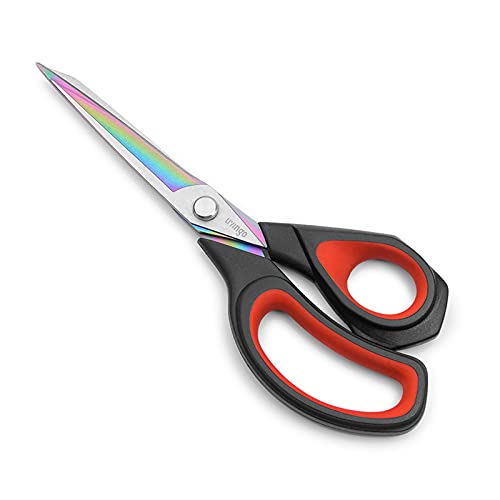
Best for: quilters and dressmakers who require durability and strong edge retention. Made from high-density forged stainless steel with a titanium coating to resist rust and adhesives. The 9.5″ length provides leverage for straight cuts and pattern work. Limitation: the heavier blade may be less nimble for very intricate mini pieces.
Fiskars RazorEdge Fabric Scissors, 8″

Best for: users prioritizing exceptionally smooth cutting and an ergonomic grip. RazorEdge blades are ultra-sharp with a precisely honed edge, and the pivot design promotes effortless cuts through fabric. Caution: price and blade stiffness may be a consideration for left-handed users or those needing a lighter touch.
Fabric Scissors Professional 10 inch (Proshear)

Best for: professionals working with leather, denim, canvas and other tough materials. Made from high carbon steel for edge retention and sharp, clean cuts through multiple layers. The bent handle design helps keep materials flat, aiding accuracy. Caution: high-carbon steel requires careful maintenance to prevent rust if not dried properly.
SINGER Fabric Scissors, 8.5″

Best for: general users needing reliable daily cutting with a comfortable grip. These 8.5″ steel-blade scissors are designed for both right- and left-handed use, making them versatile for shared workspaces. Limitation: not specified for extreme multi-layer or leather cutting; intended for standard fabrics.
Buying Guide: Fabric Scissors Buying Considerations
- Blade material and hardness: High-carbon steel blades stay sharper longer and cut tougher fabrics; stainless steel blades resist rust but may dull sooner with heavy use.
- Blade length: Shorter blades offer precision for small pieces; longer blades are better for straight, long cuts and larger patterns.
- Handle design and comfort: Look for ergonomic, non-slip handles and balanced weight to reduce hand fatigue during extended sewing sessions.
- Edge quality and maintenance: A finely honed edge matters; clean blades with proper drying prevent rust and fatigue. Some models include protective guards or bolt locks for accuracy.
- Intended use: Some scissors are specialized for leather or multiple fabric layers; choose based on your typical projects to avoid dulling or mis-cuts.
- Ambidexterity: Consider models with symmetric grips if you share tools with left-handed users.
Frequently Asked Questions
- What makes a fabric scissor “heavy duty”? — They use high-carbon or forged steel blades designed for durability and to cut through multiple fabric layers and tougher materials like leather.
- Are longer scissors better for fabric cutting? — Longer blades are efficient for long, straight cuts and pattern work; shorter blades offer precision for tight corners.
- Should I choose stainless steel or high-carbon steel? — High-carbon blades sharpen to a finer edge and cut tougher fabrics longer but require drying to prevent rust; stainless steel resists rust but may dull faster in heavy use.
- Is an ergonomic handle important? — Yes. Ergonomic, non-slip handles reduce hand fatigue and improve control on extended projects.
- Can right-handed scissors be used by left-handed people? — Some models are ambidextrous; others perform best with the dominant hand. Check product notes for handedness compatibility.
- How should I maintain fabric scissors? — Wipe blades after use, dry thoroughly, and store with blades closed or protected to prevent edge damage.