Whether you’re upgrading a cramped living room setup or building a dedicated home theater, rear surround speakers matter. This guide highlights five reliable options that pair well with common AV receivers and offer clear, directional sound for cinematic immersion. The selections vary by budget, room size, and mounting needs, helping you pick the right fit for your setup. The buyer-friendly table below compares key points to consider at a glance.
| Product | Best For | Key Benefit |
|---|---|---|
| Saiyin Indoor Wall Mount Passive Speakers | Compact spaces, wired systems | Clean rear fill with wall-mount design |
| Polk Audio Signature Elite ES10 Surround Speakers | Balanced, cinematic sound | Dynamic acoustic array and powerful bass response |
| Polk Audio T15 100 Watt Bookshelf Speakers | Flexible front/ rear use, starter system | Versatile mounting and clear, vocal-forward sound |
| Klipsch R-41SA Surround Speakers | High-detail, Atmos-ready surrounds | Tractrix horn and LTS tweeter for precise highs |
| Polk OWM3 Compact Wall & Bookshelf Speakers | Compact rooms, multi-placement | Seven placement options for flexible setup |
Saiyin Indoor Wall Mount Passive Speakers With 3″ Drivers

Best for compact spaces and wired systems. These 6-ohm passive rear speakers are designed to be powered by a receiver or amplifier, making them ideal for wired home theater builds where wireless connectivity is not available. The dome tweeter handles midrange and high frequencies for natural, clear sound, while the compact enclosure (about 5.1″ x 4.1″ x 5.3″) fits discreetly in living rooms or media closets. They are best for listeners who want rear-channel fill without bulk and who already own an AVR with speaker wire connections. Caution: These are passive speakers and require an external amplifier; no built-in wireless option or Bluetooth is provided.
Polk Audio Signature Elite ES10 Surround Speakers

Best for cinematic surround with a rich soundstage. The ES10 pair uses Polk’s Dynamically Balanced Acoustic Array with a 1″ tweeter and 4″ woofer to deliver lifelike sound and engaging bass via Power Port technology, reducing turbulence for clean, impactful movie and game audio. These speakers are compatible with a wide range of amplifiers and AVRs, including Dolby Atmos setups when paired with appropriate front and ceiling channels. Choose this option if you want a compact, high-value surround pair that emphasizes overall clarity and dynamic range. Caution: Requires a capable receiver to unlock full bass potential, especially in larger rooms.
Polk Audio T15 100 Watt Home Theater Bookshelf Speakers

Best for versatile room placement and starter surrounds. The T15 pair delivers clear, balanced sound with a 0.75″ tweeter and 5.25″ Dynamic Balance woofer. They work well as front, left-right, or rear speakers in a growing home theater system. The bookshelf form factor and wall-mount capability provide flexible installation for rooms of varying sizes. Caution: For larger rooms or when aiming for robust rear-channel bass, pairing with a subwoofer helps achieve fuller impact.
Klipsch R-41SA Powerful Surround Speakers
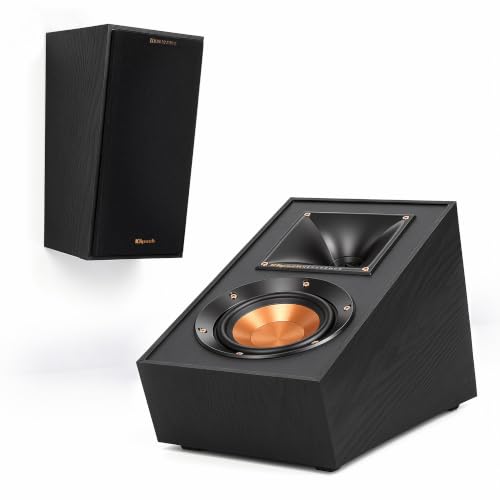
Best for high-detail, immersive surround with a horn-loaded design. The R-41SA uses a Tractrix horn and Linear Travel Suspension titanium tweeter for crisp highs and subtle cymbal details, paired with robust woofers for solid midrange and bass. These surrounds excel in Atmos-enabled systems when used in conjunction with compatible speakers and amps. Choose these if you prioritize precise highs and expansive imaging in a mid-to-large room. Caution: The horn-loaded design can be more forward in some setups; placement and toe-in may influence soundstage localization.
Polk OWM3 Compact Wall & Bookshelf Speakers

Best for compact rooms and flexible mounting. The OWM3 pair combines a 4.5″ mid/woofer with a 1″ tweeter, offering detailed audio across a wide placement spectrum. The distinct curved design supports seven orientation options, enabling precise rear placement behind seating or near walls for diffuse surround effects. Choose this option when space is tight yet surround sound integrity must be preserved. Caution: Being compact, bass output is limited; consider a subwoofer if deep bass is a priority.
Buying Guide: Key Considerations For Rear Surround Speakers
Room size and layout influence necessary performance. In smaller rooms, compact speakers with efficient tweeters work best to prevent bass wash and speaker overpower. Larger spaces benefit from higher sensitivity and more capable woofers to maintain consistent surround levels. Wiring and power requirements matter for passive models; ensure your receiver or amplifier can drive the impedance and wattage of the chosen speakers.
What should I consider when choosing rear surrounds?
- Speaker type: Passive vs. powered. Passive surrounds require an amplifier; powered surrounds include built-in amplification but can limit compatibility with some receivers.
- Impedance and sensitivity: Most common options range from 6–8 ohms. Higher sensitivity enables louder sound with less power.
- Placement and mounting: Wall-mount or bookshelf designs affect dispersion and imaging. Horn-loaded tweeters can offer detailed highs but may require careful toe-in.
- Room acoustics: Reflective surfaces and furniture influence perceived surround width. Soft furnishings can improve ambience; hard surfaces can cause reflections.
- Subwoofer integration: Rear surrounds pair with front channels and subwoofers for a full, cohesive system. Subwoofers improve deep bass, especially in large rooms.
How do I pair these with other speakers?
- Aim for tonal balance: Choose surrounds that match the front stage’s overall sound signature to avoid jarring transitions.
- Consider Dolby Atmos or DTS:X compatibility if you plan to add height channels; ensure your AVR supports these formats and has enough channels available.
- Test placement: Avoid placing speakers too close to corners, which can exaggerate bass and muddy imaging. Position slightly above or behind seating for optimal wrapping sound.
What are common installation caveats?
- Wiring: Ensure speaker wires are rated for in-wall or in-wall mounting if necessary, and avoid pinched or damaged strands.
- Power requirements: For passive models, confirm your receiver’s output and impedance compatibility to prevent distortion or overheating.
- Aesthetics: Use wall plates or in-wall cable management to keep setups tidy and unobtrusive.
Frequently Asked Questions
- Q: Do rear surrounds need to be high-end to work well? A: Not necessarily. Match performance to room size and system goals; even mid-range surrounds can deliver a solid immersive experience when paired with a compatible front stage and subwoofer.
- Q: Can I use bookshelf speakers as rear surrounds? A: Yes. Bookshelf models with wall-mount capability can function well as surrounds and are often flexible for various room layouts.
- Q: Is a dedicated center channel necessary with rear surrounds? A: A center channel improves dialogue clarity, but surrounds primarily augment ambient sound; many setups perform well with a strong front stage and proper volume balance.
- Q: How important is horn design for surrounds? A: Horn-loaded tweeters can provide more defined high-frequency detail; placement and room acoustics influence perceived benefits.
- Q: Should I always pair surrounds with a subwoofer? A: For most movies and music, yes. A subwoofer augments low-frequency effects and ensures bass consistency across listening positions.
- Q: Are these products compatible with Dolby Atmos? A: Surrounds can be part of an Atmos-enabled system when the AVR supports Atmos decoding and has appropriate speaker layout; check your receiver’s channel configuration.