Direct answer: For a reliable, future‑proof setup, choose high‑bandwidth HDMI 2.1 cables that support 8K@60Hz, 4K@120Hz, and 48Gbps. This article reviews top options suited for gamers, home theater lovers, and creatives who need stable, high‑fidelity signals. The list highlights where each cable excels and who should buy it.
Buyer types addressed:
– Gamers seeking smooth 4K/120Hz or 8K readiness.
– Home theater enthusiasts prioritizing HDR and reliable long cables.
– Content creators and media enthusiasts requiring durable braiding and multi‑platform compatibility.
– System builders needing backward compatibility with older HDMI versions.
A quick comparison helps you pick the right pick for your setup, whether you game, stream, or edit in 8K and beyond.
Summary table of selected products
- Highwings 8K 10K 4K HDMI Cable 48Gbps 6.6FT/2M — Best overall for versatile 8K/4K support
- Anker HDMI 2.1 Cable, 48Gbps Ultra High Speed — Best for gaming and future-proofing
- Highwings 8K@60 HDMI Cable 10FT/3M — Best long‑reach option
- Silkland Certified HDMI 2.1 Cable Ultra High Speed 48Gbps — Best braided build and durability
- Cable Matters [Ultra High Speed] 8K HDMI Cable, 6.6ft — Best certified value
Highwings 8K 10K 4K HDMI Cable 48Gbps 6.6FT/2M
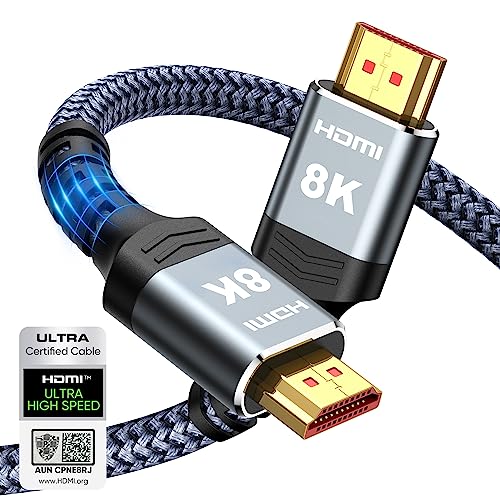
Best for versatile, high‑bandwidth needs. This 2.0/2.1 compatible cable supports 8K@60Hz, 4K@240Hz, and 4K@120Hz, delivering 48Gbps bandwidth. Ideal for users who want future readiness and backward compatibility with HDMI 2.0 and older versions. The braided build and robust data path aim to minimize dropped frames during intense gaming or high‑bitrate video playback. Caution: check device support for 8K hotspots to ensure your source and display align with 8K capabilities.
Anker HDMI 2.1 Cable, 48Gbps Ultra High Speed

Best for gaming enthusiasts and futureproof setups. It supports 8K@60Hz and 4K@120Hz with 48Gbps bandwidth and is HDMI Forum certified, ensuring conformity and shielding against interference. This cable excels for PlayStation 5, Xbox Series X/S, and devices claiming 4K@120Hz. Caution: real‑world gains depend on source hardware and display capability; verify your monitor/TV bandwidth before upgrading.
Highwings 8K@60 HDMI Cable 10FT/3M

Best for longer runs without sacrificing signal quality. This 3-meter cable supports 8K@60Hz and 4K@120Hz with 48Gbps bandwidth. It’s backward compatible with older HDMI standards. A caution: longer cables can incur slight signal attenuation if used with marginal source/display hardware; ensure all components support HDMI 2.1 features.
Silkland Certified HDMI 2.1 Cable Ultra High Speed 48Gbps Braided HDR 6.6FT

Best for durability and gaming across platforms. Silkland emphasizes HDMI 2.1 certification with a braided “E‑Braid” design, plus copper cores and ferrite beads for stable signals at 4K@120Hz and 8K readiness. Best for users who value a robust exterior and long‑term reliability. Limitation: certification is a snapshot; verify your exact device specs for required 4K/8K modes.
Cable Matters [Ultra High Speed] 8K HDMI Cable, 6.6ft

Best value with official Ultra High Speed certification. This 6.6 ft cable supports 48Gbps and HDMI 2.1 features, including eARC and bandwidth for 8K and 4K gaming. It offers broad compatibility with PS4 Pro, Xbox One, Apple TV, and Roku Ultra setups. Caution: shorter length options can limit placement flexibility in larger rooms.
Buying Guide: Key Considerations For Your HDMI 2.1 Cable
- Bandwidth and standards: Look for HDMI 2.1 cables delivering 48Gbps for 8K@60Hz and 4K@120Hz. If you only need 4K, a high‑quality HDMI 2.0b cable may suffice, but 2.1 future‑proofs longer lifespans.
- Length vs. signal integrity: Longer cables can experience more attenuation. Choose the shortest length that fits your setup, or opt for reinforced designs (braided, gold‑plated connectors) if you must run long cables.
- Device compatibility: Verify that your source (PC/console), display (TV/monitor), and AV receiver support the desired refresh rates and HDR formats (HDR10, HDR10+, Dolby Vision, etc.).
- Certification and build quality: Certified Ultra High Speed cables and braiding improve reliability in environments with interference. A ferrite bead helps reduce EMI.
- Future needs: If you anticipate upgrading to 8K sources or high‑frame‑rate gaming, prioritize 2.1 cables with broad backward compatibility.
Frequently Asked Questions
- What is the main advantage of HDMI 2.1 cables?
They support higher bandwidth (up to 48Gbps) enabling 8K@60Hz and 4K@120Hz, plus features like VRR and eARC for smoother gaming and audio. - Do all HDMI 2.1 cables officially certify 8K?
Most certified 2.1 cables advertise 8K/4K capabilities, but actual performance depends on source and display compatibility. - Is a longer HDMI cable always worse?
Not always, but longer runs can introduce signal loss. Choose certified cables and keep lengths reasonable for your setup. - Can HDMI 2.1 cables work with older TVs?
Yes, they are backward compatible with HDMI 2.0/1.x devices, but you won’t gain 8K/120Hz on older gear unless both ends support it. - Should I prioritize braided vs. plain cables?
Braided cables tend to be more durable in daily use and have better wire protection, but performance depends on the internal construction and certification.