Looking for reliable photovoltaic panels and essential accessories for off-grid solar setups? This guide highlights five well-rounded options and related gear that optimize performance for RVs, boats, homes, and remote installations. Each entry explains who benefits most, why it’s a fit, and practical considerations to keep in mind. The buyer-friendly format helps compare output, durability, and install flexibility at a glance.
Summary table of selected products:
| Product | Best For | Key Benefit | Limitations |
|---|---|---|---|
| Callsun N-Type 16BB 400W | High-efficiency, off-grid setups | Up to 25.6% efficiency, bifacial capability | Higher upfront cost |
| ECO-WORTHY 400W N-Type 4pcs | Large off-grid systems, DIY installs | Two-busbar design with IP68 wiring box | May require robust mounting space |
| 100W Solar Panel by Rvpozwer | Compact 12V/24V projects | High efficiency (25%), durable build | Lower overall wattage per panel |
| JJN 100W 10BB Monocrystalline | Portable or small RV setups | High efficiency with 10BB cells | IP65/67 protection is modest for harsh climates |
| BougeRV Tools & Connectors Kit | Installers needing reliable connectors | Complete crimping tool kit for secure connections | Tools don’t produce power themselves |
Callsun N-Type 16BB 400W Dual-Module Panel

This 2-panel configuration totals 400W and uses N-Type 16BB cells for higher efficiency and reliability. The dual-module parallel design enables continued output if one section is shaded, improving shading tolerance in trees or structures. Best for RVs, vans, marine use, and small home-rooftop setups where space and shade are variables. Caution: wiring and mounting must support bifacial backsheet exposure to maximize rear-side energy capture.
ECO-WORTHY 400W N-Type Panels

This ECO-WORTHY array features four 100W modules built with N-Type cells and 16BB busbars, delivering up to 25% efficiency. The system includes an IP68-rated junction box with pre-installed bypass diodes, enhancing performance in low-light and shaded conditions. Suitable for larger off-grid builds, garden sheds, and hybrid systems. Choose this if you need a DIY-friendly, scalable 12V/24V setup. Limitation: more total surface area required than a single high-watt panel.
Rvpozwer 100W Solar Panel

With 100W capacity and 25% efficiency, this panel uses high-purity monocrystalline cells and an 18BB design to maximize output. It sports robust weather resistance and a wide operating temperature range, making it a solid option for compact off-grid projects such as trailers or small cabins. Best for: smaller off-grid builds or as a supplementary panel. Caution: lower total energy if used as a standalone system in a larger setup.
JJN 100W Monocrystalline Panel
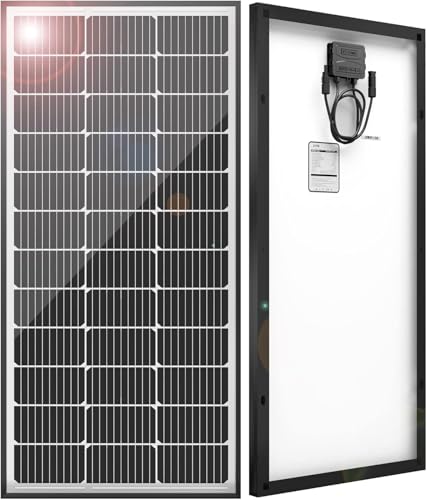
JJN employs 10BB cell technology to deliver up to 23% efficiency in a compact 100W package. The panel features a durable aluminum frame and strong weather sealing (IP65/67 options), suitable for outdoor use in variable climates. Best for portable installs, boats, and off-grid vehicles where space is limited. Limitation: performance may decrease more quickly under extreme shading compared to bifacial designs.
BougeRV Solar Crimping Tool Kit
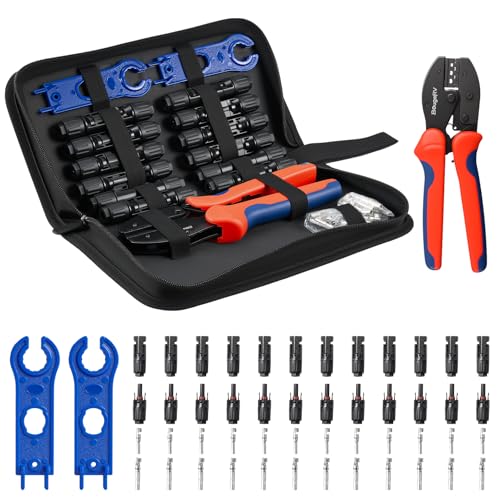
This toolkit includes a wire crimper, two spanners, 12 pairs of standard PV connectors, and spare pins. The tools are designed for reliable, weather-resistant connections in solar installations, with tinned copper pins and waterproof connector rings. Best for installers seeking a complete, durable crimping solution. Caution: tools are not a power source; proper training recommended for crimping accuracy.
Buying Guide
What should you consider when choosing PV panels and accessories for off-grid power?
- System size and goals: Match panel wattage to your energy needs and available roof space or mounting area. If you plan to run essential loads, consider higher-wattage modules and a scalable array.
- Panel technology: N-Type cells (with 16BB busbars) provide higher efficiency and reduced hot spots. Bifacial designs can add rear-side energy, especially in reflective environments.
- Shading tolerance: Dual-module or bifacial configurations can minimize power loss in shaded conditions. Bypass diodes and shading-resistant designs improve reliability.
- Durability and climate: Look for robust frames, weatherproofing (IP ratings), and wide operating temperature ranges for outdoor use in RVs, boats, or remote cabins.
- Wiring and connectors: Choose compatible cables (e.g., 10 AWG or thicker for long runs) and weatherproof connectors with secure crimps. A complete tool kit helps ensure durable connections.
- Installation footprint: Larger 400W-class panels save space but require stronger mounting systems. Smaller 100W panels offer flexibility for portable or space-constrained setups.
- Budget and up-front costs: While higher-efficiency panels cost more, they provide better space utilization and performance in real-world conditions.
Key comparison questions
- Is bifacial energy worth the extra cost for my location and shading? If you have ample sun and reflective surfaces, it can add meaningful output.
- Do I need a scalable system? Consider panels with modular configurations or kit-compatible components for future expansion.
- Will I run 12V/24V systems or larger inverters? Ensure panels’ voltage and bypass diodes align with your battery charging and inverter setup.
- How important is low-light performance? N-Type and front/back illuminated designs tend to perform better under overcast conditions.
Frequently Asked Questions
- What is the advantage of N-Type solar panels? They typically offer higher efficiency and better resistance to potential-induced degradation and hot spots.
- Are bifacial panels worth it for home use? They can add energy in certain layouts, especially with strong albedo or reflective surfaces, but benefits depend on installation specifics.
- What does IP68 mean for solar panels? It indicates a high level of water and dust resistance for junction boxes and connections, improving reliability in harsh environments.
- How do I size a solar kit for an RV? Start with your daily energy needs, then select panels and a charge controller that can handle peak load plus a safety margin.
- Is a tool kit necessary for installation? Yes, having proper crimping tools and connectors reduces connection failures and improves system longevity.
- Can I mix different panels in one system? Mixing panels can work if they’re compatible in voltage and current, but it’s often best to match wattage and technology.