Planning reliable off-grid power for camping means choosing compact, durable, and versatile portable power stations and solar chargers. This guide highlights five top options that balance capacity, weight, and multiple output ports to suit hikers, RV campers, and emergency prep. Each pick is best for different outdoor needs, from lightweight solo trips to serious weekend camping with power-hungry devices.
| Product | Capacity | Weight | Best For |
|---|---|---|---|
| Jackery Explorer 300 | 292Wh | 7.5 lbs | Laptops and cameras on short trips |
| MARBERO 88Wh | 88Wh | 3.2 lbs | Lightweight, basic devices on quick outs |
| HOWEASY 98Wh | 98Wh | 2.3 lbs | Mini emergencies and portable charging |
| Anker SOLIX C300 | 288Wh | not listed | Durable LiFePO4 with fast USB-C |
| Jackery Explorer 1000 v2 | 1070Wh | 23.8 lbs | Extended camping, RV, or off-grid living |
Jackery Explorer 300 Portable Power Station

The Jackery Explorer 300 delivers 292Wh with LiFePO4 chemistry and a compact 7.5-pound form factor. It features two AC outlets, a 100W USB-C PD port, two USB-A ports, and a 120W car port, enabling laptops, drones, cameras, and essential camping electronics. Its 600W peak surge supports brief power bursts and solar charging compatibility when paired with panels. This option is best for campers who need reliable off-grid power without added bulk and who want long battery life from LiFePO4 cells.
Best for: Solo hikers or couples who need a portable, durable generator for mid-range electronics. Why selected: strong mix of ports, light weight, and long cycle life exceed typical travel power banks. Caution: limited overall capacity may require recharging after several high-demand devices.
BLAVOR Solar Power Bank 10,000mAh

The BLAVOR solar power bank offers 10,000mAh with USB-C input/output and wireless charging. It supports charging three devices simultaneously, making it a compact option for outdoor trips where space is limited. The higher cycling safety and lighter form factor make it a good companion for casual campers who prioritize quick top-ups and multiple charging options. Best for: travelers who value portability and solar recharging for occasional devices. Caution: smaller capacity may require more frequent recharges for power-hungry gear.
MARBERO 88Wh Portable Power Station
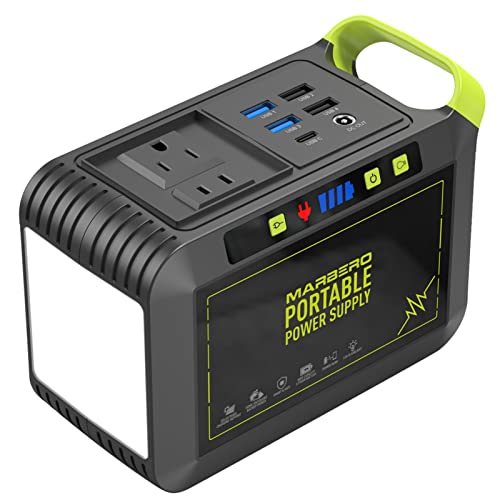
The MARBERO 88Wh unit emphasizes efficiency and portability with eight output ports and a compact 6.5 x 4.6 x 3.1-inch chassis weighing about 3.2 pounds. It supports charging phones, tablets, laptops, and small appliances, with a built-in BMS for safety. This is best for ultralight campers who want multiple outputs in a slim package. Choose this if you need a broad set of ports in a tiny footprint. Caution: limited battery capacity for higher-demand devices during multi-day trips.
HOWEASY Portable Power Station 98Wh

The HOWEASY 98Wh power station offers 2 AC outlets (110V, 135W), multiple USB/USB-C ports, and several DC outputs. Its airline-friendly 99Wh battery makes it a travel-friendly choice. This unit is best for campers needing a compact, multi-output solution that also doubles as an emergency backup at home. Caution: lower capacity may limit sustained usage for larger appliances.
Anker SOLIX C300 DC Power Bank Station

The Anker SOLIX C300 provides 288Wh with LiFePO4 batteries and a 300W continuous rating. It features fast charging via dual USB-C ports and a robust, durable design with smart temperature control. Best for: campers who value long life and steady performance in a rugged package. Caution: ensure you have an external charger if you plan to run many high-wattage devices simultaneously.
Buying Guide
Power capacity versus weight: Higher watt-hours deliver longer runtime but add weight. For frequent carry, target 100–300Wh with under 8 pounds; for RV or basecamp, 700–1070Wh options fit better.
Battery chemistry: LiFePO4 batteries last longer and tolerate more charge cycles than standard lithium-ion. They are safer under heat and provide better longevity for year-round camping.
Output options: Look for a mix of AC outlets, USB-C PD, USB-A, and car ports. Multiple ports allow charging several devices at once, which is essential for camping setups like lighting, fans, and small appliances.
Rechargeability: Consider models that support solar charging or car charging. Solar compatibility is valuable when you’ll be away from power for extended periods.
Weight and form factor: If you’re backpacking or day hiking, lighter units with integrated handles are preferable. For basecamp or RV use, a larger unit with more ports may be better.
Safety features: BMS (battery management system), over-current protection, short-circuit protection, and temperature control improve reliability in outdoor environments.
FAQs
- What size power bank is best for camping? – A balance of capacity (around 100–300Wh for lightweight trips) and weight is ideal for portability, while higher capacities (700–1070Wh) suit basecamp or RV setups.
- Can I charge a laptop with these power banks? – Yes, many offer 100W+ USB-C PD ports or AC outlets capable of powering laptops.
- Do LiFePO4 batteries last longer outdoors? – LiFePO4 cells typically offer longer cycle life and better heat stability than standard lithium-ion chemistries.
- Is solar charging worth it for camping? – Solar charging is beneficial for multi-day trips, reducing the need to carry extra fuel or power supplies.
- Are these units airline-safe? – Some models, like the 99Wh class devices, comply with common airline regulations; check the exact rating before travel.
- How many devices can you charge at once? – It depends on the model; many provide a mix of USB-C, USB-A, and AC outlets to handle multiple devices simultaneously.