Answering the question: what portable power station is best for camping depends on your power needs, travel style, and budget. This guide surveys five solid options ideal for outdoor use, family trips, and emergency backup. Best picks cover compact, mid-range, and higher-capacity needs. The buyer type each product serves is noted to help you choose quickly. The table below compares key specs to streamline decision-making.
| Product | Capacity | Best For | Approx. Weight | Charge Speed (est.) |
|---|---|---|---|---|
| MARBERO Portable Power Station 88Wh | 88Wh | Compact trips, minimal gear | 3.2 lbs | 0-80% in 2 hrs |
| Jackery Explorer 300 | 292Wh | Hikes, light backpacking | ~7.5 lbs | Standard fast charging with solar/power |
| Jackery Explorer 1000 v2 | 1070Wh | Family camping, longer off-grid stays | ~23.8 lbs | 1 hr fast charge (with app) |
| VTOMAN Jump 600X | 299Wh | Road trips, car use, jump-start | ~12 lbs | Fast recharge options |
| HOWEASY Portable Power Station | 88Wh | Emergency kits, small devices | ~2.3 lbs | Three recharging modes |
MARBERO Portable Power Station 88Wh
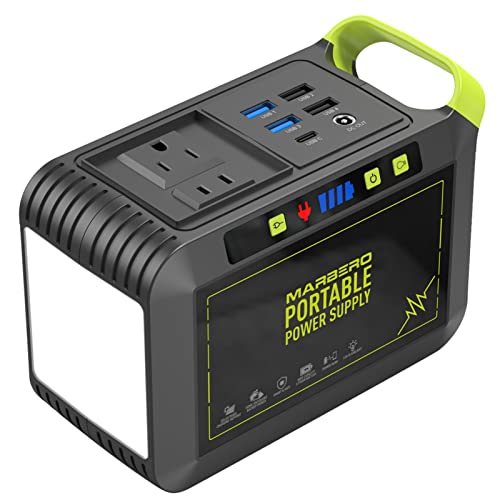
Best for ultra-compact camping setups and quick-access power, the MARBERO 88Wh unit emphasizes portability with a slim profile (6.5 x 4.6 x 3.1 inches) and a light 3.2-pound weight. It features eight output ports for simultaneous use and a robust BMS for safety. Its highlight is fast charging from the included adapter to 80% in about two hours, plus compatibility with MARBERO’s solar panels for off-grid use. Best for solo hikers, festival campers, or emergency kits where space is at a premium.
Who it’s for: travelers prioritizing a lightweight, all-in-one charging block for phones, tablets, small devices, and essential appliances without carrying heavy gear. Why selected: its compact form factor and multi-port setup allow flexible power management in tight spaces.
Limitations: limited capacity means it won’t run power-hungry appliances for long. Use it for charging devices or small electronics rather than large gear or appliances.
Jackery Explorer 300

The Explorer 300 targets campers who need a reliable, portable power source with more capacity than ultra-compact models. At 292Wh, it can run laptops, cameras, drones, small appliances, and CPAP devices with ease. It includes two AC outlets, USB-C PD, USB-A ports, and a 12V car port, delivering flexible charging for a weekend trip or a compact RV setup. It’s best for small groups or individuals who require a balance of capacity and portability.
Who it’s for: campers who want a sturdy mid-size power station for multiple devices without adding significant weight. Why selected: strong mix of AC, USB-C PD, and car-charger outputs makes it versatile for varied gear.
Limitations: heavier than ultra-compact models and not ideal for prolonged all-night power in larger households without recharging.
Jackery Explorer 1000 v2

For bigger off-grid needs, the Explorer 1000 v2 delivers 1,070Wh with a 1,500W continuous output and up to 3,000W surge. This model supports practical outdoor living with two AC outlets, a 100W USB-C PD port, USB-A, and a 12V car port. It uses LiFePO4 chemistry to extend life and reduce cycle degradation, ideal for weekend family trips or as a reliable backup power source for larger devices. Best for: extended camping stays, RV use, or emergency scenarios where higher load devices may be used.
Who it’s for: families or groups needing substantial power for multiple devices. Why selected: high capacity and durable battery chemistry provide long-term reliability.
Limitations: heavier and bulkier, which may affect portability for solo travelers or hikers with strict weight limits.
VTOMAN Jump 600X Portable Power Station

The Jump 600X combines a compact 299Wh pack with a practical car jump-start port, offering 600W continuous power and 3,000-life-cycle LiFePO4 chemistry in a portable form factor. It can be expanded with an extra battery to reach up to 939Wh. This makes it versatile for camping, RV trips, and roadside emergencies. Best for: campers who want built-in jump-start capability and a scalable power solution for longer trips. Why selected: integrated jump-start capability reduces the need for extra devices on the road.
Limitations: adding the extra battery increases weight and cost; not ideal if space is extremely tight or if jump-start isn’t a priority.
HOWEASY Portable Power Station

The HOWEASY unit emphasizes maximum output versatility in a compact 88Wh package. It offers 8 output ports, including two AC sockets, a USB-C PD port, QC 3.0 USBs, and DC ports, plus an LED display for status. It supports three charging methods: AC adapter, solar panel (panel not included), and car charger, making it adaptable for diverse environments. Best for: quick-charge needs, emergency backup, and off-grid trips where space matters. Why selected: flexible charging modes and a broad array of ports in a small form factor.
Limitations: the 88Wh capacity is modest for extended use of higher-watt appliances; plan to recharge frequently on longer trips.
Buying Guide: Key Considerations For Camping Use
How much capacity do you need? For light camping or short trips with phones and lights, 88–300Wh models may suffice. For longer stays or multiple devices, 600–1,000Wh or more is better. Consider peak and continuous power to match devices like CPAP machines or mini-fridges.
Output versatility matters. Look for a mix of AC outlets, USB-C PD, USB-A, and 12V DC/Car ports to support laptops, phones, cameras, fans, and other gear. Solar panel compatibility expands off-grid capability.
Weight and size influence portability. Ultra-compact models are easy to carry but offer limited power; larger packs provide more runtime but require more space. If you hike or bike, prioritize lighter builds with solid handles.
Battery chemistry and lifecycle. LiFePO4 chemistry lasts longer and tolerates more charge cycles. This is important for frequent use or long-term outdoor life. Check warranty and care requirements for extreme conditions.
Charging speed and methods. Fast recharge features save downtime but verify real-world performance with solar or wall-charger options. Consider multi-source charging if you’ll be in shaded or variable sunlight.
Durability and safety. A robust BMS, overcharge protection, short-circuit protection, and thermal management help prevent device failures in camping environments. A protective case or rugged housing can improve longevity.
Frequently Asked Questions
- What size power station is best for camping? Choose based on devices and trip length. 88–300Wh suits solo or short trips with essentials; 600–1,070Wh supports family use and longer outages.
- Can I run a CPAP machine with these units? Some units with higher wattage (hundreds to 1,000W) can power CPAP devices if compatible with the device’s draw. Check continuous wattage ratings and battery capacity.
- Are LiFePO4 batteries better for camping? Yes. LiFePO4 offers longer cycle life, better thermal stability, and safer chemistry for outdoor use.
- Is solar charging worth it for camping? Solar charging adds off-grid flexibility, especially on sunny spots. Ensure compatibility with your panel and proper sun exposure.
- How should I store a power station when not in use? Store in a cool, dry place away from direct sunlight. For LiFePO4 packs, partial state-of-charge storage is often recommended, following manufacturer guidelines.
- Do these devices support simultaneous charging and discharging? Many models offer pass-through charging or simultaneous charging, but check each unit’s specifications to confirm.