Answering the need for dependable off-grid power, these portable chargers are suited for campers, hikers, and RV travelers who want reliable device charging without heavy gear. The top picks vary from compact 10,000mAh units to larger 97–88Wh power stations. Choose based on how many devices you need to charge, how heavy you’re willing to carry, and whether you prefer solar-ready options or built-in outlets for small appliances.
| Product | Best For | Key Benefit |
|---|---|---|
| BLAVOR 10,000mAh (10k) Solar Power Bank | Solo travelers | 20W USB-C fast charging, wireless charging |
| MARBERO 88Wh Portable Power Station | Car campers | Multiple outputs, compact 88Wh with 120W peak |
| Jackery Explorer 300 | Extended trips | 292Wh LiFePO4, 2 AC outlets, solid longevity |
| HOWEASY 88Wh Portable Power Station | Group outings | Eight ports, built-in LED, compact for its capacity |
| ENOFLO 97.68Wh Solar Generator | Emergency backup | LED flashlight, six outputs, portable and versatile |
Note: The table highlights a mix of compact packs and larger power stations to fit different camping setups. Each product section below explains who it’s best for and why it was selected, along with a practical caution when relevant.
BLAVOR 10,000mAh Solar Power Bank (10k) — Compact Camp Charger

The BLAVOR 10k offers a compact power bank with USB-C input/output and 20W fast charging. It supports charging three devices simultaneously and includes a wireless charging option. The lithium-cobalt battery aims for higher cycle life in a small footprint, making it suitable for lightweight travelers who prioritize portability. Best for: solo campers needing quick recharges for phones, earbuds, or a small tablet without carrying a heavy pack.
Limitation: While compact, it provides a moderate total capacity, so long outdoor trips may require recharging mid-day with sun or a backup option.
MARBERO Portable Power Station 88Wh
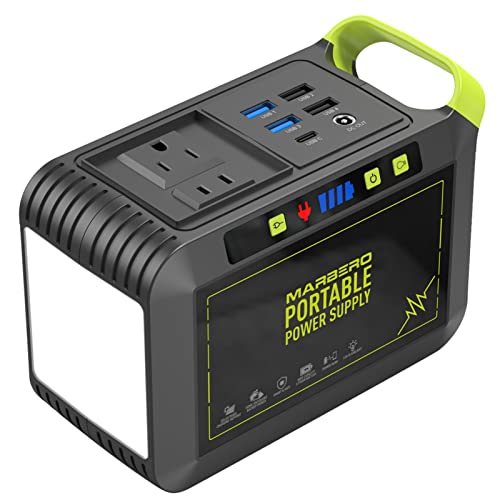
MARBERO’s 88Wh unit emphasizes efficiency and portability with eight outputs and a compact 6.5 x 4.6 x 3.1 inch design. It’s suitable for outdoor use, road trips, and emergency backup, with USB, USB-C PD, and AC options. Best for: campers who need multiple ports and the ability to power small appliances or devices simultaneously while on extended trips.
Limitation: The kit’s solar panel is optional; solar charging is effective with MARBERO’s panels but may require additional gear for full solar independence.
Jackery Portable Power Station Explorer 300

The Explorer 300 provides a robust 292Wh LiFePO4 battery in a lighter form, with two AC outlets, a USB-C PD port, USB-A ports, and a car port. It’s designed for longer outings where laptops, cameras, or CPAP devices might be used. Best for: campers needing reliable off-grid power with a balance of weight and capacity for laptops and essential devices.
Limitation: Heavier than ultra-compact packs; consider this if you’re trekking with a lighter carry or only need phone charging on shorter trips.
HOWEASY 88Wh Portable Power Station

HOWEASY’s unit packs eight outputs, including two AC sockets and multiple USB ports, plus an LED display for status. It also supports three recharging methods and claims a cycle life of over 1,500 times. Best for: groups or families needing multiple charging options and USB-C PD along with AC power for devices like fans, lights, and small kitchen gear.
Limitation: The stated outputs are useful, but users should plan charging cycles in advance for longer trips when sun is scarce.
ENOFLO Portable Power Station 97.68Wh

ENOFLO combines high-density lithium cells with a compact form factor (97.68Wh). It features 6 outputs, a built-in LED flashlight, and a simple LED display. Best for: campers who want a compact power station with a dedicated flashlight for night use and basic device charging in a small pack.
Limitation: Like many compact power stations, it may not supply sustained high-w wattage for power-hungry appliances over long periods.
Buying Guide: Portable Camping Power Essentials
- What capacity do you need? For light use and phone charging, 10k–20k mAh units are enough. For laptops or multiple devices, target 88–292Wh power stations.
- What charging methods matter? USB-C PD, USB-A, AC outlets, car ports, and solar input provide different advantages depending on your camping style.
- Portability vs. power: Smaller packs are easier to carry; larger power stations deliver more charge and outlets. Balance weight with your trip duration.
- Solar readiness: If you expect sun, consider built-in solar panels or a system that pairs with foldable panels. Battery type (LiFePO4 vs. lithium-ion) affects cycle life and longevity.
- Output needs: List devices (phones, tablets, GPS, fans, CPAP). Ensure the number of outputs and wattage meet your needs, especially for high-draw devices.
- Durability and weather: Look for rugged housings and splash resistance if camping near damp environments or on uneven terrain.
Frequently Asked Questions
- What’s the best camping power bank for solo trips? A compact 10k–20k mAh unit with USB-C and wireless charging is typically best for one or two devices.
- Do I need a solar charger for camping? Solar support helps when grid power is unavailable, but it may require sunny conditions and extra panels for rapid recharging.
- Can a power station run my laptop on a camping trip? Some models offer 100W USB-C PD or higher and AC outlets; check device wattage and the generator’s continuous output.
- How long will a power station last for camping? Duration depends on capacity (Wh) and the devices’ draw. Plan charging cycles and have a backup method if possible.
- Are LiFePO4 batteries better for camping? LiFePO4 cells generally deliver longer cycle life and stability, making them a durable choice for extended outdoor use.
- What should I avoid when choosing a camping power bank? Avoid underpowered units with insufficient outputs for your needs and units lacking proper protection features for outdoor use.