Direct answer: for calligraphy, choose pens with flexible or brush tips and water-based ink for smooth, expressive strokes. The best options below are suited to beginners seeking reliable ink flow and clear line variation, as well as seasoned letterers needing durable tips for daily practice. This guide highlights five strong choices, with a quick buyer’s table and practical notes. Each product is evaluated for who it’s best for and why it stands out, plus a concise caution when applicable.
| Product | Why it’s great for | Best use case |
|---|---|---|
| Brusarth Calligraphy Pens for Writing | Flexible nibs, smooth water-based ink | Lettering practice and art drawings |
| Tombow 62038 Fudenosuke Brush Pen (2-Pack) | Soft and hard tip options | Versatile strokes for calligraphy and illustrations |
| PANDAFLY Calligraphy Pens (10 Size) | Wide nib variety, archival pigment ink | Beginners to advanced, multi-style lettering |
| Fhyhej Calligraphy Pens (6 Size) | Flexible brush tips, multi-size set | Practice and expressive calligraphy |
| Kuretake ZIG Calligraphy Markers (12 colors) | Dual tips, Japan-made quality | Colorful lettering and design work |
Brusarth Calligraphy Pens for Writing

The Brusarth set offers smooth writing with water-based ink that dries quickly and resists smearing. It includes flexible nibs ranging from extra fine to brush tips to accommodate both precise lettering and broader strokes. Suitable for calligraphy, hand lettering, and art drawing, this set is best for beginners practicing basic shapes and adults pursuing creative lettering. A potential limitation is that some users may prefer a broader collection of nib types beyond what’s included here.
Tombow 62038 Fudenosuke Brush Pen (2-Pack)
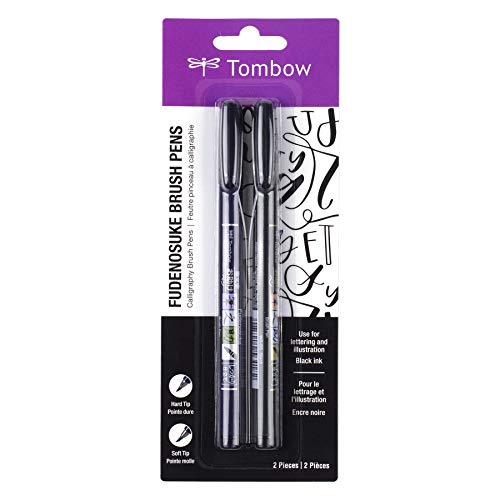
The Tombow Fudenosuke set provides both soft and hard tip options in one package, enabling varied line weight with brush pressure. This makes it ideal for calligraphy and art drawings, especially for learners who want to switch between fine control and expressive strokes. It’s a strong pick for mixed media work. Caution: brush tips require careful handling to maximize tip life and prevent fraying with aggressive pressure.
PANDAFLY Calligraphy Pens (10 Size)

PANDAFLY offers a wide nib variety, including soft brush and multiple fixed sizes (0.5mm to 3mm), with archival black pigment ink that is waterproof and fadeproof. This makes it well suited for beginners who want to experiment across many styles or crafters who color-code projects. Best for multi-style practice, but the set’s ink color is fixed to black, which may limit color projects for some users.
Fhyhej Calligraphy Pens (6 Size)

The Fhyhej set covers six sizes with soft and hard tip flexibility, supporting extra-fine to medium strokes through pressure changes. It’s a practical starter-to-intermediate option for users who want consistent performance across both lettering and illustration tasks. Limitation: like many brush-pen kits, tip life depends on handling, and the ink is water-based, so color-fastness can vary on different papers.
Kuretake ZIG Calligraphy Markers (12 Colors)

The Kuretake ZIG markers pair dual tips (2.0mm square and 3.5mm) with a broad color range, making it a versatile choice for professionals and beginners alike who want quick, vivid lettering and design work. Best for colorful projects and layout work. Consider that some users may prefer pigment-based inks for longevity, as dye-based inks can shift with light exposure over time.
Buying Guide
What should you look for when choosing calligraphy pens?
- Tip type and flexibility: Brush tips and flexible nibs allow varied line widths, essential for expressive calligraphy.
- Ink properties: Water-based inks are common for practice and clean drawing, but pigment or archival inks may be preferred for longevity and color fidelity.
- Ink color options: Some sets focus on black ink; others provide multiple colors. Choose based on project needs.
- Paper compatibility: Smooth, bleed-resistant paper helps prevent feathering and smearing with flexible tips.
- Maintenance and care: Soft brush tips require gentle handling and proper storage to extend tip life.
How to match products to user needs?
- Beginners: Look for sets with soft brush tips and clear instructions, such as Tombow Fudenosuke or PandaFly kits.
- Lettering enthusiasts: Choose nibs offering extra-fine to broad strokes and consistent ink flow, like Brusarth or Fhyhej.
- Art and design professionals: Consider color variety and dual-tip markers with durable nibs, such as Kuretake ZIG markers.
Usage scenarios to consider:
- Hand lettering for cards and invitations
- Calligraphy practice sheets and tutorials
- Illustration, journaling, and doodling
Frequently Asked Questions
- What is the best type of pen for beginners in calligraphy?
– A flexible brush or nib pen set with a gentle learning curve, such as Tombow Fudenosuke or PandaFly, is ideal for beginners to master stroke control. - Do calligraphy pens require special paper?
– Yes. Smooth, bleed-resistant paper minimizes bleed-through and feathering when using flexible tips. - Are water-based inks suitable for artwork?
– Yes. They dry quickly, are easy to clean, and work well for practice and light projects, though color-fastness may vary with exposure. - Can I use colored inks for calligraphy?
– Some kits include multiple colors; others focus on black. If color is important, choose markers or pens that supply color options. - How should I store brush-tip pens to extend their life?
– Store tips horizontally or with tips slightly elevated, away from direct heat, and cap or cover when not in use to prevent tip deformities. - Is a chisel-tip pen necessary for all calligraphy styles?
– Not for basic calligraphy. A chisel or angled brush can help with broad strokes in specific scripts, but many learners do well with flexible brush tips first.