Choosing a pedal power supply depends on your rig’s needs, including how many pedals you run, the required voltages, and whether you need isolated outputs. This guide highlights five reliable options, suitable for small to medium pedalboards and gig setups. Each product is explained with its ideal user, strengths, and a practical note to help you compare at-a-glance. The following table summarizes key specs to help you decide quickly.
| Product | Outputs | Best For | Notes |
|---|---|---|---|
| Donner DP-1 Guitar Power Supply | 10 isolated outputs (9V/12V/18V) | Compact boards needing versatile voltage options | Strong short-circuit protection; low-noise design |
| D’Addario PW-CT-9V | 9V DC, 800mA max | 9-volt pedals on a budget-friendly board | Battery-free, reliable 9V supply |
| JOYO DC 9V 1.2A | 9V DC, 1.2A | Moderate pedal setups needing extra current | 5-way daisy chain; includes reverse polarity option |
| Voodoo Lab Pedal Power 3 Plus | 12 isolated outputs, 500mA each | High-output, larger pedalboards | Expandable via X4/X8 modules |
| LEKATO Pedal Power Supply | 10 isolated ports; 9V/12V/18V potential on two ports | Quiet, clean power with protection | Adjustable dual ports for varied pedals |
Donner DP-1 Guitar Power Supply

The Donner DP-1 provides 10 isolated outputs for 9V, 12V, and 18V pedals. With 7 outputs at 9V 100mA, plus dedicated higher-current and higher-voltage options, this unit suits compact rigs that require diverse voltages. Best for players who want a light, portable power solution without sacrificing isolation or stability. Caution: ensure each pedal’s current draw stays within per-output limits to avoid stressing the supply.
D’Addario PW-CT-9V Power Adapter
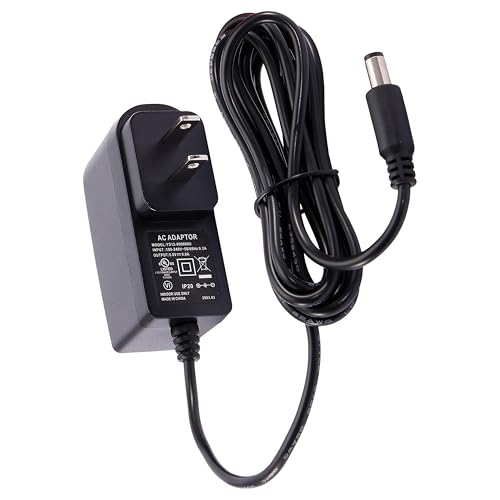
The D’Addario PW-CT-9V is a battery-free 9V DC power adapter designed for pedals on a pedalboard. It provides a reliable continuous supply for 9V devices and is versatile enough to power other 9-volt devices when needed. Best for players who want a simple, stable 9V solution on a compact board. Limitation: it is a single-output unit, so it may require additional adapters for larger pedal setups.
JOYO DC 9V 1.2A Power Supply
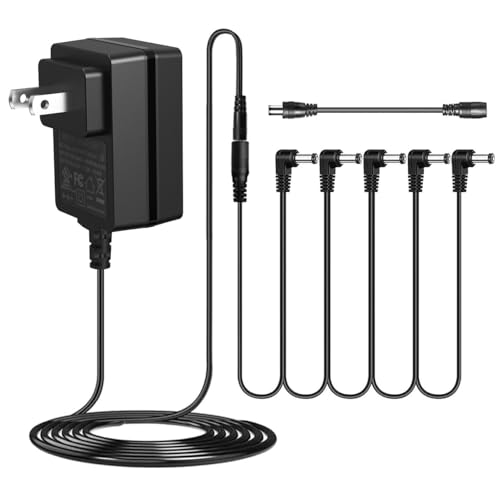
The JOYO DC 9V 1.2A provides 9V at up to 1.2A total, with a 5-way daisy chain and a reverse polarity cable. This is a practical choice for mid-sized pedalboards that need extra current per pedal and a straightforward daisy-chain setup. Best for players who want a simple, affordable solution with multiple pedals powered in parallel. Caution: daisy-chained pedals share current, so ensure total draw stays within limits to avoid voltage sag.
Mosky Pedal Power Supply (Camola Brand)

The Mosky (Camola) pedal power supply offers 10 isolated outputs, including 9V 300mA and 9V 500mA ports, plus two adjustable 9/12/18V outputs and a USB port. It emphasizes low noise and comprehensive protection, making it suitable for gigging players who need clean power for a diverse pedal lineup. Best for players who want an affordable, feature-rich isolated power solution; limitation: adjustables require monitoring to match pedal requirements precisely.
Voodoo Lab Pedal Power 3 Plus

The Voodoo Lab Pedal Power 3 Plus offers 12 isolated 500mA outputs with 10 dedicated 9V rails and 2 switchable 9V/12V outputs. It supports expansion via X-LINK to add 16 more isolated outputs, making it ideal for larger pedalboards and high-current DSP effects. Best for professionals and players growing their rig. Caution: higher upfront cost and larger footprint, which may not fit compact boards.
LEKATO True Isolated Power Supply

LEKATO delivers true isolation across 10 outputs with built-in short-circuit and over-current protection. Two ports offer adjustable voltage for 9V/12V/18V needs, and a USB port adds charging capability for mobile devices. Best for players who demand quiet, clean power and flexible voltage options. Limitation: some users may prefer independent, fully isolated voltage rails for every pedal in ultra-rig setups.
Buying Guide
How many pedals are you powering? If you have a compact board, choose a unit with several isolated outputs and enough current for your heaviest pedal. For larger rigs, consider models that offer expansion via X-LINK or other modules. Isolated outputs reduce noise and prevent inter-pedal interference, which is crucial for high-gain or analog-signal setups. Do you need adjustable voltages (9V/12V/18V)? If yes, pick a supply with adjustable ports. Are you power-constrained by space or weight? Look for compact, lightweight options with reliable short-circuit protection. Do you want USB charging alongside pedal power? A USB port adds multi-device versatility. Consider total budget, expansion plans, and whether you prefer a single all-in-one solution or modular growth over time.
Frequently Asked Questions
- What is an isolated pedal power supply?
It provides separate power paths for each pedal, reducing noise and avoiding interaction between pedals. - Do I need 18V outlets on a power supply?
Only if you use 18V pedals; many players power most pedals on 9V but keep dedicated 12V/18V outputs if required by specific pedals. - Can I daisy-chain pedals instead of using isolated outputs?
Daisy-chaining can save space and cost but may introduce noise or voltage drop; isolated rails are generally better for tone stability. - Is expansion worth it for future pedal additions?
Yes, modular systems (like X-LINK-capable units) reduce the need to replace the power supply later. - What safety features should I look for?
Short-circuit protection, over-current protection, and robust enclosures are essential for reliable live use. - Are built-in USB ports useful for pedalboards?
They can charge phones or power accessories, but do not rely on USB as the primary pedal power source.