Buying an overlocker (serger) helps you finish garments with neat edges, rolled hems, and secure seams. This guide identifies five strong options for American buyers, covering a range of budgets and projects from lightweight knits to heavier fabrics. Each pick is best for different sewers — from hobbyists to small studios — and includes practical pros, limitations, and who should avoid certain models. Below, compare features quickly, then dive into detailed product notes and practical buying tips.
| Product | Best For |
|---|---|
| Brother 1034D | Versatile, beginner-friendly projects, heavy fabrics |
| SINGER X5004-HD | Durable builds and flexible stitch options |
| VEVOR 1250 SPM | High-speed finishes and organized workspace |
| SINGER S0100 | 2–4 thread versatility for diverse projects |
| JUKI MO-50E | Advanced threading and differential feeds |
Brother 1034D Serger Overlock Sewing Machine

The Brother 1034D offers a metal frame and a reliable 3- or 4-thread setup, delivering up to 1,300 stitches per minute. This model is best for sewers who need strong performance with multiple layers of fabrics, including denim. The internal components and sturdy frame help minimize vibration during operation. A dedicated lower looper threading mechanism simplifies setup, which is a plus for beginners and experienced users alike. A caution: threading paths can be intricate for first-time users, so plan extra practice time.
Best For
- Seamstresses handling medium to heavy fabrics
- DIY hobbyists seeking quick, consistent finishes
Limitations
- Standard manual may require time to master threading paths
SINGER® X5004-HD Serger Overlock Machine, 2-3-4 Thread Capability

The X5004-HD emphasizes durability with a heavy-duty metal frame and flexible stitch options (2, 3, or 4 threads, six stitch types). It’s designed to handle thicker fabrics with reduced vibrations and precise stitching. A larger cutting knife helps process heavy materials more efficiently. Best for projects that require both sturdy seams and clean finishes. A potential limitation is that more experienced users may want even more advanced presser-foot options for specialty finishes.
Best For
- Projects with thick fabrics like denim or upholstery
- Sewers needing reliable, long-lasting performance
Limitations
- May not have the broad accessory range of top-tier models
VEVOR Serger Overlock Sewing Machine 1250 SPM

This model focuses on speed and versatility, offering 2/3/4-thread configurations with adjustable stitch length. A 0.7–2.0 differential feed helps manage stretchy fabrics, while a high-speed capability of up to 1,250 SPM supports quick projects. The machine includes a trim trap and tool storage for workspace organization. Best for busy sewers who value efficient setups. A caution: differential feed performance can vary with very delicate fabrics, so test on scraps first.
Best For
- Projects requiring fast throughput
- Stretch fabrics and mixed-material projects
Limitations
- May require careful threading for optimal results with unusual fabrics
SINGER® S0100 High Speed Serger Overlock Machine
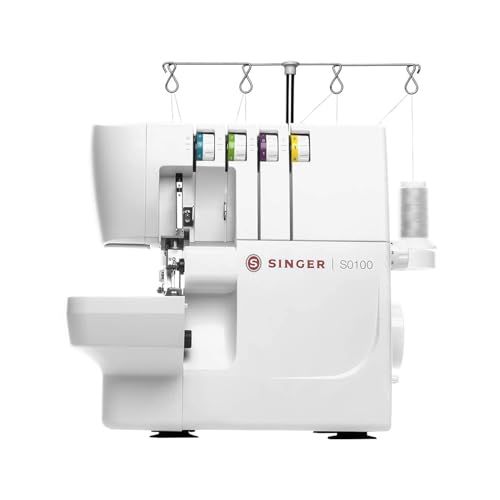
The S0100 offers 2-, 3-, or 4-thread options with six stitch types, pre-threaded setup, and a front-accessory compartment for convenience. Its differential feed helps prevent puckering on stretchy knits and delicate fabrics, ensuring smooth finishes. This model suits sewists who want turnkey setup without a steep learning curve, while still offering versatile stitch configurations. Limitation: some users may seek more robust motor power for very thick materials.
Best For
- Beginner to intermediate sewers needing quick-start threading
- Projects including knits, napkins, and light decorative edges
Limitations
- Motor power may be less suited to ultra-heavy fabrics
SINGER® HD0500S Heavy Duty Serger Overlock Machine

The HD0500S combines high speed with a power-rich motor for thick fabrics, delivering up to 1,300 stitches per minute. It features LED lighting and a user-friendly threading system with color-coded paths to speed setup. With 2-, 3-, or 4-thread configurations and six stitch types, it is designed for professional finishes. A caution: the feature set emphasizes speed and durability over a maximal number of presser feet options.
Best For
- Projects requiring fast, heavy-duty finishing
- Users who value bright LED threading guides
Limitations
- Some users may want more advanced accessory compatibility
JUKI MO-50E Serger

The JUKI MO-50E features lay-in tensions, automatic lower looper threading, and adjustable differential feed. These capabilities make it a strong choice for sewers who want precise control over complex fabrics and textures. It’s well-suited for those who regularly work with knits and layered fabrics, and who appreciate easy tension management. A limitation is that JUKI models can have a steeper learning curve for users entirely new to sergers.
Best For
- Advanced users needing precise tension control
- Projects with knits, layered fabrics, and rolled hems
Limitations
- May require more initial setup time to master tensions
Buying Guide: Key Considerations For Your Overlocker Purchase
What should you check before buying? Face fabric type, intended projects, and your threading skill level guide choices. A metal frame generally indicates durability for frequent use. Look for 2-, 3-, or 4-thread configurations to match the stitches you need, including rolled hems for lightweight fabrics and overlock stitches for edges.
What’s the difference between 2-, 3-, and 4-thread serging?
2-thread sergers finish edges and provide simple seams. 3-thread models add an overlock seam, while 4-thread options provide a strong, two-needle finish for sturdy hems. Consider your typical fabrics to decide which configuration you need most.
How important is differential feed?
Differential feed prevents stretching or puckering, especially on knits. A wider differential range offers more versatility, particularly for delicate fabrics or very stretchy materials.
Is auto-threading worth it?
Auto or easy-threading reduces setup time and errors. If you frequently switch fabrics, this feature can save time, but it’s not essential for every sewer.
How loud and heavy are these machines?
Most sergers operate with moderate noise and compact footprints. A metal frame usually correlates with reduced vibration, which helps stability during operation.
What accessories should come with the machine?
Look for a spare needles set, foot control, tweezers, color-coded threading guides, and a basic instruction manual. A front-accessory compartment improves convenience for frequent tool changes.
Maintenance tips
Regularly clean lint and dust from the knife area and tension discs. Use the color-coded threading paths to avoid misthreading, and keep the machine threaded correctly when storing to prevent tangling.
Frequently Asked Questions
- Do I need a serger if I already have a regular sewing machine? A serger provides professional finishing edges, rolled hems, and overlock stitches that a standard sewing machine cannot replicate as cleanly or quickly.
- Can I serge with a low-budget model? Yes, many entry-to-mid-range sergers offer solid 2-, 3-, or 4-thread configurations suitable for common fabrics, though thicker materials may require more capable models.
- Which thread type should I use? Polyester and nylon threads are common for serging due to strength and stretch control; match thread to fabric type for best results.
- What fabrics are best for sergers? Knit fabrics, jersey, and woven fabrics with finished edges are ideal; very delicate fabrics may require slower settings and careful testing.
- Is a separated knife necessary? Integrated or separate trimming capabilities help with edge finishing; choose based on your project needs and budget.
- How do I choose between models? Compare stitch options, differential feed, speed, motor power, and threading complexity against your typical projects and skill level.