Looking for a reliable outdoor wireless camera to boost home security? This guide compares five top options and explains who they are best for. Each pick highlights battery life, video quality, storage options, and ease of use. Ideal for homeowners, renters with rented spaces, or anyone upgrading an old system, these models offer clear visuals, flexible placement, and smart features like motion detection and two-way talk.
Summary of chosen products:
| Product | Best For | Key Feat |
|---|---|---|
| Blink Outdoor 4 – Wireless Smart Security Camera (3-Camera System) | Homeowners needing multi-camera coverage with long battery life | Up to 2-year battery life; 1080p live view |
| GNCC Solar Security Cameras Wireless Outdoor | Locations with limited power access; sunny climates | Solar powered; 1080p; weather resistant |
| 2026 Upgraded 2K Security Cameras Wireless Outdoor | Best color night vision and cloud/SD options | 2K UHD; free cloud storage; AI motion detection |
| Blink Outdoor 4 – Wireless Smart Security Camera (2-Camera System) | Flexible single-user setup with add-on options | Up to 2-year battery life; 1080p live view |
| Security Cameras Wireless Outdoor (VISION WELL, 2K) | All-weather, color night vision, AI alerts | 2K live video; color night vision; AI recognition |
Blink Outdoor 4 — 3-Camera System

Best for: households seeking broad outdoor coverage with long battery life. The 3-camera setup provides extensive perimeter monitoring without frequent battery changes. Features include up to two-year battery life, 1080p HD live view with infrared night vision, and crisp two-way audio via the Blink app.
Why selected: This model focuses on low-maintenance, wireless operation with a straightforward installation. The Sync Module Core enables multi-camera coordination, helping you monitor multiple entry points from a single app. Caution: Local storage is not included with the Sync Module Core, so plan for cloud storage or an external option if needed.
Blink Outdoor 4 — 2-Camera System

Best for: smaller properties or focused coverage on two entry points. This variant maintains the same 2-year battery life and 1080p HD live view with infrared night vision and two-way audio. The Sync Module (sold separately) enables local storage and multi-camera management.
Why selected: It’s a compact, budget-conscious choice that still delivers reliable wireless operation and easy app controls. Caution: Requires a Sync Module for extended features; not included in the core package.
2026 Upgraded 2K Security Cameras Wireless Outdoor

Best for: homes needing high-resolution footage and flexible storage. This model offers 2K UHD video, full-color night vision, and free cloud storage with optional local SD card support up to 256GB. It supports 2.4G and 5G WiFi, IP66 weatherproofing, and 1-6 months of battery life depending on use.
Why selected: It provides improved video quality and storage flexibility, with AI motion detection options for smarter alerts. Caution: Free cloud storage may be SD quality; HD may require a paid plan.
GNCC Solar Security Cameras Wireless Outdoor
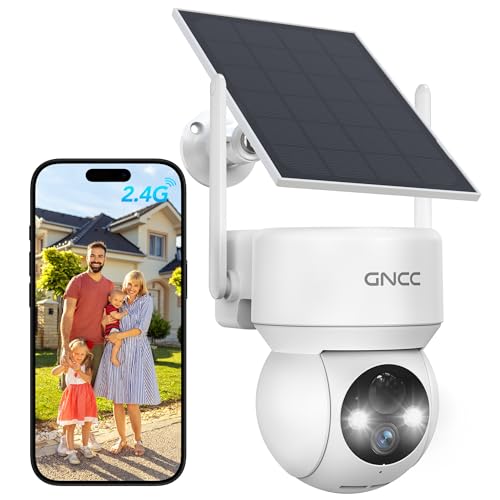
Best for: sunny climates or areas with easy access to sunlight and off-grid needs. Features include a 3W solar panel, a 5200mAh battery, IP65 weather rating, and 1080p Full HD with 355° horizontal and 90° vertical rotation to minimize blind spots.
Why selected: The solar panel extends standby periods and reduces maintenance. Caution: Optional AI recognition and cloud features may require ongoing subscription and network access; real-world performance depends on sunlight exposure.
VISION WELL Outdoor 2K Wireless Camera

Best for: users seeking 2K resolution with color night vision and AI motion alerts. This weatherproof camera supports 2K live video, color night vision, and 2-way talk, with optional cloud and SD storage.
Why selected: It offers strong nighttime detail and AI-driven alerts for smarter security. Caution: Not compatible with 5GHz WiFi; ensure your network matches device requirements.
Buying Guide
What to evaluate when selecting an outdoor wireless camera system:
- Power options: Battery-powered vs. solar vs. wired. Battery life affects maintenance intervals.
- Video quality: 1080p is common; 2K/2K+, or color night vision provide clearer detail in low light.
- Storage: Cloud options versus local SD card; hybrid storage may fit diverse needs.
- Weather and durability: Look for IP ratings and temperature ranges suitable for your climate.
- Night vision: Infrared versus color night vision; consider the environment and desired detail level after dark.
- Field of view and rotation: Wider horizontal/vertical angles reduce blind spots; multi-axis cameras help monitor yards and entryways.
- Alerts and AI features: Motion detection accuracy and smart recognition (people, vehicles, pets) can reduce false alerts.
- Installation scope: Determine how many cameras you need and whether a central hub or module is required for multi-camera setups.
What matters for different buyers:
- Renters or temporary setups: Look for long battery life and simple, tool-free installation.
- Homeowners with large yards: A multi-camera system or XR-range options may offer broader coverage.
- Smart home enthusiasts: Check compatibility with Alexa or other ecosystems and cloud vs. local storage preferences.
- Budget-conscious shoppers: Prioritize a reputable brand with clear upgrade paths and documented durability.
Frequently Asked Questions
- Q: Do outdoor wireless cameras require a subscription for cloud storage? A: Some models include free cloud storage options with limited quality; higher-quality or longer histories may require a paid plan.
- Q: How long do batteries typically last on these cameras? A: Battery life varies by model and usage, with many offering up to 1-2 years under typical operation.
- Q: Can I use these cameras without WiFi? A: Most rely on WiFi for video transmission and cloud features; some offer local storage when paired with a hub.
- Q: Are color night vision features worth it? A: Color night vision improves detail in low light but may consume more power or require specific camera models.
- Q: What is the best number of cameras for a standard home? A: A typical setup covers 2-4 entry points; add cameras for larger perimeters or high-traffic areas.
- Q: Do these cameras integrate with smart home assistants? A: Several models support Alexa or similar platforms; check product pages for compatibility notes.