Answering your search for a plant-powered, skin-friendly, and eco-conscious detergent: this guide highlights five top organic options, each with clear benefits for different needs. This selection is ideal for households prioritizing gentle formulas, environmental impact, and compatible performance in standard or high-efficiency machines. The buyers most likely to benefit are those with sensitive skin, families washing baby clothes, households reducing chemical exposure, and consumers seeking vegan or phosphate-free options. A quick product comparison table is included below to help you decide at a glance.
| Product | Key Benefit | Best For |
|---|---|---|
| ECOS Lavender | Climate-positive, vegan, plant-powered | Sensitive skin, eco-conscious households |
| ECOS Free & Clear | Same eco focus; fragrance-free option | Very sensitive skin, fragrance avoidance |
| Seventh Generation Free & Clear | Low additives, dermatologist-tested | Fragrance- or dye-free needs, delicate fabrics |
| Molly’s Suds Ocean Mist | Ultra-concentrated; gentle on skin | Sensitive skin; hard water; septic-safe |
| 365 by Whole Foods Organic Unscented | Organic, unscented, versatile | Organic label matters; scent-free option |
ECOS Laundry Detergent Lavender — 100 Fl Oz (Pack of 2)

Best for households seeking a lavender-scented option with a strong eco profile. ECOS emphasizes climate-positive and vegan formulas that are gentle on sensitive skin. This option is pH-balanced and designed to minimize environmental impact, with no parabens or phosphates. Suitable for daily laundry, including fabrics prone to irritation. Caution: Lavender fragrance may not be ideal for those with fragrance sensitivities.
Why chosen: ECOS Lavender stands out for a balanced combination of plant-powered cleaning and a lavender scent that many users enjoy. It’s a solid all-purpose choice when you want thoughtful sustainability with everyday performance.
ECOS Laundry Detergent Free & Clear — 50 Fl Oz (Pack of 2)

Best for fragrance-free cleaning with a climate-positive approach. This Free & Clear variant delivers the same vegan, plant-powered formula without scents, dyes, or parabens. It’s a practical pick for households with highly sensitive skin or infants and for those who prefer a truly neutral wash. Caution: Some users with extremely sensitive noses may notice a subtle odor in packaging, although formula remains unscented.
Seventh Generation Laundry Detergent Free & Clear — 40 oz

Best for families seeking a fragrance- and dye-free option with a sensitive-skin focus. Seventh Generation emphasizes a plant-derived enzyme blend that targets stains while remaining gentle on fabrics. This makes it well-suited for baby clothes, towels, and linens that benefit from a milder approach. Caution: Being concentrated, measure accurately to avoid residue on delicate fabrics.
Molly’s Suds Ocean Mist Liquid Laundry Detergent

Best for those who want a pediatric-nurse-developed, sensitive-skin-friendly formula with no harsh synthetic fragrances. Molly’s Suds is ultra-concentrated and designed to work well in hard water and with HE machines. It’s a good choice for households seeking a simple, effective wash with minimal additives. Caution: The scent is optional; if you prefer a scented option, you may want a different product in this guide.
365 by Whole Foods Market Organic Unscented — 200 Fl Oz
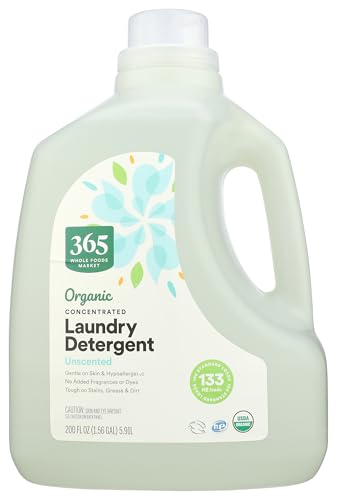
Best for buyers prioritizing an organic label and unscented formula. This detergent is designed to be gentle on sensitive skin while maintaining standard and HE machine compatibility. The large 200 fl oz size offers extended use with fewer refills. Caution: Unscented formulas may still contain trace additives necessary for cleaning; verify ingredient lists if you have specific sensitivities.
Buying Guide
What should you consider when choosing an organic detergent?
- Skin sensitivity: Look for fragrance-free, dye-free formulations and dermatologist-tested options to reduce irritation.
- Environmental impact: Favor climate-positive, vegan, or phosphate-free formulas that minimize water pollution and support sustainable farming.
- Concentration and loads: Ultra-concentrated detergents help reduce packaging waste and are cost-efficient per load.
- Machine compatibility: Ensure the product is suitable for standard and HE washing machines to avoid residue or poor cleaning performance.
- Scent preferences: If scent matters, choose a plant-based fragrance; otherwise, select Free & Clear or Unscented options.
- Label integrity: Organic or natural labels correlate with stricter sourcing; however, verify third-party certifications if important to you.
How to choose between fragrances and fragrance-free?
Fragrance options like lavender provide a pleasant laundry-up experience but may irritate highly sensitive skin. Fragrance-free formulas reduce irritants yet still deliver effective cleaning for everyday laundry. Consider a fragrance trial before committing to a full bottle when fragrance sensitivity exists.
Best practices for use
Follow the recommended loads per bottle and adjust for water hardness. For households with babies or sensitive skin, start with a smaller amount and observe skin tolerance and clothing irritation levels.
FAQ
- Are organic detergents as effective as traditional ones? Yes, many organic detergents use plant-based enzymes and biodegradable cleaners designed for mainstream washing machines and common stains.
- What makes an organic detergent better for the planet? They often avoid phosphates, synthetic fragrances, and harsh solvents, while prioritizing vegan ingredients and climate-conscious production.
- Can I use organic detergents in high-efficiency (HE) machines? Most options in this guide are formulated for HE machines; always check the product label for compatibility.
- Which is best for sensitive skin? Fragrance-free or Free & Clear formulas are typically best for sensitive skin; test on a small fabric area if unsure.
- Do organic detergents work well with hard water? Some brands, like Molly’s Suds, indicate compatibility with hard water, aiding stain removal and reducing mineral buildup.
- Is there a difference between organic and natural detergents? “Organic” often refers to production standards and certifications, while “natural” describes ingredients that are plant-based or minimally processed; verify certifications if important to you.