Open-ear headphones let you hear your surroundings while enjoying your audio, making them ideal for runners, commuters, cyclists, and casual listeners who prioritize awareness and comfort. This guide highlights five top options, detailing who each is best for and why they stand out. Use this overview to compare fit, battery life, and storage for workouts, travel, and daily use.
Summary Table
- Soundcore V20i by Anker — Best for all-day comfort and situational awareness
- SHOKZ OpenRun Pro 2 — Best for premium bone conduction sound and secure fit
- TRAUSI Open Ear Wireless Earbuds — Best for ultra-long battery life and instant Bluetooth 5.4
- CXK Bone Conduction Headphones — Best value bone conduction with mic for calls
- TOZO OpenEarRing Open Ear Buds — Best for ultra-light comfort and 40-hour total playtime
Soundcore V20i Open-Ear Earbuds Review

Brand: Soundcore
Key Features: Ultra-Comfort with Open-Ear Design; Enhanced Situational Awareness; Four Adjustable Positions for a Secure, Comfy Fit.
Best for: Everyday wearers who want unobtrusive comfort and awareness during commutes, workouts, or desk work. The open-ear design reduces ear fatigue and keeps you connected to your environment.
Why selected: This model prioritizes all-day comfort and versatile fit positions, making it a strong choice for those who value continuous wear without pressure or intrusion.
Caution: As with other open-ear devices, passive noise isolation is limited, so environment sound may compete with audio at higher volumes.
SHOKZ OpenRun Pro 2 Bone Conduction Headphones

Brand: SHOKZ
Key Features: Open-Ear Awareness; Dual Drivers for clear highs and deep bass; Secure, lightweight fit with Ni-Ti memory wire and ergonomic ear hooks.
Best for: Fitness enthusiasts who want immersive sound with strong situational awareness during runs or rides, plus a secure gym-friendly fit.
Why selected: Combines bone and air conduction tech to deliver robust audio while maintaining environmental awareness, a key advantage for outdoor workouts.
Caution: The sound profile can feel different from conventional over-ear headphones; users accustomed to traditional headphones may need a short adjustment period.
TRAUSI Open Ear Wireless Earbuds — 80H Playtime

Brand: TRAUSI
Key Features: Up to 80 hours total playtime; Active fit with open-ear design; Bluetooth 5.4 with instant connect and stable connection.
Best for: Heavy listeners who want long battery life for travel, long workouts, or daily commutes without frequent recharging.
Why selected: The extended playtime and reliable Bluetooth 5.4 make it a practical pick for multi-day trips or long gym sessions.
Caution: Battery life figures are dependent on usage; high-volume listening or calling may reduce total hours.
CXK Bone Conduction Headphones With Mic

Brand: CXK
Key Features: Advanced Bone Conduction Tech; Bluetooth 6.0; IPX7 Water Resistance; Open-Ear Design with mic for calls.
Best for: Outdoor athletes who need reliable calls, weather resistance, and a lightweight fit for running and cycling.
Why selected: Combines up-to-date wireless tech with robust water resistance and a built-in mic, making it versatile for calls during workouts.
Caution: IPX7 protection is sweat and immersion-resistant but not designed for swimming; use accordingly.
TOZO OpenEarRing Open Ear Buds
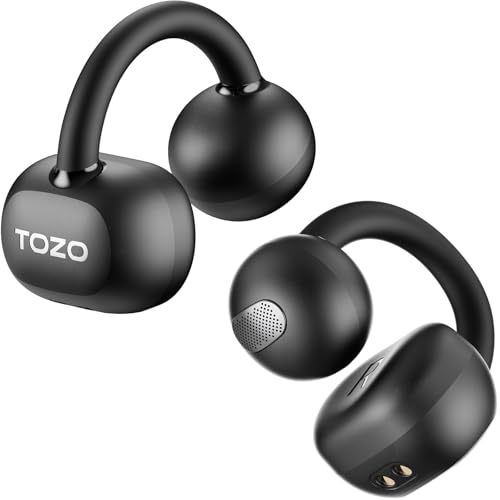
Brand: TOZO
Key Features: Ultra-light design; OrigX acoustic tech for Hi-Res stereo; Digital display and 40-hour total playtime.
Best for: Listeners who want a feather-light fit with long listening sessions and easy battery monitoring.
Why selected: Exceptional comfort combined with long battery life and a technical emphasis on audio fidelity through OrigX.
Caution: May lack some bass emphasis for those who prefer stronger low-end in bone conduction designs.
Buying Guide: Key Purchase Considerations
- Open-ear vs. bone conduction: Open-ear earbuds sit around or in the outer ear canal but do not seal the ear, while bone conduction devices transmit sound through the cheekbone. Open-ear models are typically lighter and more comfortable for long wear, while bone conduction can deliver richer perceived bass without blocking ambient noise.
- Battery life: Look for total playtime per charge and case capacity if included. For travel or long workouts, a device offering 40–80 hours total playtime is advantageous.
- Fit and stability: Adjustable positions, ear hooks, or titanium frames help keep the unit secure during activity. Consider weights and any memory-wire components if you move a lot.
- Water and sweat resistance: IP ratings (IPX4, IPX5, IPX7) indicate protection levels. Sports use benefits from higher ratings.
- Connectivity: Bluetooth version (5.0+), pairing speed, and codec support affect ease of use in crowded areas and with multiple devices.
- Microphone quality: If calls are important, a reliable mic with stable transmission is essential for clear conversations on the go.
Frequently Asked Questions
- What is the main difference between open-ear and bone conduction headphones?
Open-ear headphones rest around or near the ear canal, allowing ambient sound; bone conduction transmits sound through the cheekbones for a distinct listening experience without blocking the ears.
- Are open-ear headphones safe for running in traffic?
Yes. The open-ear design helps you stay aware of traffic and surroundings, which is a key safety benefit during outdoor activities.
- Do these devices require special maintenance?
Regular cleaning and avoiding harsh moisture exposure help extend life. Follow the manufacturer’s care instructions for charging and storage.
- Can I use bone conduction headphones for phone calls?
Some models include a built-in microphone and support calls, but mic performance varies by model and environment.
- How do I choose between 80-hour and 10-hour battery models?
Choose based on usage patterns: long trips or multi-day events benefit from longer battery life, while casual daily use may not require extended endurance.