Direct answer: For driveway oil stains, concrete-specific cleaners that lift or encapsulate oil perform best. This guide highlights five proven options, explains who they’re best for, and compares their approach to stain removal. Choose this guide if you want practical, non-harmful solutions that minimize scrubbing while restoring curb appeal. The table below helps you compare at a glance.
| Product | Best For | Approach |
|---|---|---|
| CHOMP! Pull It Out 32 Oz | Light to moderate oil stains on residential driveways | Deep-penetrating lift; chalk-dust removal |
| Oil Eater Overnight Stain Remover | Older stains across driveways, pavers, garages | Molecular-level oil pull-out; no scrubbing |
| Oil Eater Original 1 Gallon | Heavy grease and engine oil on concrete | Biodegradable degreaser; dissolves grease |
| Krud Kutter Concrete & Driveway Cleaner | Stubborn oil and grease on multiple surfaces | Commercial-strength formula; pressure-wash friendly |
| GORILLA Concrete Cleaner & Degreaser | Heavily stained driveways and garages | Concentrated, versatile dilution; less scrubbing |
CHOMP! Pull It Out Concrete Oil Stain Remover (32 Oz)

Best for: Homeowners with moderate oil stains on concrete or brick surfaces. Why selected: It uses a deep-penetrating formula to lift oil and petroleum-based stains from porous surfaces like driveways and garage floors. The product emphasizes safety, avoiding bleach, acids, and hazardous materials while delivering a residue-free cleanup that can reveal a cleaner surface after brushing. Caution: Do not rely on it for non-porous surfaces or very fresh spills that require immediate containment.
Overnight Stain Remover for Concrete and Driveways (White, Oil Eater)
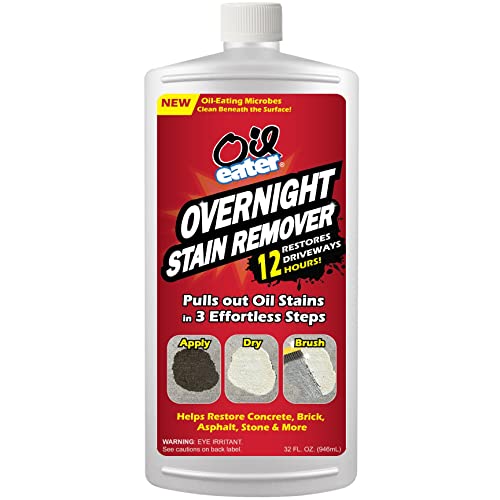
Best for: Older or set-in oil stains where a longer treatment helps. Why selected: This product uses oil-eating microbes to pull oil from beneath the surface, with a simple three-step process—pour, dry, sweep away—requiring no scrubbing or rinsing. Caution: Overnight drying means planning around weather and ensuring the product dries completely before sweeping.
Oil Eater Original 1 Gallon Cleaner, Degreaser
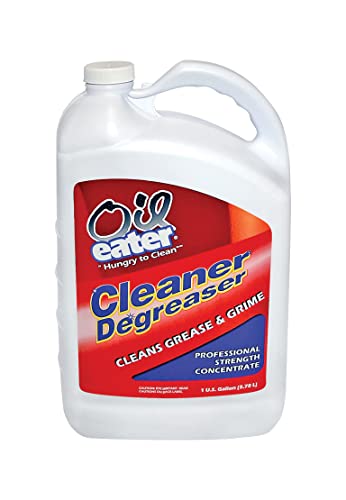
Best for: Tough automotive leaks and heavy grease on concrete. Why selected: A professional-strength degreaser that dissolves grease, oil, and dirt from washable surfaces, with a biodegradable formula and USDA approval for food service facilities. Caution: For some stains, multiple applications may be necessary to fully lift deeply embedded oil.
Krud Kutter Concrete & Driveway Cleaner

Best for: Heavy oil, grease, and general grime on driveways and sidewalks. Why selected: Commercial-strength formula targets embedded stains and is designed for quick action with minimal scrubbing—especially when used with a pressure washer. Caution: Results may vary with very old or weathered stains; test on a small area first.
GORILLA Concrete Cleaner and Degreaser (64 Oz)

Best for: Heavily stained concrete surfaces at home or in small business settings. Why selected: A heavy-duty, concentrated cleaner that can be diluted or used full strength to lift embedded oil and grime from concrete, with less scrubbing required when paired with proper rinsing. Caution: Concentrates can be strong; follow dilution guidance to avoid surface damage on delicate materials.
Buying Guide: Choosing The Right Oil Stain Remover For Your Driveway
What stain type best guides your choice? For fresh oil leaks, products that lift or dissolve the oil as it dries tend to work fastest. For old, set-in stains, cleaners that pull contaminants from beneath the surface and then allow sweeping or rinsing are often more effective.
- Surface type matters: Porous concrete holds stains more than sealed or painted surfaces. Choose products labeled for concrete, brick, or pavers for best results.
- Application method: Some cleaners require drying time, while others work with a quick rinse or pressure wash. Decide based on your schedule and tools available.
- Environmental and safety considerations: Look for biodegradable formulas, non-acidic options, and products that avoid harsh solvents when possible.
- Stain age and severity: Lighter, newer stains respond to milder cleaners; older stains may need stronger formulas or multiple applications.
- Equipment compatibility: If you plan to use a pressure washer, choose cleaners designed for pressure- washing to maximize effectiveness and minimize surface damage.
Frequently Asked Questions
- Do these products require scrubbing? Some rely on absorption or chemical lift with minimal scrubbing, while others may involve light brushing after drying.
- Can I seal my driveway after cleaning? Yes, cleaning first helps sealants adhere better and prolongs the new look. Allow full dry time before sealing.
- Are these products safe for plants and pets? Most are designed with safety in mind, but avoid application on new plant growth or areas where pets frequent until the surface is fully dry.
- Should I use a degreaser for all stains? Degreasers work well on grease and oil; for minor stains a lighter cleaner may suffice. Tailor your choice to stain type and surface.
- Is a professional-grade cleaner necessary for all jobs? For large commercial spaces or deeply ingrained stains, professional-grade formulations often deliver faster, more consistent results.
- Will these products remove color or sealant from concrete? Most cleaners target stains, not dyes or sealants, but always test on a small, inconspicuous area first.