Discover the best natural light alarm clocks designed to wake you gradually with sunrise simulations, soothing sounds, and customizable dimming. This guide highlights five top models ideal for light sleepers, heavy sleepers, couples with different wake times, and households seeking calmer mornings. Each option uses progressive light to align with your circadian rhythm, reducing morning stress and improving sleep quality. Below is a quick look at the standout picks and who they’re best for.
Summary table of chosen products:
| Product | Best For | Key Benefit | Notable Limitation |
|---|---|---|---|
| Odokee Sunrise Alarm Clock | Small to mid-sized bedrooms | Sunrise customize 5–60 minutes with Bluetooth audio | Sound options may be ideal for light-to-moderate sleepers |
| JALL Full-Screen Wake Up Light | Heavy sleepers, families | Full-front screen for broad light coverage, dual alarms | Front panel brightness can be intense for very bright rooms |
| Philips SmartSleep Wake-up Light | Health-conscious buyers | Clinically inspired design with sunset/sunrise and reading lamp | More features may come at a higher price point |
| REACHER Sunrise Alarm Clock | Calm wakes for all ages | Extensive sound options, 0–100% dimmable night light | Some users may prefer simpler interfaces |
| Thybro Sunrise Alarm Clock | Bedroom versatility | Longer fade options, high-quality audio, flexible brightness | Complex features require setup time |
Odokee Sunrise Alarm Clock White Noise Machine

Best for: light sleepers who want a gentle wake with integrated Bluetooth audio. The Odokee offers a sunrise simulation that gradually brightens 5–60 minutes before your alarm, aligning with your circadian rhythm for a peaceful start. It doubles as a 25-sound sleep aid and supports Bluetooth streaming for music, podcasts, or white noise.
Why selected: The combination of a customizable sunrise, a robust set of natural and colored noise options, and a decent Bluetooth speaker makes it flexible for different sleep routines and preferences.
Caution: If you rely on a loud alarm, this model emphasizes gentle wake but may not satisfy those who require a strong auditory cue for waking.
JALL Full-Screen Wake Up Light Sunrise Alarm Clock

Best for: heavy sleepers and households needing synchronized alarms. The full-screen sunrise simulation starts 10–60 minutes before the alarm, with a front panel that provides broad light coverage for a less jarring wake. It also includes dual alarms, snooze, sleep timer, and Bluetooth syncing for time accuracy.
Why selected: The large light surface and dual alarms help families with different routines, reducing morning friction and ensuring both wake up on time.
Caution: Front-screen brightness and the auto-sync feature can be too bright or require Bluetooth setup for first use.
Philips SmartSleep Wake-up Light

Best for: health-conscious buyers seeking clinically supported wake routines. The Philips model offers colored sunrise and sunset simulations, a set of natural sounds, FM radio, and a reading lamp with tap snooze and auto-dimming display.
Why selected: Clinically recommended features and a robust set of wake options make it a strong, well-rounded choice for those prioritizing consistency and daily structure.
Caution: It may require more initial learning to optimize settings beyond basic use.
REACHER Sunrise Alarm Clock and Sound Machine
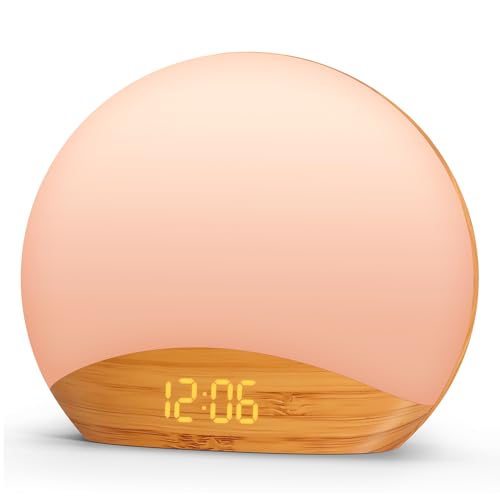
Best for: users who want a calm wake with a wide range of natural sounds. It mimics natural light with brightness control and offers 26 gentle sounds, including white noise, ocean, and rain. A 5–180 minute timer helps tailor the transition to bedtime routines as well as wake time.
Why selected: The broad sound library and flexible timer support both wake and sleep routines, making it versatile for families and individuals alike.
Caution: Some users may prefer simpler controls over the multiple sound options.
Sunrise Alarm Clock with Sound Machine – Thybro
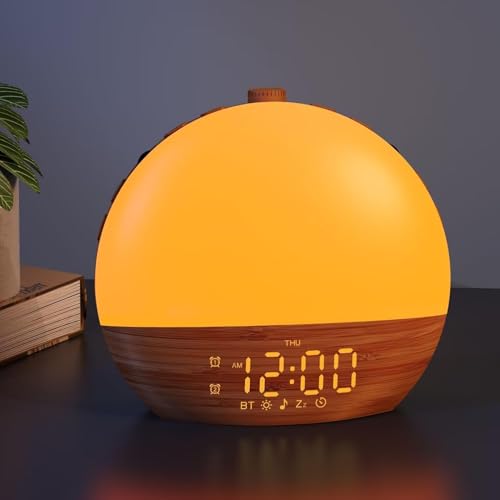
Best for: versatile bedroom use with detailed control over lighting and audio. This model provides a 20–30 minute sunrise, high-fidelity audio, and 32-level volume with 13-level brightness controls. It blends gradual light with bird chirps and nature sounds for a calming start.
Why selected: It supports a calm, non-disruptive wake and an equally soothing night routine, making it a good fit for adults and kids who need a gentle transition.
Caution: The feature-rich interface may require a longer initial setup, especially for first-time users.
Buying Guide
What matters most when choosing a natural light alarm clock:
- Sunrise duration and brightness: Look for adjustable fade times (5–60 minutes) and dimmable displays to fit your room and sensitivity.
- Sound options: Consider built-in nature sounds, white noise, or Bluetooth streaming if you want personalized audio.
- Alarms and routines: Dual alarms, weekdays/weekends, and snooze features help families with different wake times.
- Display controls: Brightness, color warmth, and screen blackout modes affect night visibility and sleep quality.
- Additional features: FM radio, reading lamp, timer settings, and Bluetooth connectivity add convenience but vary by model.
- Ease of use vs. depth: Simpler devices are easier to operate, while feature-rich models suit tech-savvy users.
FAQ
- What is a sunrise alarm clock best for?
They are best for promoting natural wake-ups, reducing morning jolts, and supporting circadian-aligned sleep cycles.
- Do these clocks help with sleep quality?
Yes, gradual light and soothing sounds can improve sleep onset and reduce wake-time stress when used consistently.
- Can I use these clocks without light?
Many models offer dimmable lights and screen-off modes, or a timer to use only the sounds at night.
- Is Bluetooth or radio essential for a good wake-up?
Not essential, but Bluetooth allows customized audio and easier time syncing. Radios provide familiar alarms for some users.
- Are these clocks suitable for kids?
Yes, many models include kid-friendly dual alarms and gentle wake options suitable for children and beginners.
- What should I consider if my partner has a different wake time?
Choose a model with dual alarms, separate routines, and adjustable brightness to minimize disturbances.