When choosing a multimeter for electrical work, you need accuracy, safety features, and ease of use. This guide highlights five top options ideal for professional electricians, HVAC technicians, and serious DIYers. Each pick balances measurement range, build quality, and practical features like backlit displays and non-contact voltage detection. Read on to see who each meter is best for and why.
Product comparison at a glance
| Product | Best For | Key Features |
|---|---|---|
| Klein Tools MM325 Multimeter | Daily electrical work with broad testing needs | 600V AC/DC, 10A DC, 2 MΩ, continuity, diode, battery test; LED lead-alert; backlit display |
| KAIWEETS KIT01 | All-in-one portable diagnostic set | Digital multimeter, non-contact voltage tester, GFCI tester; backlit LCD; CAT III 600V |
| Klein Tools 69149P Electrical Test Kit | Combo of voltmeter and non-contact tester | 600V AC/DC, 10A DC, 2 MΩ; continuity indicators; NCVT with audible alert |
| Klein Tools CL120VP | Clamp meter with voltage testing | AC current, NCVT clamp; AC/DC voltage; auto-ranging; test lead holder |
| AstroAI CM2K0R Clamp Meter | Versatile clamp meter for current-heavy tasks | AC voltage, AC current via clamp; capacitance, resistance, diode, continuity; backlit display |
Klein Tools MM325 Multimeter
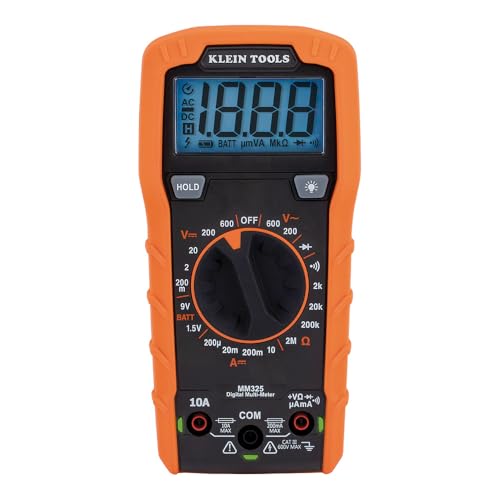
The Klein Tools MM325 offers broad measurement capabilities suitable for everyday electrical maintenance. It can test AC/DC voltage up to 600V, measure 10A DC current, and test resistance up to 2 MΩ. It supports continuity, diode tests, and a battery test, making it a well-rounded choice for electricians who handle residential and commercial tasks. Lead-alert LEDs improve accuracy by confirming proper test lead placement, and the backlit LCD is helpful in dim workspaces. Best for: technicians who need a sturdy, all-around meter with safety-focused features.
Limitation: The MM325 is manual-ranging, which may slow workflows for technicians who prefer auto-ranging convenience. This model is best when you want straightforward, reliable readings with clear guidance for lead placement.
KAIWEETS KIT01: All-In-One Diagnostic Set

The KIT01 pairs a digital multimeter with a non-contact voltage tester and a GFCI outlet tester in one compact kit. It’s designed for electricians, HVAC pros, and serious DIYers who value efficiency and want to minimize trips to the truck for separate tools. The digital meter measures AC/DC voltage up to 600V, DC current up to 10A, and resistance up to 20 MΩ, with a backlit display and auto-off features. The non-contact detector provides live voltage readouts with color and audible cues. Best for: quick, all-in-one diagnostics in the field.
Limitation: The included safety features are robust, but the kit’s scope may not replace a full environment-specific meter for highly specialized electrical work requiring advanced SCADA or test-specific accessories.
Klein Tools 69149P Electrical Test Kit
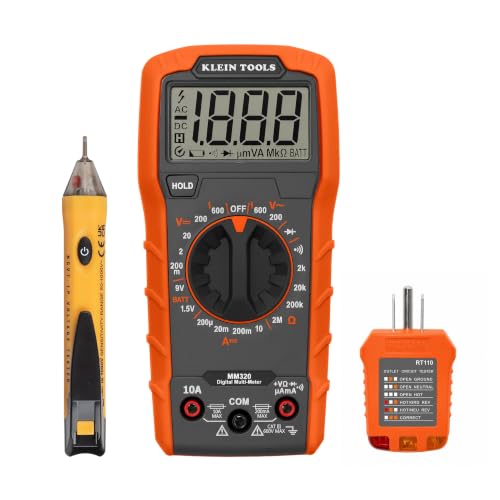
This three-piece Klein Tools kit pairs a versatile MM320-style multimeter with a dedicated non-contact voltage tester (NCVT1P). It provides a comprehensive testing setup for both voltage and continuity, including audible and visual indicators to confirm continuity and voltage presence. Best for: electricians who want a compact, dependable pair for on-site diagnostics and quick checks. Caution: the NCVT should be used as a detector, not a sole verification method for live circuits.
Klein Tools CL120VP Electrical Voltage Test Kit

The CL120VP kit centers on a clamp meter capable of measuring AC current with a voltage-testing clamp and standard test-lead measurements for AC/DC voltage, resistance, and continuity. Auto-ranging technology helps ensure accurate readings, while a dedicated test-lead holder supports hands-free operation when needed. Best for: projects involving high-current tasks or where live current needs quick confirmation. Limitation: clamp meters can be less precise for very low current measurements compared to dedicated handheld meters.
AstroAI CM2K0R Digital Clamp Meter

The AstroAI CM2K0R is a versatile clamp meter that focuses on AC voltage and AC current measurement through the clamp, with added features like resistance, capacitance, and diode/continuity testing. It includes a backlit display and audible/visual alarms to indicate readings, useful for troubleshooting in dim environments. Best for: fieldwork where clamping around a conductor is the primary method for current measurement. Caution: this meter cannot measure DC current via the clamp, so use it on AC current tasks only.
Buying Guide: Key Considerations For Electricians
What should you look for when selecting a multimeter?
- Measurement range and accuracy: Ensure the meter covers essential ranges (AC/DC voltage up to at least 600V, current up to 10A, and resistance up to several megaohms). Auto-ranging saves time, while manual-ranging can offer control in specialized tasks.
- Safety ratings: Look for CAT III or CAT IV ratings appropriate to your typical work environment. Non-contact voltage detection (NCVT) is valuable for quick checks but should not replace voltage verification.
- Display and usability: A backlit LCD helps in dim spaces. Data hold and auto-off features can improve efficiency during long jobs.
- Form factor and accessories: Clamp meters are ideal for high current tasks. Kits with test leads, carrying cases, and additional testers reduce toolbox trips and improve readiness on-site.
- Durability and portability: Rugged builds and protective features reduce risk in busy job sites. Consider models with protective holsters or vibration-resistant housings.
- Maintenance and notes: Some meters require careful lead placement and correct socket use. Follow the manufacturer’s manual to avoid incorrect readings or damage.
FAQs
- What is a multimeter best used for in electrical work?
They measure voltage, current, resistance, and continuity, helping diagnose circuits, test components, and verify proper operation.
- When should I use a clamp meter instead of a standard multimeter?
A clamp meter is ideal for measuring AC current without breaking the circuit. It’s especially useful for high-current tasks.
- What safety features matter most in a meter?
CAT ratings, NCVT, proper insulation, and sturdy construction help protect you during live measurements.
- Is auto-ranging better than manual-ranging?
Auto-ranging speeds up measurements and reduces range guessing, but some specialists prefer manual control for precision in certain tests.
- Can I rely on NCVT alone to confirm a circuit is de-energized?
No. NCVT is a detector; always verify with a known-good meter on a validated test point before servicing a circuit.