Answering the need for sharp detail, dynamic range, and portable setups, this guide highlights mirrorless cameras ideal for landscape shooters. These picks suit beginners exploring landscapes, enthusiasts upgrading gear, and travelers seeking compact, capable gear. Each option is evaluated for image quality, weather sealing, lens flexibility, and ease of use in outdoor settings. The summary table below helps compare standout choices at a glance.
| Product | Why It Stands Out | Best For |
|---|---|---|
| Canon EOS R100 Kit (24.1MP + 18-45mm) | Compact, affordable APS-C with 4K video; lightweight for hikes | Beginners, travel photographers |
| Canon EOS R100 Double Lens Bundle | Versatile focal range; two lenses cover wide to tele landscape shots | Landscape enthusiasts seeking flexibility |
| Sony Alpha a7 IV with 28-70mm | Full-frame sensor, advanced processing, strong dynamic range | Serious landscape shooters |
| Canon RF-S 10-18mm F4.5-6.3 IS STM | Ultra-wide for dramatic landscapes; lightweight | Wide vistas, architecture landscapes |
| Canon EOS RP + RF 24-105mm Kit | Full-frame portability with flexible zoom; stabilized option | Travel landscapes, low-light scenarios |
Canon EOS R100 Mirrorless Camera Kit with 18-45mm

Best for beginners who want a compact, budget-friendly entry into mirrorless landscapes. The EOS R100 features a 24.1 MP APS-C sensor and DIGIC 8, offering crisp detail and reliable color with a lightweight body. It supports 4K video for location footage, making it a solid all-around landscape starter. Choose this if you want an easy-to-handle camera for day hikes and scenic excursions without carrying heavy gear.
Canon EOS R100 Dual Lens Bundle
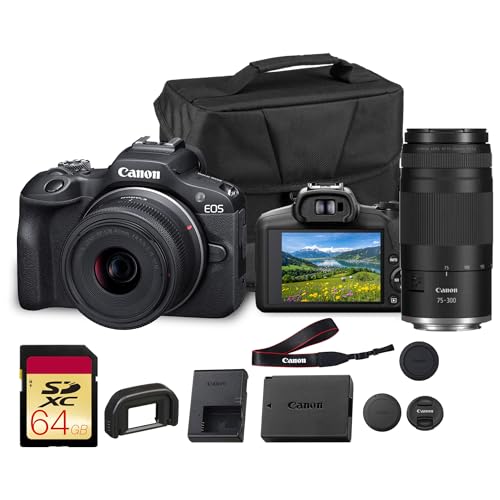
This bundle adds the RF-S 18-45mm and RF 75-300mm for landscape versatility—from sweeping wide scenes to distant details. The 24.2MP APS-C sensor and DIGIC 8 processing deliver crisp landscapes with clean skies. Best for beginners and enthusiasts who want a ready-to-shoot setup that covers most landscape scenarios, from morning light to golden hour. A minor limitation is color depth only as strong as glass and processing allow at high ISOs.
Sony Alpha a7 IV with 28-70mm Lens

Best for landscape photographers seeking a full-frame sensor and advanced processing. The a7 IV delivers high resolution, robust color, and excellent dynamic range, useful in high-contrast landscapes. It’s better for shooters who want more latitude in post-processing and the flexibility of a broad lens ecosystem. A caution: the heavier body and lens setup may be less ideal for long hiking sessions without a tripod.
Canon RF-S10-18mm Ultra-Wide Zoom

Best for dramatic landscapes and tight spaces where you need expansive sky and scenery. The ultra-wide 10-18mm focal range captures broad vistas and architectural scenes effectively. Choose this if your primary landscape work involves sweeping horizons or cramped locations. Limitations include a slower aperture at the wide end, which may require higher ISO in low light or less shallow depth of field.
Canon EOS RP + RF 24-105mm Kit

Best for travelers who want a full-frame option with a versatile zoom. The EOS RP is compact for a full-frame body, and the 24-105mm lens covers wide landscapes to mid-range detail. This kit suits landscapes with varied subjects, from seascapes to mountain vistas. Potential limitation is autofocus performance in very low light compared to newer models, but it remains a capable, portable landscape option.
Buying Guide: Key Considerations For Landscape Mirrorless Cameras
- Sensor size and resolution: Full-frame sensors provide greater dynamic range and low-light performance, while APS-C cameras offer lighter weight and a more affordable path to excellent landscapes.
- Lens options: Ultra-wide and standard zoom lenses expand landscape capabilities. Consider lens flexibility for night skies, mountains, and wide horizons.
- Dynamic range and color science: Look for cameras with natural color rendering and strong detail in shadows and highlights for dramatic landscapes.
- Weight and portability: For hikes and travel, a lighter kit often means you’ll shoot more on location.
- Weather sealing and ruggedness: Outdoor landscapes demand cameras that tolerate dust, moisture, and temperature changes.
- Video capability: If you plan to document location footage, ensure 4K quality and reliable autofocus for video.
- Budget and upgrade path: Entry-level kits offer great value; consider future lens options and service availability when evaluating price.
Frequently Asked Questions
- What is the best mirrorless camera for landscapes on a budget?
Canon EOS R100 kits provide strong image quality in a compact, affordable package. - Which lens is essential for landscape photography?
An ultra-wide lens (like 10-18mm) helps capture expansive skies and distant horizons. - Is full-frame superior to APS-C for landscapes?
Full-frame offers better dynamic range and low-light performance, but APS-C systems are lighter and more affordable. - Do I need weather sealing for landscapes?
Weather sealing helps in misty, dusty, or rainy conditions, but it’s not always mandatory for casual landscape shooting. - Should I use a tripod with landscape photography?
Yes, for long exposures, night skies, and ensuring sharpness across wide scenes. - Are there advantages to a two-lens kit for landscapes?
Two lenses cover a wide range—from wide panoramas to distant details—without changing lenses frequently.