Discover compact, affordable mini keyboard pianos that suit new players, travelers, or space‑conscious studios. This guide highlights five practical options, explains who each is best for, and helps you compare features like key count, power options, and built‑in sounds. Ideal buyers include absolute beginners, junior players, and budding producers needing portable MIDI control. The quick reference table below summarizes key details to aid decision‑making.
| Product | Brand | Keys | Best For |
|---|---|---|---|
| Alesis Melody 32 Mini Piano Keyboard | Alesis | 32 | Beginner piano practice on the go |
| Akai MPK Mini MK3 25‑Key | Akai Professional | 25 | Mobile music production and DAW control |
| Raimy 37 Keys Electronic Keyboard | Raimy | 37 | Kids and new players needing playability |
| Akai MPK Mini IV 25‑Key | Akai Professional | 25 | Advanced MIDI control with live production features |
| Casio Casiotone SA‑81 | Casio | 44 mini keys | Young beginners needing more range in a compact form |
Alesis Melody 32 Mini Piano Keyboard

The Alesis Melody 32 mini keyboard is a portable, beginner‑oriented digital piano with 32 keys and multiple sound voices. It supports USB power or four AA batteries, delivering 300 voices including acoustic piano and electric piano textures. The built‑in 1/8″ headphone output lets learners practice quietly. A built‑in record feature and 40 demo songs support practice progression, while accompaniment modes with 300 rhythms add performance variety. Best for absolute beginners who want a self‑contained teaching tool that travels easily. A limitation is that longer sessions may require external amplification for larger rooms.
Akai MPK Mini MK3 25‑Key USB MIDI Keyboard Controller

The Akai MPK Mini MK3 is a compact USB MIDI controller focused on music production and beat making. It features 25 velocity‑sensitive keys and a four‑way thumbstick for dynamic pitch and modulation control, plus a built‑in arpeggiator with adjustable settings. Native Kontrol Standard (NKS) integration lets you control compatible software directly from the keyboard. Best for mobile producers who need a versatile controller with hands‑on DAW access. A potential drawback is that it relies on a computer or USB powered setup for full functionality.
Akai MPK Mini IV 25‑Key USB‑C MIDI Keyboard Controller

The Akai MPK Mini IV updates the Mini line with USB‑C power and 25 velocity‑sensitive keys. It combines studio‑grade control with a compact footprint, featuring eight assignable knobs, a bright color screen, and a push/turn encoder for direct access to presets and DAW functions. Best for producers seeking a modern, portable controller with tactile feedback and clear visual navigation. It may be overkill for simple keyboard practice without a computer or DAW, so consider use cases carefully.
Casio Casiotone SA‑81 Compact Keyboard
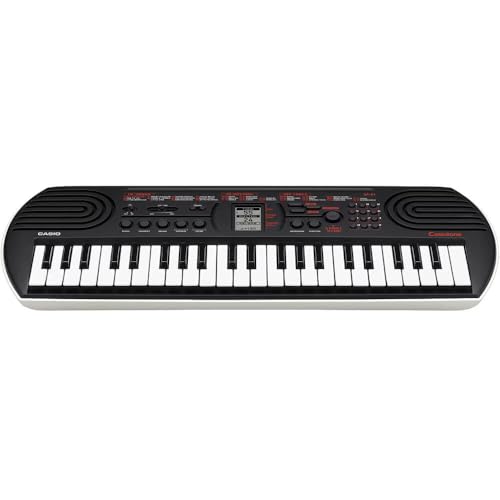
The Casio SA‑81 is a compact 44 mini‑key keyboard designed for younger players or beginners who want more real‑world feel than a toy. It offers 100 tones and 50 rhythms, with built‑in songs to practice with. The one‑touch tone selection allows quick changes between piano, organ, or other sounds. Best for early learners who want a broader sonic palette in a small form. A limitation is the reduced key size compared to standard keyboards, which may affect hand positioning for older beginners.
Casio Casiotone SA‑51 32‑Key Compact Digital Keyboard

The Casio SA‑51 targets younger players with 32 mini keys and 100 tones, plus a one‑touch tone selector for quick access to piano, trumpet, or drum sounds. This model is designed for easy learning and fun exploration, making it suitable for kids who want a straightforward instrument to practice rhythm and melody. Best for family households seeking affordable, kid‑friendly keyboard options. A caution is that the sound and key feel are simplified compared to larger, full‑size keyboards.
BIGFUN 37 Keys Keyboard Piano For Kids

The BIGFUN 37‑key toddler piano is a kid‑oriented option with multiple modes, rhythms, tones, and a built‑in record/playback function. While not a high‑fidelity instrument, it supports early musical exploration with visual and audible variety. Best for very young learners or as a travel companion for families. A limitation is that it prioritizes fun features over building advanced technique or full‑size key familiarity.
Buying Guide
Key purchase considerations help narrow choices for your needs.
- Intended use: Practice at home, travel, or music production? Portable MIDI controllers suit producers, while mini pianos with built‑in tones suit beginners or kids.
- Key count and feel: More keys resemble real pianos and enable broader range practice; smaller keys are easier for small hands but limit technique development.
- Power and connectivity: USB power is convenient for computers and tablets; battery power adds portability. Check for needed cables or adapters.
- Sound and voices: Look for a diverse voice set if you want different timbres; some models emphasize basic piano sounds, others include drums and synths.
- Practice features: Built‑in metronome, recording, and playback help track progress. Demo songs add learnable material for beginners.
- Durability and safety: For kids, non‑toxic materials and smooth edges reduce risk during play.
- Future growth: A slightly upgraded option with more keys or better DAW integration may be a better long‑term investment than a basic toy.
FAQ
Q: Are mini keyboards suitable for serious piano practice?
A: They’re good for introductory practice and finger coordination, but a full‑size keyboard is better for developing technique and hand position on standard piano keys.
Q: Do these units require a power source?
A: Most offer USB power or battery operation, which makes them highly portable. Always check the product’s power requirements in the specs.
Q: Can I use these with a computer for music production?
A: Yes, the MIDI controllers (like Akai MPK Mini MK3 and MPK Mini IV) interface with DAWs via USB, enabling beat making and virtual instrument control.
Q: Which is best for children under six?
A: Models with 32–44 mini keys, bright sound options, and safety‑focused design (such as Casio SA‑51 or SA‑81) are typically suitable for younger players.
Q: Do any models include built‑in learning features?
A: Several options offer demo songs, rhythm accompaniments, and one‑touch tone selection to facilitate learning and play along sessions.