The best microphone for voice over depends on your setup, budget, and recording environment. This guide highlights five top options that consistently deliver clear, broadcast-ready voice recordings for YouTube, podcasts, audiobooks, or corporate narration. Ideal buyers range from mobile creators needing plug-and-play gear to home studios seeking studio-like clarity. Below is a quick snapshot of the chosen products and why they stand out for voice over work.
| Product | Best For | Key Benefit |
|---|---|---|
| Mini Mic Pro | On-the-go creators | Plug-and-play wireless Lavalier with wind protection |
| ZealSound K66 USB | PC/mac podcasting and streaming | Intelligent noise reduction with easy USB setup |
| FIFINE Studio Condenser USB Kit (T669) | Home studios | All-in-one kit with boom arm and pop filters |
| Logitech Creators Blue Yeti | YouTube, podcasts, and multi-pattern needs | Four pickup patterns for versatile recording |
| ZOPPLM Wireless Lavalier | Mobile shoots and interviews | 2-pack convenience with USB-C and Lightning adapters |
Mini Mic Pro: Wireless Clip-On for Clear Voice

Best for mobile creators needing a tiny, high-quality lavalier. The Mini Mic Pro is designed to clip onto a shirt and deliver studio-like sound without the complexity of software or apps. It supports both USB-C and Lightning, enabling quick plug-and-play use with iPhone, Android, tablets, or laptops. Wind protection kits are included to help reduce outdoor noise, making this a strong choice for on-location voice overs and quick interviews. A limitation is that, as a wireless lavalier, performance can depend on the operating environment and connection stability.
ZealSound K66 USB: Clean Podcast Voice

The K66 USB microphone emphasizes studio-quality voice with a cardioid condenser capsule that focuses on your voice while reducing background noise. It offers a wide 40Hz–18kHz frequency response and a 46kHz sampling rate for rich lows, detailed mids, and clear highs. The built-in Noise Reduction Mode helps minimize keyboard clicks, fan noise, and chatter, making it well-suited for home studios, remote meetings, and podcasting. The device is plug-and-play with USB, and includes adapters for iPhone, iPad, and USB-C devices. Choose this if you want reliable, one-cable setup with adjustable noise control; avoid it if you require multiple microphone patterns or XLR connections for higher-end studios.
FIFINE Studio Condenser USB Kit: All-in-One Voiceover Bundle

Designed for home studios and content creators, this USB condenser mic kit comes with a boom arm, shock mount, pop filter, and an 8.2-foot USB cable. It delivers a wide frequency response and cardioid pickup to capture clear voice with minimal ambient noise. The included accessories help you position for optimal sound and reduce plosives. Best for voice overs, podcasts, and YouTube recordings. A caution is that the kit is USB-only and not compatible with Xbox consoles, which limits gaming use but keeps the focus on voice quality for recording.
Logitech Creators Blue Yeti USB Microphone

The Blue Yeti offers multiple pickup patterns (cardioid, omni, bidirectional, stereo), making it versatile for voice over work, interviews, and solo narration. It pairs with Blue VO!CE software for enhanced vocal quality and effects. This mic is well-suited for creators who want flexibility in how they record, especially when switching between single-person narration and multi-source dialogue. Best for users who need different mic patterns within a single device; choose this if you require more than one recording mode, but be aware that it may be bulkier than compact USB mics.
ZOPPLM Wireless Lavalier: Dual Pack for Mobile Shoots
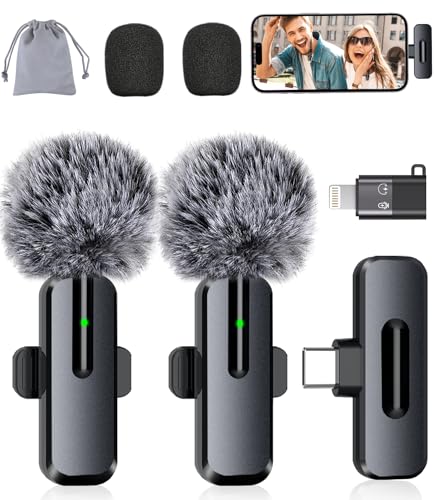
This 2-pack wireless lavalier set is designed for iPhone and Android use, with USB-C and Lightning adapters for quick connection. It provides studio-quality vocal clarity with wind protection and advanced DSP for outdoor and live environments. Best for interviews and field reporting where multiple sources are needed, and there is a need for quick, cable-free operation. A limitation is that performance can vary with body movement or proximity to the transmitter, so position the mic carefully for consistent sound.
Buying Guide: Key Factors for Choosing a Voice-Over Microphone
- Use case and environment: Are you recording in a quiet home studio, a noisy office, or on location? USB mics are simpler for desktops, while XLR or lavaliers offer more flexibility for fieldwork.
- Connection type: USB mics are plug-and-play; XLR mics require an interface but offer professional-grade control. Wireless lavaliers provide mobility but may need batteries and careful placement.
- Pickup pattern: Cardioid mics focus on your voice, while omnidirectional mics capture more ambient sound. For solo narration, cardioid is typically best.
- Frequency response: A wider range captures more natural voice textures. Look for 20 Hz–20 kHz or similar specs for clarity.
- Accessories: Boom arms, shock mounts, wind screens, and pop filters can dramatically improve sound quality and reduce plosives and handling noise.
- Budget and upgrade path: Consider a starter kit versus a modular setup that can grow with your needs (USB to XLR, additional mics, or better software).
FAQ
- What microphone is best for voice over beginners? A USB condenser mic with cardioid pickup, like the FIFINE Studio Kit, provides simplicity and good sound without extra gear.
- Do I need an audio interface for voice over work? If you choose an XLR microphone, yes. USB mics can work directly with a computer, laptop, or tablet.
- Are wireless lavaliers good for voice over narration? They are excellent for on-camera or field work, offering mobility, but ensure wind protection and line-of-sight for best results.
- What is a good all-around microphone for YouTube and podcasts? A versatile option is a multi-pattern USB mic like the Blue Yeti, especially if you plan to switch between solo narration and interviews.
- What accessories improve voice over quality? A sturdy stand or boom arm, shock mount, pop filter, and proper room treatment significantly reduce noise and improve clarity.
- Can USB mics be used for professional-level voice work? Yes, many USB mics provide broadcast-quality sound suitable for podcasts and voice over projects, especially with proper processing and editing.