Finding the right metronome for guitar practice helps players build steady timing, groove, and rhythm across styles. This guide highlights five reliable options suited for different budgets and practice needs. Whether you want a digital model with multiple sounds, a compact 3-in-1 tool, or a classic wind-up unit, these picks are chosen for clear tempo indication, durable design, and user-friendly operation. Ideal buyers include beginners building fundamentals, intermediate players tightening rhythm, and performers needing quiet practice.
| Product | Type | Best For | Notes |
|---|---|---|---|
| Sondery ProBeat Digital Metronome | Digital | Early learners and guitarists needing quick tempo and rhythm settings | Color display, vocal counting option, multiple digital sounds |
| Ulumac Aroma 3-in-1 | Digital, Tuner | Players needing metronome, tuner, and tone generator in one | Broad tempo range, versatile patterns |
| Ueteto Digital Metronome for Piano/Guitar/Drum | Digital | Quiet practice with headphone option | LCD display, 9 rhythm patterns, 40–208 BPM |
| SDREAM Digital Metronome | Digital | Beginners and students seeking long battery life | Two voice options, 10 rhythm patterns, rechargeable |
| SEIKO SQ50-V Quartz Metronome | Digital/Quartz | Precise tempo control for performances | Classic interface, 39-position dial, adjustable clicks |
Sondery ProBeat Digital Metronome
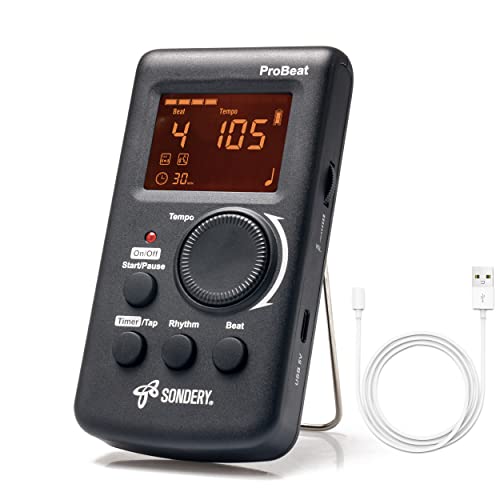
The Sondery ProBeat is a digital metronome designed for rapid tempo setup and clear tempo reading. Best for beginners and intermediate players who want straightforward controls and audible rhythm cues. The device offers a color screen for quick tempo interpretation, a vocal counting option, and three digital sounds for practice variety. Its rotary tempo dial covers 40–208 BPM, with 10 beat patterns for versatile rhythm training. A built-in speaker provides strong audible output, and an earphone jack supports quiet practice. Caution: the compact design may require occasional reference to the display in bright lighting to avoid misreads.
Ulumac Aroma 3-in-1 Metronome and Tuner

The Ulumac Aroma combines a metronome, tuner, and tone generator in one pocket-sized unit. Best for guitarists, bassists, violinists, and other instrumentalists who want a compact all-in-one tool. It supports 30–260 BPM across 10 beat patterns and 8 rhythm styles. The tuner recognizes A0–C8, with A4 calibration and ±0.5 cent accuracy, making it suitable for multiple instruments. Note: This AMT-560 tuner is not intended for piano tuning. Caution: precision tuning may vary slightly with temperature and humidity in some environments.
Ueteto Digital Metronome for Piano/Guitar/Drum

The Ueteto digital model emphasizes a bright LCD display, flashing LED tempo indicator, and headphone compatibility. Best for musicians who want a quiet practice option with adjustable volume and a 3.5mm headphone jack for monitoring. It offers 9 rhythm patterns and 40–208 BPM, plus a battery-saving screen that turns off after 30 seconds and wakes with any button press. The center wheel design aids quick adjustments. Caution: the single speaker may be less audible in noisy environments; use headphones for privacy during late-night practice.
M350 AUPHY Mechanical Metronome

The M350 AUPHY mechanical metronome uses a wind-up mechanism with a classic design and accent bell options. Best for students and players who prefer traditional wind-up operation without batteries. Tempo ranges from 40–208 BPM with 5 beat selections (2, 3, 4, 6, and 0). The device features a metal clockwork movement and a dust cover for durability. Caution: wind-up models require occasional maintenance for consistent performance, and the accent bell can be distracting in quiet practice spaces.
Seiko SQ50-V Quartz Metronome

The Seiko SQ50-V offers a refined design with precise tempo control. Best for players who need reliable tempo dialing with a wide BPM range, 40–208 BPM, using a 39-position rotary dial. It provides adjustable click volume and two click tones (high or low) to suit different practice environments. Caution: the compact design may take a moment to locate the dial if stored in a crowded case; ensure the dial is kept clean to avoid misreads.
Buying Guide
What type of metronome fits your practice style?
- Digital vs. mechanical: Digital models offer more features, multiple tones, and headphones; mechanical versions deliver a traditional experience with battery-free operation.
- Tempo range and beat patterns: Look for 40–208 BPM and multiple beat options (0, 2, 3, 4, 6, etc.) to cover scales, arpeggios, and grooves.
- Audio output: Headphone jacks help practice without disturbing others; built-in speakers are handy for solo sessions.
- Tuners and additional tools: A 3-in-1 design can save space, while a dedicated tuner helps with intonation during longer sessions.
- Durability and maintenance: Wind-up models require less power management, while rechargeable digital units benefit from long battery life but rely on charging availability.
What features have the strongest impact on practice?
- Clear tempo indication and audible click: Essential for keeping timing consistent.
- Tempo accuracy: A precision movement or digital oscillator ensures consistent beats across sessions.
- Portability and ease of setup: Smaller devices travel better and require less setup time between songs.
What should you avoid?
- Overly complex interfaces that impede quick tempo adjustments.
- Low-contrast displays or hard-to-read screens in dim practice spaces.
- Unreliable wind-up mechanisms that lose accuracy quickly.
FAQ
- Q: Is a metronome with a tuner necessary for beginners? A: A metronome with a tuner can be helpful for keeping rhythm and intonation aligned, especially for beginners who are also learning pitch accuracy.
- Q: Should I get a digital or mechanical metronome for guitar practice? A: Digital metronomes offer more features and quiet operation, while mechanical ones provide battery-free operation and a traditional feel.
- Q: Can I use a metronome for different instruments? A: Yes. Most metronomes listed support guitar, piano, drum, violin, bass, and other instruments.
- Q: Do metronomes affect tone or tuning? A: Metronomes only provide tempo cues; ensure your guitar is tuned separately using a tuner when needed.
- Q: How important is a headphone jack? A: A headphone jack is beneficial for late-night practice or performances where you need to monitor timing without others hearing the click.
- Q: What should I consider when choosing beat patterns? A: Look for a range of common grooves (0–9) and accents to practice diverse rhythms and ensure flexibility across genres.