To protect households from carbon monoxide (CO) exposure, choose alarms that are reliable, easy to install, and operate when power is interrupted. This guide highlights five CO alarms, focusing on those that offer mains power options or strong battery backup for continuous protection. Ideal for homeowners who want steady, mains-powered monitoring with dependable alerts during outages, travelers needing portable units are noted with clear trade-offs. The following table summarizes top picks for quick comparison.
| Product | Power Type | Best For | Why It Stands Out |
|---|---|---|---|
| Kidde 3rd Edition AA Battery Powered | AA Battery | Home and travel on the go | Portability with clear LED indicators and easy installation |
| TOPTES CT-580 | Rechargeable, no mains needed | Portable use, travel, or job sites | Three alarm modes with vibration and color display |
| Kidde 5th Edition COB | AA Battery | Travel or secondary spaces | Compact, portable with test/hush and alert LEDs |
| Kidde AA Battery Portable (4th/5th editions) | AA Battery | Small spaces or travel | Simple setup and battery-powered reliability |
| Kidde Plug-in with 9V Backup | 100-240V mains, 9V battery backup | Main residence with outage protection | Digital display and backup power for outages |
Kidde Carbon Monoxide Detector, AA Battery Powered, Portable for Travel or Home
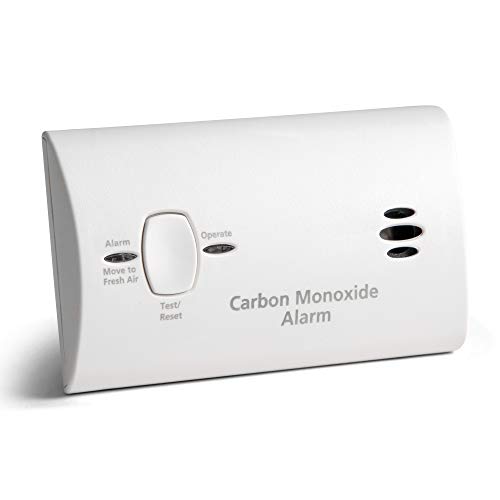
Features: Electrochemical sensor detects CO, easy installation with no wiring, operates on 2 AA batteries during power outages, wall-mount or tabletop placement, green power LED, 85 dB alarm with red CO indicator.
Best for: Small homes, bedrooms, or travel setups where mains power may be unavailable. This model prioritizes portability and simple setup without wiring. Limitations: Not a mains-powered unit; relies on batteries, so battery life is a key consideration for long-term use.
TOPTES CT-580 Portable Carbon Monoxide Detector

Features: High-sensitivity DDS sensor, detects 0–1000 PPM, quick 0.3s response, three alarm modes (indicator, audible, vibration), 0–1000 PPM range, easy-to-read TFT color display, calibrates with zero and standard gas settings for professional use.
Best for: Individuals needing rapid, visible and audible CO assessment in homes or work environments, including camping and travel. Limitations: This is a portable detector and not a fixed mains-powered alarm; it requires battery or rechargeable power to operate and is not a single-household safety device.
Kidde Carbon Monoxide Detector, AA Battery Powered CO Alarm with LEDs (5th Edition)

Features: Electrochemical CO detection, 85 dB alarm, LED warning light, test/hush button, wall-mount or tabletop placement, two AA batteries included to support operation during outages.
Best for: Everyday home use and travel where simple operation and portability matter. Limitations: Not a mains-powered device; relies on batteries, so replacement intervals matter for continuous protection.
Kidde Carbon Monoxide Detector, AA Battery Powered CO Alarm with LEDs
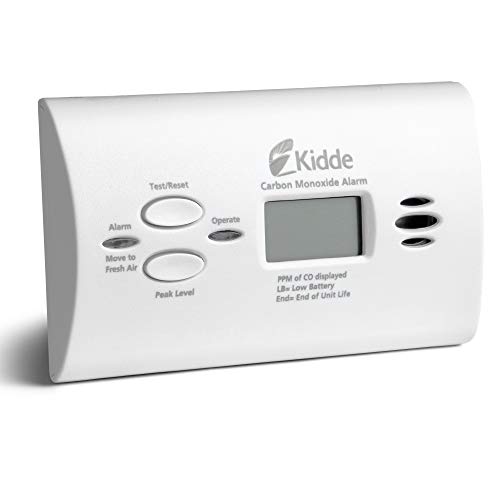
Features: Electrochemical sensor, easy installation with no wiring, operates on two AA batteries, wall or tabletop placement, portable design.
Best for: Small homes, dorm rooms, or rental units where quick setup is essential. Limitations: Battery-powered operation means ongoing battery management is required for continuous protection.
Kidde Smoke and Carbon Monoxide Detector (2-in-1)

Features: 2-in-1 detection for smoke and CO, 85 dB alarm, red LED visual warnings, operates on two AA batteries, added false alarm reduction technology.
Best for: Home environments where both smoke and CO monitoring are desired in a compact unit. Limitations: Battery-powered with no dedicated mains power; ensure batteries are kept fresh to maintain protection.
X-Sense 10-Year Battery CO and Smoke Alarm with LCD

Features: Combination CO and smoke detection, UL 217 and UL 2034 certified, 10-year sealed lithium battery, large LCD display, standalone unit without Wi-Fi or interconnection.
Best for: Homes wanting long-life power and a clear display in a standalone setup. Limitations: No wireless interconnection; consider if you need a networked alarm system.
Kidde CO + Explosive Gas Alarm with Plug-in Power
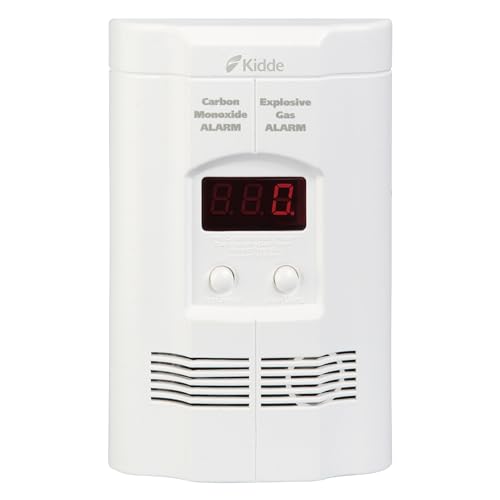
Features: Plug-in to a standard 120V outlet, 9V battery backup, digital LED display shows CO level or “GAS” for explosive gas, 85 dB alarm, red LED indicators.
Best for: Primary home installation where mains power is available and backup protection during outages is important. Limitations: Needs a powered outlet; if power fails, backup will activate the 9V battery but may reduce overall sensor life.
Buying Guide
- Power source: Prefer mains-powered units with battery backup for outage protection, or battery-only units for portable needs. Evaluate whether you need a fixed detector or a portable option.
- Sensor type and response: Look for electrochemical CO sensors for accuracy. If you want multi-utility, consider combination smoke+CO detectors but note their power and installation requirements.
- Alarm features: Consider alarming sound level (dB), LED indicators, test/hush functionality, and LCD readouts for quick CO level assessment.
- Installation and maintenance: Wall-mount vs tabletop options; battery life and replacement costs; whether the unit supports easy battery swaps and removal for cleaning.
- Interconnection and expansion: If you need networked protection, choose models that support interconnection, Wi-Fi, or hub compatibility. standalones offer simplicity.
- Durability and warranty: Check the warranty length and sensor stability over time. Long-life detectors reduce maintenance overhead in busy households.
- Placement guidelines: Install detectors on every level, near sleeping areas, and away from heating vents or high humidity to minimize false alarms.
FAQ
- Do I need a mains-powered CO alarm if I have battery-powered ones?
– Mains-powered units with battery backup provide continuous protection during power outages, which is critical for sleeping areas. - Can a CO alarm detect both gas and smoke?
– Some models combine smoke and CO detection, but verify that both sensors are present and tested for your needs. - How often should I replace CO detectors?
– Many detectors have a recommended lifespan (often 5–10 years) based on sensor and battery life; follow manufacturer guidance. - What is the difference between a photoelectric smoke detector and an ionization detector?
– Photoelectric sensors respond faster to large smoke particles from fires; ionization sensors respond faster to flaming fires. For CO, focus on the CO sensor quality and battery backup. - Should detectors be interconnected?
– Interconnected detectors can provide early alerts across rooms, but standalone units still offer essential protection when networked options aren’t available. - Is a digital display important on a CO alarm?
– A display helps quickly gauge CO levels and verify operation, but some compact models omit it in favor of LED indicators.