Answering the buyer’s need for clearer, deeper footage in dim conditions, these top action cameras excel in low light. The list targets beginner to intermediate storytellers who shoot outdoors at dusk, indoors with limited lighting, or underwater environments. Each pick is evaluated for night-friendly features, such as larger sensors, enhanced color science, and reliable stabilization. The following table highlights key specs to compare at a glance.
| Product | Best For | Why It Stands Out |
|---|---|---|
| DJI Osmo Action 4 Essential Combo | Adventurers; nighttime POV shooters | 1/1.3″ sensor, 10-bit color, 4K60/120fps options |
| GoPro LIT Hero | Vloggers; on-the-go creators | Built-in light, user-friendly, rugged and waterproof |
| AKASO EK7000 | Budget-conscious beginners | 4K30/2.7K30 with EIS; solid entry-level performer |
| Insta360 X5 | 360° storytellers; immersive shots | 8K30 360° video; strong low-light processing |
| AKASO Brave 7 LE | All-weather vloggers | 4K30, IPX7 waterproof, dual displays |
Note: The selections prioritize low-light performance, image processing, stabilization, and practical use in varied lighting. Each product section includes suitability notes to help you choose based on your shooting style and environment.
DJI Osmo Action 4 Essential Combo
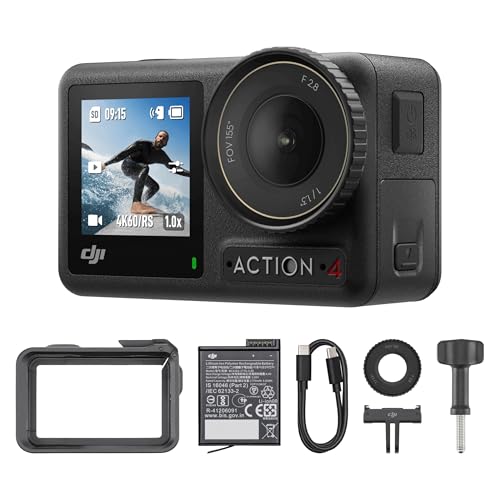
The DJI Osmo Action 4 Essential Combo is designed for users who prioritize low-light clarity and color accuracy. It features a 1/1.3-inch sensor with 2.4μm pixel size for crisper footage in dim conditions and auto white balance for true-to-life colors underwater. The 10-bit color depth and D-Log M profile help preserve detail for later editing, making this camera suitable for creators who want professional-grade color without heavy grading. It shoots 4K at up to 120fps with a wide 155-degree field of view for immersive shots. Best for: action lovers who film at dusk, in caves, or underwater environments where light is scarce. Limitation: higher-end color profiles require post-processing for full benefit.
GoPro LIT Hero

GoPro LIT Hero is an entry-level-friendly option with a built-in light, making it practical for close-quarters or dim scenes. It offers simplified controls for quick switching between video, photo, and slow-motion modes, and its rugged, waterproof build handles outdoor adventures. The built-in light has three brightness settings and remains useful even when the camera is off or charging. Best for: creators who want a compact, easy-to-use camera with extra lighting for low-light vlog-style footage. Limitation: built-in light may not substitute for strong ambient light in very dark settings.
AKASO EK7000 4K30FPS

AKASO EK7000 provides a strong affordability-to-performance ratio with 4K30fps video and 20MP photos. It includes built-in electronic image stabilization (EIS) for steadier footage and is designed for underwater use to about 131 feet with the included waterproof housing. Best for: beginners who want 4K footage without a hefty price tag. Limitation: image quality and color depth in very-low-light situations may trail pricier models.
AKASO Brave 4 Action Camera

AKASO Brave 4 records in 4K30 with 20MP photos and includes a wide 170° adjustable view angle. Built-in gyroscope stabilizes footage for smooth results, and the camera supports Wi-Fi and HDMI for quick sharing and viewing on larger screens. Best for: users who want flexible shooting angles and easy sharing in moderate lighting. Limitation: wider angle can exaggerate lens distortion; users may crop in post for narrower perspectives.
Insta360 X5

Insta360 X5 offers 8K30fps 360° video with dual 1/1.28″ sensors and a triple AI chip design to boost low-light performance. Its standout feature, the invisible selfie stick, enables third-person-like framing without visible hardware. Best for: creators who want fully immersive stories with strong low-light processing and post-capture framing flexibility. Caution: 360° footage increases data size and editing demands compared to standard cameras.
Insta360 Ace Pro 2 Dual Battery Bundle
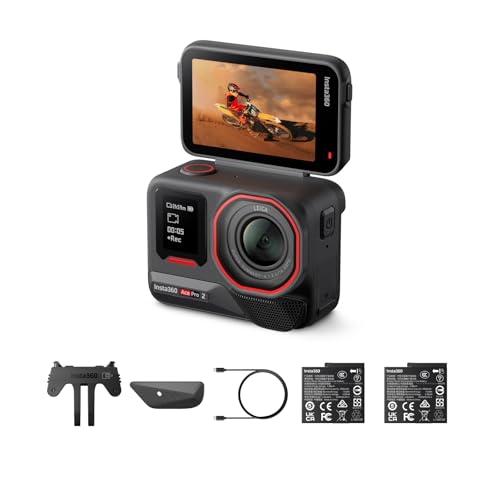
The Insta360 Ace Pro 2 Dual Battery Bundle pairs a high-performance sensor with dual AI chips for improved low-light processing and detail retention. The 1/1.3″ sensor and Leica optics deliver better color and dynamic range, with support for 4K60fps Active HDR and 8K30fps recording. Best for: advanced shooters who want cutting-edge low-light performance and long recording sessions. Limitation: higher complexity and data output require robust post-processing workflows.
Buying Guide
What should I prioritize for low-light action footage?
- Sensor size and pixel size: Larger sensors and bigger pixels capture more light, reducing grain in dark scenes.
- Color depth and profiles: 10-bit color and log profiles preserve more detail for editing in post.
- Stabilization: Effective EIS or gyro-based stabilization helps maintain clarity when moving in low light.
- Low-light processing: AI-based noise reduction and dedicated night modes improve brightness and color in dim conditions.
- Additional lighting: Built-in or attachable lights can dramatically improve near-dark footage.
How should I compare these cameras?
- Look for sensor size, pixel pitch, and dynamic range as primary indicators of night performance.
- Consider field of view: ultra-wide lenses may introduce distortion; consider how you want to frame action in low light.
- Evaluate battery life and data handling: higher resolutions and 8K recording demand more power and storage.
- Assess waterproofing and ruggedness if you shoot near water or in rain.
Which features matter most for my use case?
- Outdoor night adventures: prioritize low-light performance and stabilization.
- Vlogging in dim studios: built-in lighting and color accuracy are key.
- 360° storytelling: immersive capture benefits from 360-degree sensors and AI framing.
Frequently Asked Questions
- What makes a camera good in low light?
- Is a built-in light necessary for low-light vlogging?
- Should I choose 360° cameras for low light?
- Do these cameras support underwater shooting?
- How important is post-processing for low-light footage?
Key factors are sensor size, pixel size, dynamic range, noise reduction algorithms, and color science. Cameras with larger sensors and 10-bit color depth generally perform better in dim conditions.
Not always, but a built-in or attachable light helps close the gap when ambient light is scarce or uneven.
360° cameras excel in immersive capture, but their data requirements and night processing can be demanding. Choose if you need omnidirectional views.
Several models in this list are designed for underwater use with appropriate housings or built-in waterproofing, boosting performance in dim underwater lighting.
Very important. 10-bit color, D-Log/Mix, and AI noise reduction often require editing to unlock full potential.