The best keyboards for beginners offer built‑in teaching aids, useful accessories, and a helpful variety of sounds to keep practice engaging. This guide highlights five beginner‑friendly options designed for students, adults picking up music, or kids exploring piano basics. Each product is evaluated for who it fits best, why it stands out, and any notable limitations.
Summary table of selected products:
- RockJam RJ5061 61 Key Keyboard Piano Kit with Stand, Bench & Headphones — Best all‑in‑one starter kit for complete beginners who want immediate practice setup.
- JIKADA 61 Key Portable Electronic Keyboard Piano, 3 Teaching Modes — Best teaching features and memory functions for steady progression.
- RockJam RJ361 61 Key Compact Keyboard Piano for Beginners — Best space‑saving option with solid learning features.
- Donner 61 Key Keyboard Piano, DEK-610S — Best“All‑in‑one” kit with ample voices/rhythms and accessories.
- Digital Piano 88 Key Full Size Semi Weighted (Ngdgtt) — Best for serious beginners seeking realistic feel and MIDI connectivity.
RockJam RJ5061 61 Key Keyboard Kit

Best for complete beginners who want an all‑in‑one practice setup. The RJ5061 includes a stand, bench, headphones, and note stickers, enabling ready‑to‑play sessions right from unboxing. It features a pitch bend wheel and an LED panel with 200 rhythms and 200 tones, plus demo songs to guide new players. This kit is well suited for families and students who prefer a turnkey solution for home practice.
Who it’s best for: beginner players who want a full starter kit and easy setup. Why selected: the bundled accessories reduce additional shopping, helping new learners start quickly. Limitation: the included teaching features are basic and may require later upgrades for advanced playing styles.
JIKADA 61 Key Keyboard With 3 Teaching Modes

Best for learners who benefit from structured guidance and memory features. This keyboard includes an LCD display, 3 teaching modes, and a memory function to save tone, rhythm, and tempo selections. It has built‑in speakers and multiple input/output options, including microphone support for late‑night practice without disturbing others. It offers 255 tones and rhythms, 50 demo songs, and a note sticker system for easier theory learning.
Who it’s best for: students who want progressive, mode‑based learning. Why selected: strong teaching features and a clear display help users advance step by step. Limitation: the built‑in sounds and rhythms may feel limited as user needs grow.
RockNut RockJam RJ361 61 Key Compact Keyboard
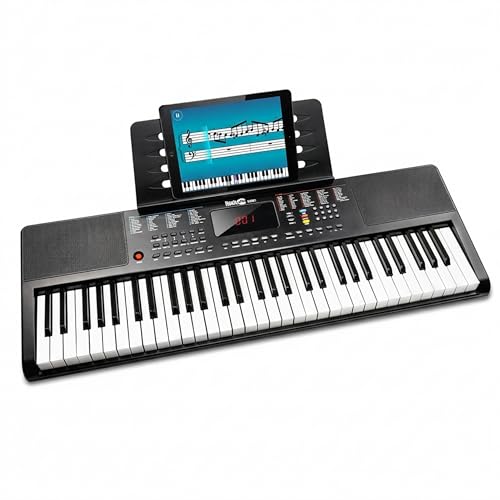
Best for space‑conscious beginners who still need robust learning features. The RJ361 combines a compact footprint with 61 keys and a broad sound/ rhythm palette. It provides sustain and vibrato effects, plus built‑in recording and playback to review progress. This makes it ideal for practice in small rooms or shared spaces where desk real estate is a concern.
Who it’s best for: learners who want a portable, budget‑friendly option. Why selected: compact design without sacrificing core learning features. Limitation: smaller physical size may feel cramped for players with a larger playing style.
Donner DEK-610S 61 Key Keyboard Kit

Best for learners seeking an all‑in‑one bundle with strong versatility. The DEK‑610S kit includes a stand, bench, sheet music stand, microphone, and power adapter. With 32‑note polyphony, 249 voices, 249 rhythms, and 50 demo songs, it supports creative experimentation and basic ensemble practice. An LCD display helps users track current functions during play.
Who it’s best for: beginners who want a complete kit with extras for performance practice. Why selected: the broad voice/rhythm options and included accessories support diverse learning activities. Limitation: the instrument is feature‑rich, which could overwhelm absolute beginners who want a simpler interface.
Ngdgtt 88 Key Semi‑Weighted Digital Piano

Best for serious beginners aiming for a realistic piano feel with modern connectivity. This 88‑key semi‑weighted keyboard simulates an authentic piano touch, offering 200 rhythms, 200 sounds, and 70 demo songs. It supports Bluetooth connectivity for lessons and MIDI/USB compatibility for music editing or external devices. A sustain pedal and built‑in speaker system add value for home practice.
Who it’s best for: learners who want a step toward an acoustic piano and digital‑age features. Why selected: realistic key action plus MIDI/USB options make it a versatile long‑term instrument. Limitation: semi‑weighted keys may feel different from fully weighted hammers to true pianists.
Buying Guide
What to consider when choosing a beginner keyboard
- Key count and action: Do you start with 61 keys or 88 keys? Semi‑weighted keys offer a more piano‑like feel, while synth‑style keys are lighter but easy for beginners.
- Teaching features: Look for built‑in lessons, LED indicators, note stickers, or three teaching modes to support methodical progress.
- Accessories included: A bundled stand, bench, headphones, music stand, and microphone reduce initial shopping and setup time.
- Sound library and rhythms: A broad selection helps with creative practice and keeps learning engaging.
- Connectivity: Bluetooth, MIDI, and USB allow access to lessons, apps, and external devices for expanded learning options.
- Size and portability: Consider space constraints in your home or classroom when selecting a compact model versus a full setup.
- Future growth: If you expect to progress to more advanced playing, prioritize instruments with memory functions, robust voices, and expandability.
Frequently Asked Questions
- What’s the simplest keyboard for a complete beginner?
Options with 61 keys and bundled accessories are typically the easiest to start, offering immediate practice setup and guided lessons.
- Should beginners get 88 keys or 61 keys?
88 keys are ideal for piano‑style playing and long‑term progression, while 61 keys are often more affordable and space‑friendly for beginners.
- Are teaching modes important for beginners?
Yes. Teaching modes, note stickers, and LCD displays help learners follow lessons, memorize positions, and stay motivated.
- Do I need MIDI or Bluetooth connectivity as a beginner?
Not immediately, but these features enable easy access to lessons and easier recording as skills grow.
- Is a bundled kit better than buying separately?
Bundled kits reduce setup time and cost by including a stand, bench, and other essentials in one package.
- What is the best choice for a small room?
Compact 61‑key models with essential features are typically best for tight spaces while still offering learning support.